Clinical Trial Eligibility & Real-World Outcome Simulator
🏥Patient Profile Builder
📊Clinical Trial Eligibility
Estimated Trial Eligibility
🌍Real-World Effectiveness
Expected Real-World Effectiveness
💡Understanding Your Results
Why Clinical Trials Show Higher Efficacy:
- 80% of potential patients are excluded due to comorbidities or age
- 92% data completeness in trials vs 68% in real-world settings
- Fixed intervals every 3 months vs variable timing averaging 5.2 months
Real-World Complexity Factors:
- Polypharmacy interactions with multiple medications reduce effectiveness
- Adherence drops by 40-60% when managing complex regimens
- Lifestyle factors significantly impact treatment outcomes
Imagine getting a new prescription that promises to cut your risk of heart disease by half. The drug worked perfectly in the studies, right? But when you take it alongside your other medications, juggle your busy schedule, and deal with your unique health history, does it still work that well? This is the core tension in modern medicine. We rely on Clinical Trial Data, which tells us if a treatment works under perfect conditions, but we live our lives based on Real-World Outcomes, which tell us how treatments perform in the messy, complex reality of everyday life.
For decades, clinical trials have been the gold standard for approving new drugs. Since Sir Austin Bradford Hill formalized randomized controlled trial (RCT) methodology in the 1940s, these strict experiments have answered one critical question: "Does this work?" However, as healthcare systems digitized patient records in the 2010s, a new player emerged. Real-World Evidence (RWE) asks a different, equally vital question: "Does this work for people like me?" Understanding the difference between these two data sources isn't just academic-it affects your safety, your treatment options, and the cost of your care.
The Ideal Lab vs. The Real World
To understand why these datasets differ so much, you have to look at who gets into them. Clinical trials are designed to isolate variables. Researchers want to know if Drug A causes Result B without anything else interfering. To do this, they create a highly controlled environment. Participants must meet strict criteria. They often exclude people with multiple chronic conditions, the elderly, or those taking certain other medications. In fact, studies suggest that up to 80% of potential patients are excluded from trials due to comorbidities or age restrictions.
Compare this to real-world practice. Your doctor doesn’t turn away patients because they have high blood pressure, diabetes, and anxiety all at once. They treat the whole person. A comparative study published in Scientific Reports (2024) highlighted this stark contrast. It analyzed 5,734 diabetic kidney disease patients in RCTs versus 23,523 patients in electronic health records (EHRs). The trial participants were significantly healthier than the general population. The trial data was collected at fixed intervals-every three months-with 92% completeness for primary endpoints. The real-world data, however, had variable timing, averaging 5.2 months between measurements, and only 68% completeness. This gap means that while trials show efficacy (does it work?), real-world data shows effectiveness (does it work here?).
Why Diversity Matters in Medical Research
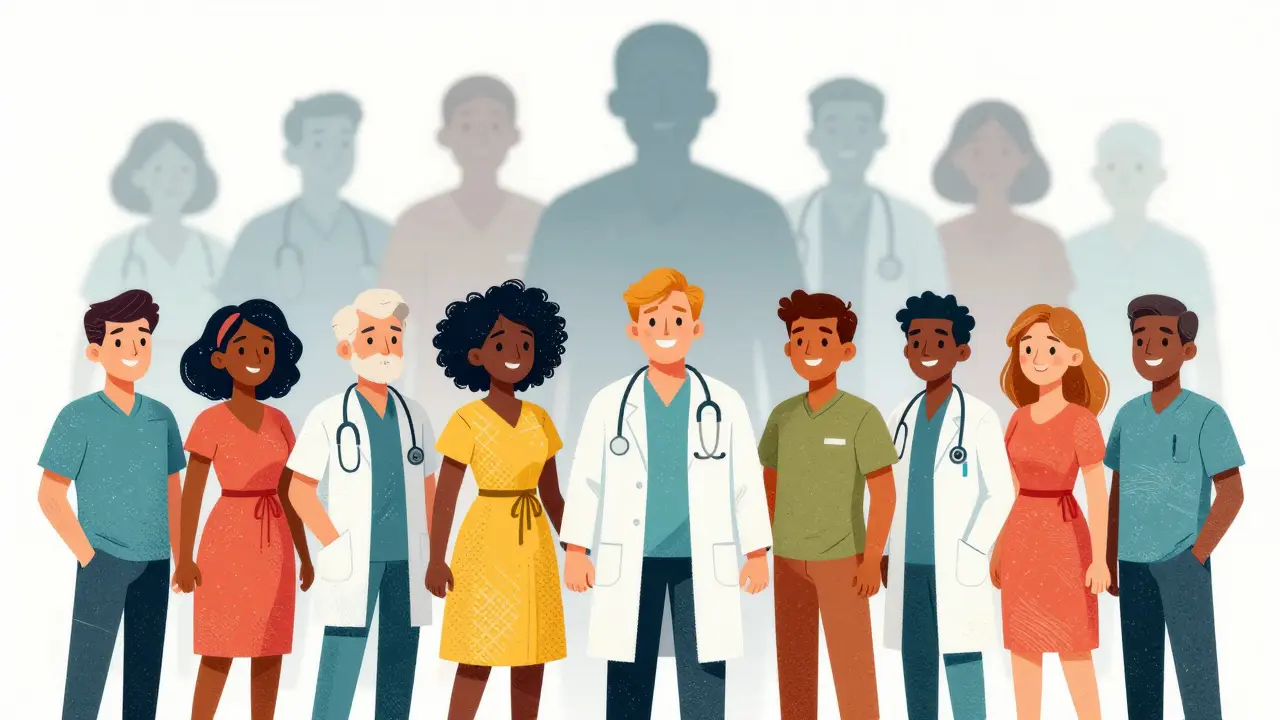
One of the biggest criticisms of traditional clinical trials is their lack of diversity. If a trial only includes young, healthy, white males, can we really trust the results for an older woman of color managing three other conditions? The answer is often no. A 2023 study in the New England Journal of Medicine found that only 20% of cancer patients eligible for clinical trials in academic centers met standard inclusion criteria. Worse, Black patients were disproportionately excluded at rates 30% higher than White patients, often due to socioeconomic factors unrelated to the disease itself.
Real-world outcomes fill this void. By using data from insurance claims databases-which cover hundreds of millions of patients-and electronic medical records, researchers can see how treatments affect diverse demographic spectrums. Dr. Alexander Spira, a medical oncologist, noted that trial patients "must be able to get to their clinical study site" and "tend to be healthier." Real-world studies capture the impact of transportation barriers, income levels, and cultural differences on treatment adherence. This broader view helps ensure that medical advancements benefit everyone, not just a select few.
| Feature | Clinical Trials (RCT) | Real-World Evidence (RWE) |
|---|---|---|
| Primary Goal | Efficacy (Does it work?) | Effectiveness (Does it work in practice?) |
| Population | Strictly selected, homogeneous | Diverse, inclusive of comorbidities |
| Data Collection | Fixed intervals, high completeness | Variable timing, lower completeness |
| Cost & Time | High ($19M avg), 24-36 months | Lower (60-75% less), 6-12 months |
| Bias Control | Randomization, blinding | Statistical adjustment (e.g., propensity scores) |
The Cost and Speed Factor
Money and time play huge roles in how we get medical information. Developing a new drug through traditional Phase III trials costs an average of $19 million and takes 24 to 36 months, according to the Tufts Center for Drug Development (2022). This slow, expensive process limits how quickly we can learn about long-term side effects or rare interactions.
Real-world evidence offers a faster, cheaper alternative. RWE studies can be conducted in 6 to 12 months at 60-75% lower cost. This speed is crucial for post-market surveillance. For example, the FDA’s Sentinel Initiative monitors 300 million patient records across 18 data partners to track drug safety after approval. This allows regulators to spot issues that didn’t appear in smaller, shorter trials. Companies like Flatiron Health have invested heavily in this infrastructure, aggregating EHR data from 2.5 million cancer patients to accelerate research. While building these systems requires significant upfront investment-Flatiron took five years and $175 million before its acquisition-the ability to analyze vast amounts of data quickly is transforming healthcare innovation.
Regulatory Shifts and Future Trends
Regulators are waking up to the value of real-world data. The U.S. Food and Drug Administration (FDA) formally recognized RWE’s potential in the 21st Century Cures Act of 2016. Since then, adoption has skyrocketed. Between 2019 and 2022, the FDA approved 17 drugs based partly on RWE, up from just one in 2015. The European Medicines Agency (EMA) has been even more aggressive, incorporating real-world data into 42% of post-authorization safety studies in 2022, compared to 28% at the FDA.
However, experts warn against replacing trials entirely. Dr. Robert Califf, former FDA Commissioner, testified that "Real-world evidence can complement traditional clinical trial data, but it cannot replace the rigor of randomized controlled trials for initial efficacy determinations." The challenge lies in data quality. Only 39% of RWE studies could be replicated due to insufficient methodological transparency, according to a 2019 Nature study. To address this, the FDA released a 2023 Real-World Evidence Framework requiring sponsors to submit data quality assessments. The goal is not to choose one over the other, but to integrate them. Hybrid trial designs, which combine the rigor of RCTs with the breadth of RWE, represent the future of medical research.
What This Means for You
As a patient, you don’t need to be a statistician, but understanding this distinction empowers you. When your doctor prescribes a medication, ask questions. Is this drug proven effective for people with my specific combination of health issues? Are there real-world studies showing how it interacts with my current lifestyle? Knowing that clinical trials provide the "ideal" scenario while real-world outcomes reflect the "actual" scenario helps you set realistic expectations. It also highlights the importance of reporting side effects and sharing your experience, as your data contributes to the growing body of real-world evidence that protects future patients.
Can real-world evidence replace clinical trials?
No, real-world evidence cannot fully replace clinical trials for initial drug approval. Clinical trials provide the rigorous control needed to establish causality and safety. However, RWE complements trials by providing data on long-term effectiveness, safety in diverse populations, and cost-effectiveness in routine practice.
Why are clinical trial participants often healthier than the general public?
Clinical trials use strict inclusion and exclusion criteria to minimize confounding variables. This often excludes patients with multiple comorbidities, extreme ages, or those taking interacting medications. This creates a "healthier" study population that may not represent the average patient seen in a clinic.
How is real-world data collected?
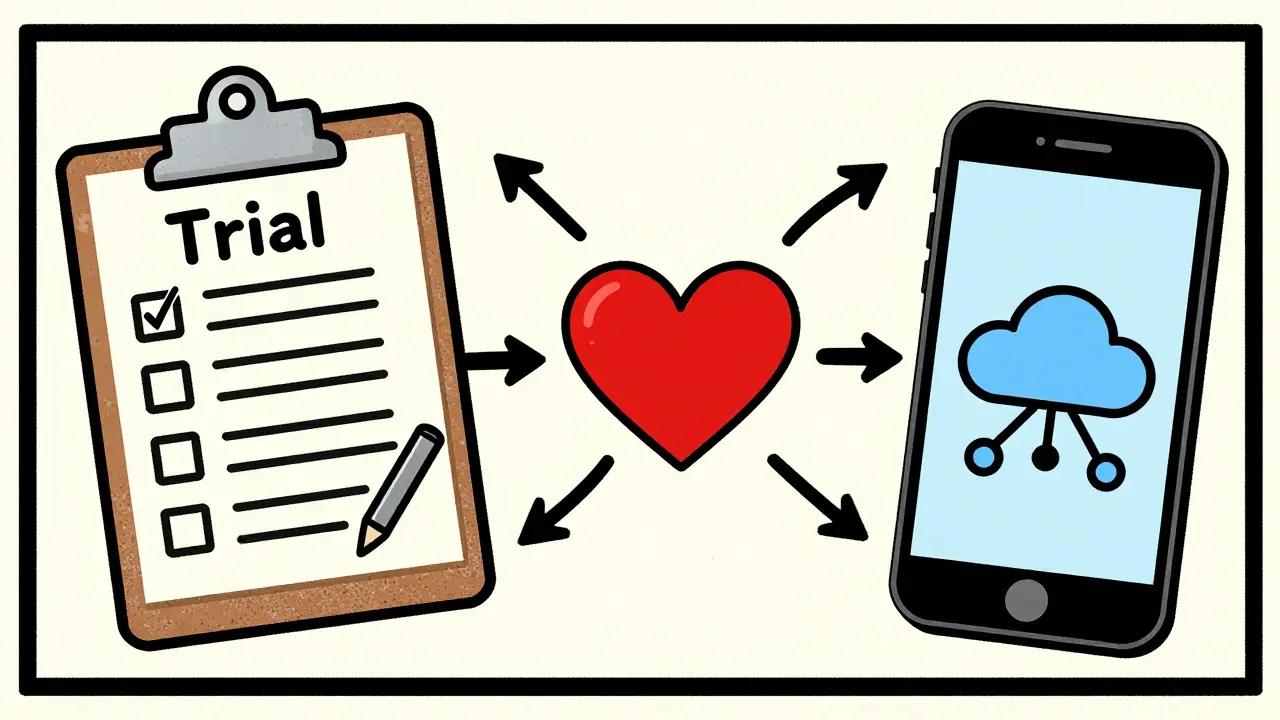
Real-world data comes from various sources including electronic health records (EHRs), insurance claims databases, patient registries, and increasingly, wearable devices and mobile health apps. These sources capture continuous, longitudinal data about patient health and treatment adherence.
Is real-world evidence reliable?
Real-world evidence can be reliable but requires sophisticated statistical methods to control for biases. Unlike randomized trials, RWE studies face challenges with data completeness and unmeasured confounding variables. Regulatory agencies now require strict data quality assessments to ensure reliability.
How does diversity in trials affect treatment outcomes?
Lack of diversity in clinical trials can lead to treatments that are less effective or have different side effect profiles for underrepresented groups. Real-world evidence helps identify these disparities by analyzing outcomes across broader demographic spectrums, including racial minorities and patients with complex health histories.
its wild how we trust these lab results so much when half the people in real life dont even fit the criteria for being tested on
i mean think about it they want perfect conditions but life is messy and chaotic and full of other meds and bad habits and stress
so yeah maybe the drug works in a vacuum but does it work for you while youre juggling three jobs and eating fast food because thats all you have time for
we need to stop pretending the trial data is the whole story its just one piece of the puzzle and probably not the most important one for most of us
I read this article and it really made me think about my own experience with medication. I was prescribed something new last year that looked great on paper but honestly I felt like nothing was changing. The doctor kept saying give it time but I knew deep down that maybe it just wasn't right for me because I have diabetes and high blood pressure too which probably messes with how my body processes things. It's crazy how they exclude people like me from trials because apparently we are too complicated or risky to study properly. So then what happens when we get the pill anyway? We become guinea pigs without realizing it. I hope more research goes into real world outcomes soon because right now it feels like we are flying blind with our health decisions based on idealized scenarios that don't match reality at all.
oh please!! :)))) another article trying to convince us that big pharma cares about 'real world' data?? lol no way!!! they only care about profit margins and keeping their stock prices up while we suffer from side effects that were hidden in those fancy controlled trials!!!! why do you think they exclude elderly people??? because they die faster and ruin the success rate statistics!!! it's all a conspiracy to keep us sick and dependent on their expensive drugs!!! don't believe the hype!!! :))))
sarcasm aside (mostly) this is actually a pretty decent summary of a super complex issue :P
but seriously, can we talk about how annoying it is that doctors still act like the FDA approval is the end of the conversation? like sure, it passed the hurdles, but did it pass the hurdle of 'working for a tired mom who also takes antidepressants'?
also, props to anyone here who has ever had to fight for their specific treatment plan because their chart didn't look like the textbook example. we are out here doing the real-world testing for free basically :)
This is such an empowering perspective! It makes me feel better knowing that my unique health situation isn't just a problem to be solved but a valuable data point in itself. I've always felt a bit left out by medical literature because I never quite fit the mold of the 'average' patient. Knowing that real-world evidence is gaining traction gives me hope that treatments will become more personalized and inclusive in the future. We should definitely encourage more diverse participation in studies!
hey guys i found this part really interesting about the cost difference. $19 million vs like 60% less for RWE studies. seems like if they used more real world data we could get cheaper drugs faster right? or am i missing something obvious here?
also does anyone know if insurance companies are using this data yet to deny claims? that would be ironic if they used 'real world' data to say your treatment doesn't work for you specifically lol
You are completely wrong about the cost implications. Real-world evidence is not a substitute for rigorous clinical trials. The reason trials are expensive is because they require strict protocols to ensure safety and efficacy. Cutting corners with observational data leads to bias and unreliable conclusions. Do not expect lower costs; expect lower quality science. Stop spreading misinformation.
typical american healthcare nonsense. why do we spend millions on fancy studies when we should just focus on basic care? the system is broken and designed to fail people like us. forget the data, fix the hospitals first.
Great points everyone! 👍 I think the key takeaway is that we need both types of data. Clinical trials tell us if a drug is safe and effective in general, while real-world evidence tells us how it works for specific groups of people. It's all about balance and context. Let's keep the conversation going! 🙌
This is incredibly informative!!! I love how it breaks down the differences between efficacy and effectiveness!!! It really helps clarify why my doctor sometimes recommends treatments that aren't the absolute newest ones on the market!!! Sometimes the older drugs have more real-world data behind them which makes them safer choices for complex patients like myself!!! Thanks for sharing this!!!