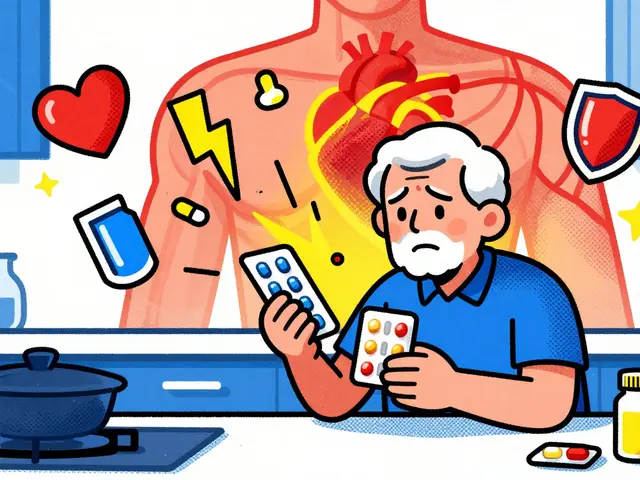
Imagine needing a life-saving drug for HIV or tuberculosis. In the United States, you might grab an unbranded pill from the pharmacy shelf without thinking twice. It’s cheap, it works, and it saves your wallet. Now imagine living in a low-income country where that same pill costs three days’ wages. You skip the dose. The disease progresses. This is not a hypothetical scenario; it is the daily reality for billions of people.
Generic medicines are pharmaceutical products containing the same active ingredients as branded drugs but sold without patent protection. They are supposed to be the great equalizer in global health. By definition, they should cost 80% less than their brand-name counterparts. Yet, despite this massive potential, generic drugs have failed to deliver equitable healthcare to the world’s poorest populations. Why does a solution that works so well in wealthy nations falter when it reaches low- and middle-income countries (LMICs)?
The Generic Paradox: High Potential, Low Penetration
You would expect generics to dominate the market in places where budgets are tight. After all, why pay more for a label? In the U.S., unbranded quality-assured generics represent 85% of the market by volume. People trust them because the regulatory system guarantees safety and efficacy. But look at LMICs. Unbranded generic medications account for only 5% of the pharmaceutical market by volume there. That is a staggering gap.
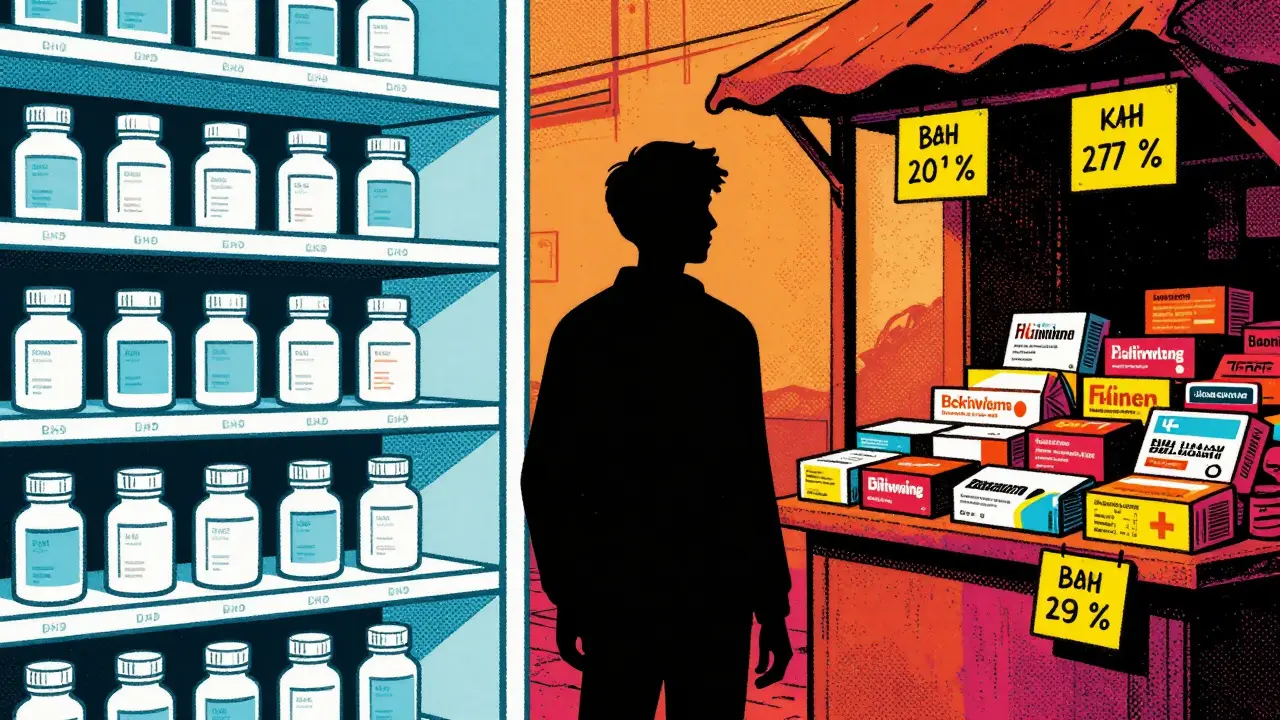
This disparity isn’t just about preference. It’s about structure. In many developing nations, the "generic" available on the shelf is often a locally branded version that still carries a markup. True unbranded generics-where the packaging is plain and the price reflects only the manufacturing cost-are rare. The World Health Organization (WHO) notes that while generics can reduce drug costs by up to 80%, this benefit rarely trickles down to the patient in resource-constrained settings. Instead, the savings get absorbed by fragmented supply chains, import tariffs, and private sector markups.
Consider the data from a study of 72 countries published in PMC. The median generic market share by volume ranges from 60% in the Western Pacific region to 82% in Southeast Asia. These numbers sound high, but they mask a critical detail: much of this volume consists of branded generics produced by local manufacturers who charge premium prices. The truly affordable, unbranded option remains a niche product, accessible only through specific public health programs rather than general commerce.
The Financial Trap of Out-of-Pocket Spending
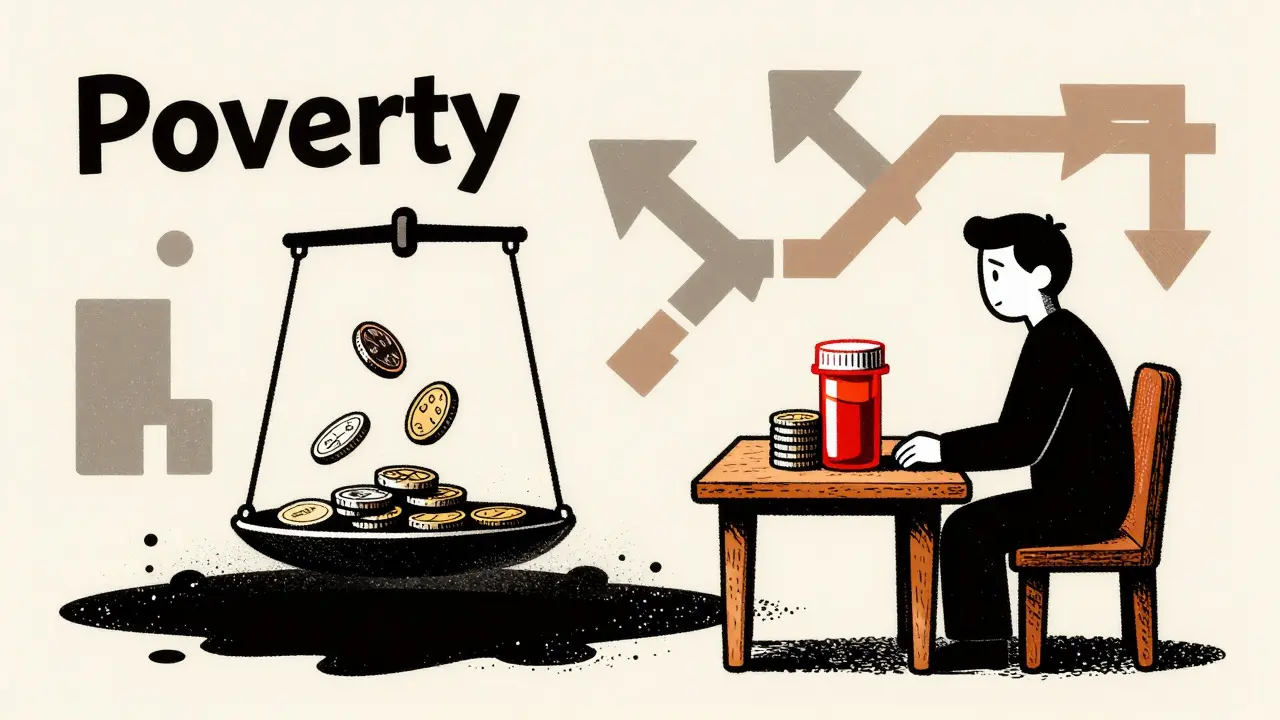
The biggest barrier to accessing generics isn’t always availability; it’s affordability. In nearly 90% of cases, people in developing nations purchase medication out-of-pocket. There is no insurance safety net. When you combine this with the fact that medicines account for 20% to 60% of total health expenditures in many LMICs, the result is financial catastrophe.
A survey by DrugPatentWatch found that healthcare costs push approximately 100 million people into extreme poverty annually. Let’s break that down. If a family earns $2 a day, and a course of antibiotics costs $6, they must choose between food and medicine. Even if a generic antibiotic costs $1, that is still half a day’s wage. For a chronic condition like diabetes or hypertension, requiring daily medication, the math becomes impossible. The generic is cheaper than the brand, but it is still too expensive for the poor.
This creates a vicious cycle. Patients delay treatment until symptoms become severe, leading to higher hospitalization costs later. Or they buy substandard counterfeits, which are rampant in regions with weak regulatory oversight. The WHO emphasizes that equitable access to safe and affordable medicines is vital for attaining the highest standard of health, yet the current economic model ensures that only the relatively wealthy in these countries can afford consistent care.
Supply Chain Gaps and Regional Disparities
Even when governments try to subsidize generics, the infrastructure often fails them. Medicine availability falls below the WHO target of 80% in both public and private sectors across most regions. A Lancet paper analyzed by MedAccess highlights stark regional differences. The European and Eastern Mediterranean regions saw significant increases in essential medicine availability since 2009, with public sector improvements of 27.8% and 12.1% respectively. In contrast, the Western Pacific Region experienced declines of 5.2% in the public sector and 7.8% in the private sector.
| Region | Change in Public Sector Availability | Change in Private Sector Availability |
|---|---|---|
| Europe | +27.8% | +3.7% |
| Eastern Mediterranean | +12.1% | +8.5% |
| Western Pacific | -5.2% | -7.8% |
| Africa | Stagnant/Declining | Stagnant/Declining |
Why do some regions improve while others decline? It comes down to infrastructure and political will. Countries with stronger tax bases and better logistics networks can maintain steady supplies of generics. Those relying heavily on donor funding face volatility. When a donor shifts focus from malaria to tuberculosis, the supply chain for antimalarial generics collapses overnight. Poor roads, lack of refrigeration, and corrupt customs officials further complicate price reduction efforts. As the Geneva Network Report recommends, governments need to abolish tariffs and eradicate trade barriers to reduce unnecessary medicine costs, but few have the political capital to implement such reforms effectively.
The Failure of Corporate Access Strategies
We often blame governments, but what about the companies making the drugs? The Access to Medicine Foundation’s 2024 analysis evaluated five major generic pharmaceutical companies: Cipla, Hikma, Sun Pharma, Teva, and Viatris. Together, they cover 90% of the 102 off-patent essential drugs identified as priority access targets in LMICs. Sounds promising, right?
Not quite. For the 10 essential drugs evaluated per company, these manufacturers had strategies in place to expand access to only 41 of them. More importantly, those strategies were "very limited in scope" and did not address affordability for the poorest patients. The report states clearly: "within these there was almost no evidence of strategies designed to boost affordability by taking ability-to-pay into account."
Compare this to inclusive business models adopted by innovator companies like Bristol Myers Squibb, Novartis, and Pfizer. While their outcomes were described as "somewhat mixed," they at least attempted to reach all 48 low-income countries. The issue is transparency. The 2024 Index found a "lack of transparent reporting on how many patients are truly being reached." Companies claim to support access, but without data showing exactly how many pills ended up in the hands of uninsured patients paying out-of-pocket, these claims remain marketing exercises rather than humanitarian achievements.
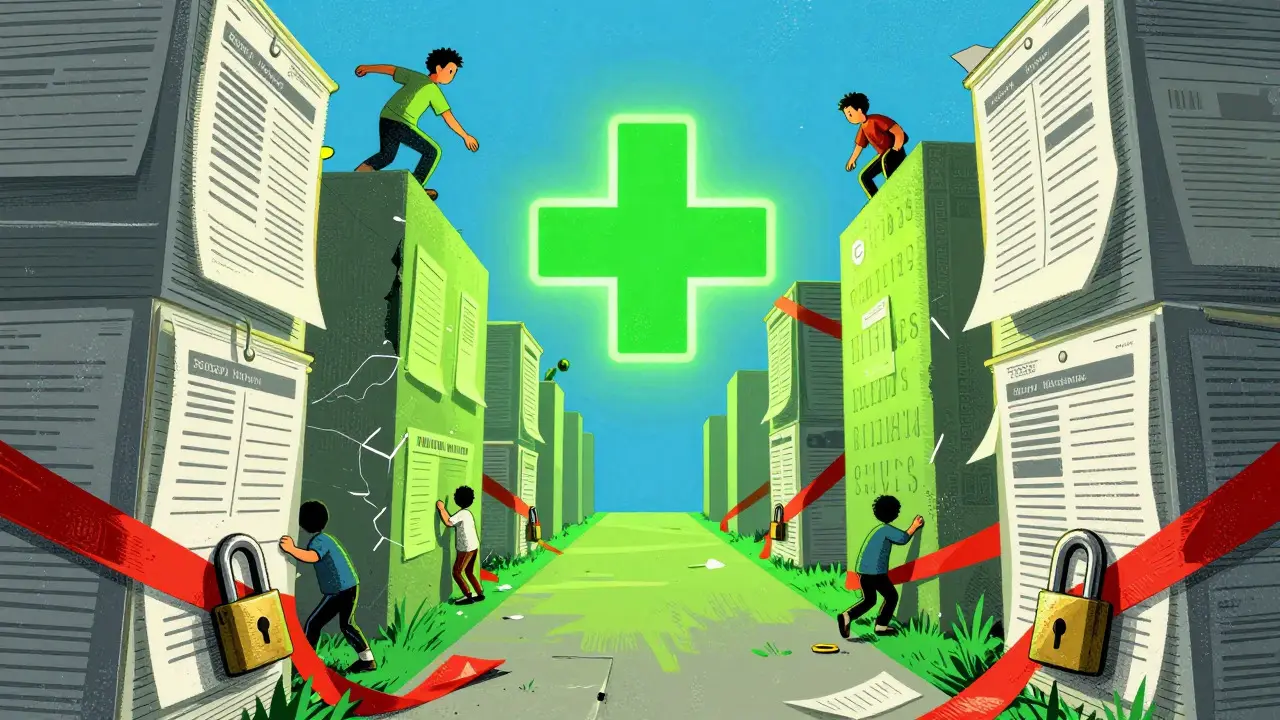
Regulatory Barriers and Patent Hurdles
Patents are designed to reward innovation, but in the context of global health, they often act as gatekeepers. The Hatch-Waxman Act of 1984 established the modern generic approval pathway in the U.S., allowing for rapid entry of generics once patents expired. However, the 1995 TRIPS Agreement introduced complexities for developing nations. While it allowed flexibility, recent trends show a pushback.
Dr. Jonathan D. Quick, former president of Management Sciences for Health, noted that "the demand for extra safeguards such as market and data exclusivity impedes low-income countries' ability to manufacture and produce generic pharmaceuticals." Some wealthy nations pressure LMICs to adopt stricter IP laws under the guise of trade agreements. This slows down the production of local generics, keeping prices artificially high.
Furthermore, regulatory harmonization is lacking. A drug approved in India may take months or years to get clearance in Nigeria due to bureaucratic red tape. Speeding up patent examination and simplifying drug approval processes, as recommended by the Geneva Network, could accelerate access significantly. Until then, regulators in low-income countries are left playing catch-up, unable to leverage the full power of global generic competition.
What Needs to Change?
Solving the generic access crisis requires more than just producing cheaper pills. It demands a systemic overhaul. First, governments must honor commitments like the Abuja Declaration, where African Union countries pledged to allocate at least 15% of annual budgets to health. As of 2022, only 23 of 54 African countries met this target. Without public investment, the burden stays on the individual.
Second, we need true unbranded generics. Policymakers should encourage procurement systems that buy plain-packaged drugs directly from manufacturers, cutting out the branding markup. Third, data-driven solutions are emerging. A survey found that 76% of healthcare organizations in emerging markets are investing in big data to address access challenges. Using AI to predict supply shortages and optimize distribution routes can prevent stockouts of essential generics.
Finally, clinical trials must move to where the patients are. Only 43% of clinical trials take place in LMICs. Examples like Gilead’s trials in Uganda for lenacapavir show promise, but this needs to scale. If drugs are tested in diverse genetic populations, the resulting generics will be safer and more effective for local communities.
Why are generic drugs not more widely used in low-income countries?
While generics are cheaper, unbranded versions make up only 5% of the market in LMICs compared to 85% in the U.S. This is due to reliance on branded generics with markups, weak supply chains, and high out-of-pocket costs that make even reduced prices unaffordable for the poorest citizens.
How do patents affect access to medicines in developing nations?
Patents delay the entry of generic competitors. Although the TRIPS Agreement allows flexibility, pressure for stricter intellectual property laws and data exclusivity periods prevents local manufacturers from producing affordable generics quickly, keeping prices high for longer.
What is the role of out-of-pocket spending in global health access?
Nearly 90% of people in developing nations pay for medicines out-of-pocket. This lack of insurance coverage leads to catastrophic financial consequences, pushing 100 million people into extreme poverty annually and forcing many to skip or delay essential treatments.
Are pharmaceutical companies doing enough to improve access?
According to the Access to Medicine Foundation's 2024 report, major generic manufacturers have limited strategies for expanding access to the poorest patients. While some innovator companies use inclusive business models, there is a lack of transparent reporting on actual patient reach and affordability measures.
What steps can governments take to lower medicine costs?
Governments can reduce taxes and abolish tariffs on essential medicines, streamline drug approval processes, and invest in public health infrastructure. The Geneva Network Report also suggests promoting open trade and modernizing reimbursement decisions to accelerate access.