For decades, cancer treatment meant cutting, burning, or poisoning tumors with chemotherapy and radiation. But in the last 15 years, something new has emerged-treatments that don’t attack cancer directly. Instead, they use the body’s own immune system to find and kill cancer cells. This is immunotherapy. Two of the most powerful tools in this space are checkpoint inhibitors and CAR-T cell therapy. They work in completely different ways, but both are changing survival rates for people with cancers that once had no real hope.
How Checkpoint Inhibitors Unleash the Immune System
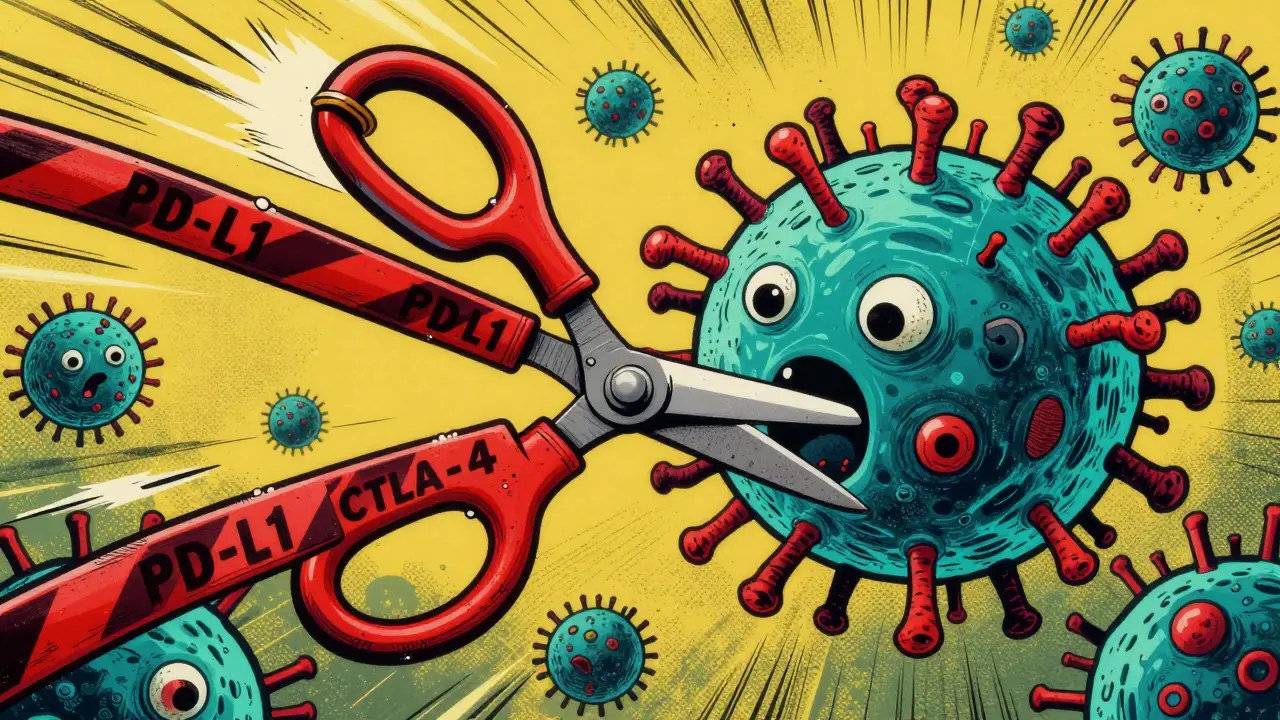
Your immune system has built-in brakes. These are called checkpoints. They stop your immune cells from attacking healthy tissue. Cancer cells are sneaky-they hijack these checkpoints to hide. They turn on signals like PD-L1 that tell T cells, the body’s soldiers, to stand down. That’s how tumors grow undetected. Checkpoint inhibitors are drugs that block those signals. Think of them as cutting the wires on a hidden bomb. Drugs like pembrolizumab (Keytruda) and nivolumab (Opdivo) block PD-1, a checkpoint on T cells. Ipilimumab (Yervoy) blocks CTLA-4, another brake. Once those brakes are released, T cells wake up and start hunting cancer cells. These drugs work best in cancers with lots of mutations-like melanoma, lung cancer, and kidney cancer-because more mutations mean more targets for the immune system to see. In some patients with advanced melanoma, checkpoint inhibitors have led to long-term remission. Some people have lived more than 10 years after starting treatment. That was unheard of 20 years ago. But they don’t work for everyone. Only about 20-40% of patients respond. Why? Because if the tumor has no immune cells inside it to begin with, releasing the brakes does nothing. That’s where CAR-T comes in.CAR-T Cell Therapy: Engineering Your Own Cancer Fighters
CAR-T therapy is like making a custom missile from your own blood. First, doctors take a sample of your T cells through a simple blood draw. These cells are sent to a lab, where they’re genetically modified to carry a special receptor called a chimeric antigen receptor, or CAR. This receptor is designed to lock onto a specific protein on cancer cells-like CD19 on B-cell leukemias or lymphomas. The modified T cells are grown in big tanks until there are hundreds of millions. Then they’re infused back into your body. Once inside, they hunt down cancer cells with laser focus. Unlike chemotherapy, which kills everything, CAR-T cells multiply in your body and keep fighting for months-even years. The results in certain blood cancers are stunning. In children with relapsed acute lymphoblastic leukemia (ALL), complete response rates hit 80-90% with tisagenlecleucel (Kymriah). For adults with aggressive lymphoma, axicabtagene ciloleucel (Yescarta) has helped nearly half of patients stay in remission for over two years. But CAR-T has limits. It’s mostly effective in blood cancers. For solid tumors-like lung, breast, or colon cancer-it’s struggled. Why? Solid tumors create a hostile environment. They block T cells from getting in, drain their energy, and flood the area with chemicals that shut them down.The Side Effects: What Patients Really Face
Both treatments come with serious risks. Checkpoint inhibitors can trigger autoimmune reactions. When the immune system is unleashed, it sometimes attacks healthy organs. Common issues include thyroid problems (hypothyroidism), skin rashes, diarrhea, and inflammation of the lungs (pneumonitis). These can be managed with steroids, but they require constant monitoring. CAR-T therapy has its own dangerous side effects. Cytokine release syndrome (CRS) happens when too many T cells activate at once, flooding the body with inflammatory chemicals. Symptoms include high fever, low blood pressure, and trouble breathing. About half of patients get CRS, and 1 in 5 get a related brain toxicity called ICANS-confusion, seizures, or trouble speaking. Both require ICU-level care. Fatigue, headaches, and fever are common with both. But CAR-T’s side effects hit harder and faster-often within days of infusion. That’s why only specialized centers can give it. You need teams trained in managing CRS and ICANS. The American Society for Transplantation and Cellular Therapy says a center needs to treat at least 10-15 patients before they’re truly proficient.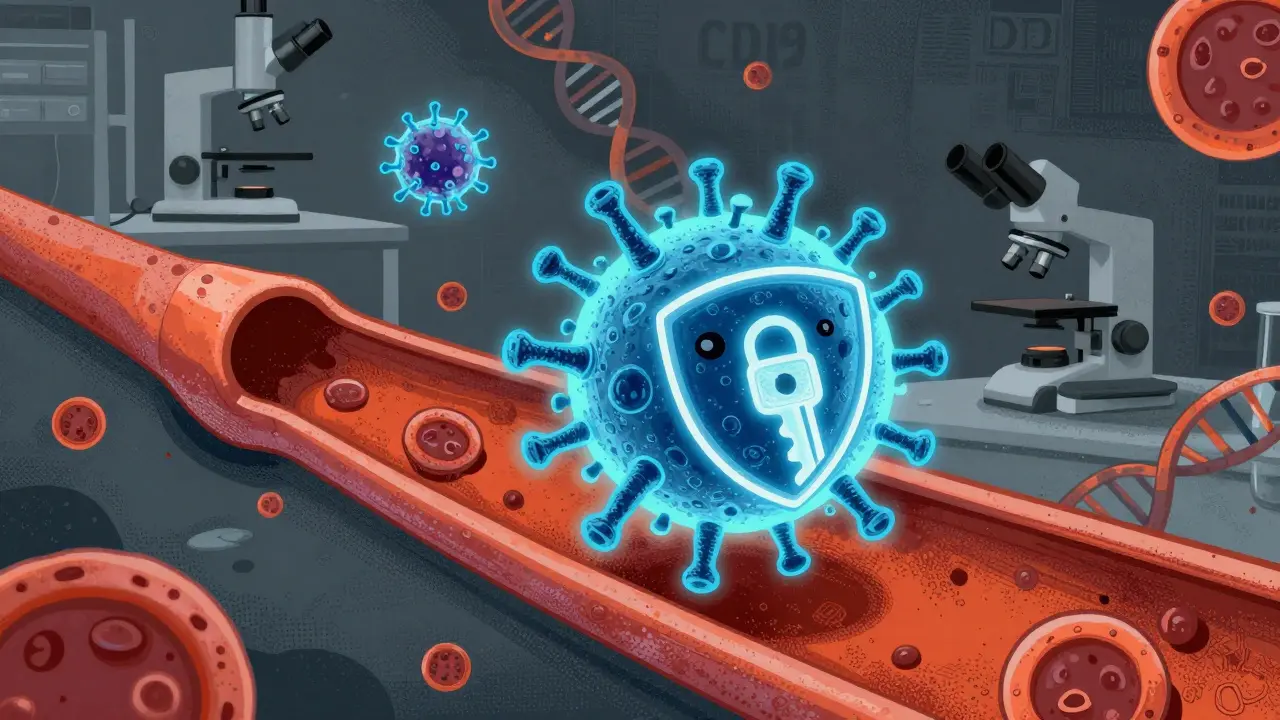
Why CAR-T Is So Expensive and Hard to Access
A single CAR-T treatment costs between $373,000 and $475,000. Why? It’s not a drug you can mass-produce. Each dose is made from one person’s blood. The process takes 3-5 weeks. During that time, the patient’s cancer can keep growing. Many patients can’t wait that long. There’s also a big access gap. In the U.S., 87% of CAR-T treatments are given at academic medical centers-even though those make up only 15% of cancer clinics. Medicaid patients are 23% less likely to get CAR-T than those with private insurance. Black patients are 31% less likely than white patients. The same disparities show up with checkpoint inhibitors, but they’re less extreme because ICIs are off-the-shelf. You can get them in a community hospital. CAR-T requires a specialized lab, trained staff, and ICU backup.The Future: Combining the Two
The most exciting development isn’t one therapy alone-it’s putting them together. Researchers are now engineering CAR-T cells that don’t just attack cancer, but also release checkpoint-blocking proteins right at the tumor site. This is called armored CAR-T. In mouse studies, these cells reduced lung inflammation by 42% compared to giving CAR-T and a checkpoint inhibitor separately. They also worked better against solid tumors. Why? Because when you give checkpoint inhibitors by IV, only 15-20% of the drug reaches the tumor. The rest circulates through your body, causing side effects. But if the CAR-T cell makes its own blocker right where the cancer is, you get the power of both with less toxicity. As of early 2024, there were 47 active clinical trials testing CAR-T plus checkpoint inhibitors. Two-thirds of them focus on solid tumors-lung, ovarian, pancreatic cancer. Early results are promising. One trial in triple-negative breast cancer showed a 2.3-fold increase in immune cells inside tumors when CAR-T was paired with a drug that blocks PTP1B, another immune brake. The goal isn’t just to make these treatments work better. It’s to make them work for more people. Scientists are working on "off-the-shelf" CAR-T cells made from healthy donors. That could cut wait times from weeks to days and lower costs. Other teams are designing CAR-T cells that target multiple cancer proteins at once, to avoid escape.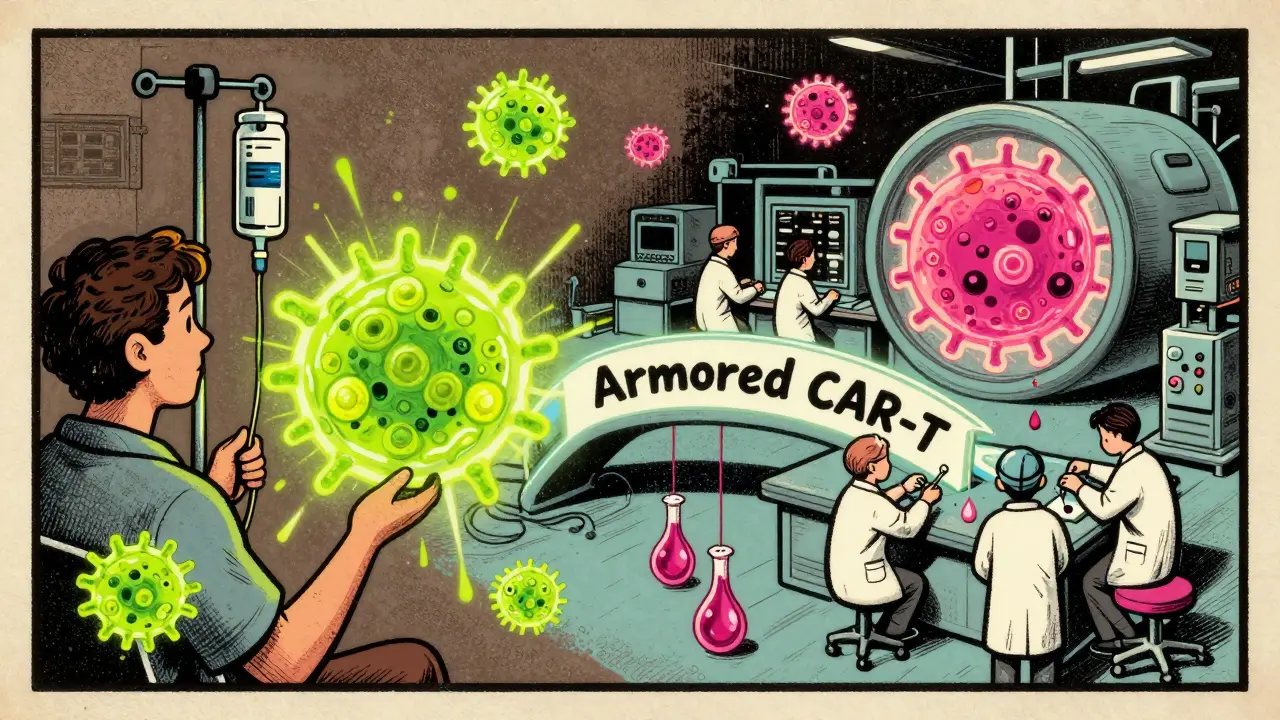


Okay, I just spent an hour reading this and I’m still buzzing. I had no idea our immune system had built-in brakes like a car! The way they described checkpoint inhibitors as ‘cutting wires on a hidden bomb’? Chef’s kiss. I’ve got a cousin in the UK who’s been on Keytruda for melanoma since 2020-she’s hiking mountains now. It’s wild to think science went from ‘poison the tumor’ to ‘wake up your body’s ninjas.’
And CAR-T? I mean, they’re literally turning your blood into a guided missile. I keep imagining little T-cells with tiny jetpacks flying around. It’s sci-fi made real. The fact that they multiply and stick around for years? That’s not treatment-that’s a lifelong upgrade.
But wow, the side effects. I read about CRS and ICANS and just… paused. Like, imagine celebrating a remission and then waking up confused, unable to speak. That’s a whole other kind of battle. Hats off to the nurses and ICUs holding it all together.
And the cost? $475k? That’s a house. Or a small island. Or a decade of therapy. I’m glad off-the-shelf CAR-T is coming, but until then, the disparities in access are criminal. My neighbor’s kid got it because her dad worked at a hospital. My friend’s mom didn’t even get the referral. That’s not medicine. That’s a lottery.
Also, armored CAR-T? That’s the future. Making the T-cells produce their own checkpoint blockers right where the tumor is? Genius. Less systemic chaos, more precision. It’s like giving your immune system a sniper rifle instead of a shotgun.
I’m not a scientist, but I’ve watched enough YouTube videos to know this is the most beautiful thing happening in medicine right now. Even if it’s not perfect, it’s hope with a pulse.
Really cool breakdown. I’m from India and we don’t have access to most of this stuff here. My uncle had lymphoma last year-doctors said chemo was the only option. CAR-T? Not even a dream here. Even checkpoint inhibitors are out of reach for most. It’s frustrating seeing how advanced this is in the US and UK while here, we’re still fighting for basic chemo availability.
But I’m glad someone’s writing about it. Maybe one day this will trickle down. Until then, I’ll just share this post with every med student I know. Knowledge is the first step, right?
So let me get this straight-we’re genetically modifying human cells to fight cancer… but the same people who made this tech also invented TikTok and crypto scams? Something’s off. Who’s really behind this? Big Pharma? The Pentagon? Are these T-cells secretly transmitting data back to some lab in Switzerland?
And why is it only working on blood cancers? Coincidence? Or are they just testing on easier targets so they can keep charging $500k per dose? I’ve seen documentaries. They don’t want a cure. They want a subscription.
Also, ‘armored CAR-T’? Sounds like a Marvel villain’s lab. I’m not buying it. Next they’ll say the tumors are just ‘too hostile’ because they’re angry at capitalism.
Interesting read. I work in oncology logistics in Australia-we don’t get CAR-T as often as the US, but we’re getting closer. The real bottleneck isn’t the science. It’s the people. Trained staff? ICU beds? Transport for fragile patients? We’ve got the tech, but not the infrastructure to roll it out evenly.
Also, the emotional toll on families waiting 5 weeks for cells to be made… that’s a silent crisis. I’ve seen patients decline while their T-cells are growing in a lab. That’s brutal.
I’ve been following immunotherapy since my mom was diagnosed with stage IV lung cancer in 2018. She’s been on a checkpoint inhibitor since then-still going strong. But I’ll tell you what no one talks about: the emotional whiplash.
One month you’re celebrating a tumor shrinking, the next you’re in the ER because your thyroid crashed. You’re told ‘this is normal’ but no one prepares you for how it feels to be both healed and broken at the same time.
And the cost? We had to sell our car. Insurance covered 80%, but the co-pays, travel, specialist visits-it added up. We’re not rich. We’re just stubborn.
But I’ll say this: if you’re reading this and you’re scared to ask your doctor about immunotherapy? Ask. Even if it’s not for you now, it might be next year. Science isn’t static. Neither should our hope be.
PD-L1 expression thresholds, TMB, HLA haplotype compatibility-these are the real gatekeepers. Most patients don’t even get tested for biomarkers before being offered ICI. And CAR-T? The manufacturing success rate is only ~70%. That means 3 in 10 patients get their cells back and it’s a dud. No one tells you that upfront.
Also, ‘off-the-shelf’ CAR-T is a mirage. Allogeneic cells still trigger GvHD. We’re 5-7 years away from viable universal CAR-T. Until then, it’s a luxury product for the privileged. The disparities aren’t accidental-they’re baked into the business model.
Let’s be real-this isn’t medicine. It’s a billionaire’s fantasy. You think they care about patients? No. They care about patent expiration dates. CAR-T costs half a million because they’re billing it as a ‘one-time cure’ so they can charge like it’s a lifetime subscription. Meanwhile, the real cure-prevention, nutrition, environmental regulation-is ignored because it doesn’t have a patent.
And don’t get me started on ‘armored’ CAR-T. Sounds like a lab experiment that got too much funding. Next thing you know, we’ll be injecting AI-powered immune cells that tweet at your tumors.
Meanwhile, people in rural areas still can’t get a mammogram. This isn’t progress. It’s performance.
For anyone reading this and thinking ‘I’m not eligible’-you’re probably wrong. I’m a nurse in a community hospital in Ohio. We’ve sent 17 patients for CAR-T evaluations in the last year. Half were told ‘no’ by their oncologist. But when they got a second opinion at a major center? Four got approved. Four.
Doctors get overwhelmed. They don’t have time to keep up with every trial. If you have advanced cancer and haven’t been offered immunotherapy, ASK. Say: ‘Is there a biomarker test I haven’t had? Is there a trial I qualify for?’
And if your doctor says ‘no’-get another one. You are not a statistic. You’re a person with options, even if they’re hard to find.
Also, check out the NCI’s clinical trial finder. It’s free. Use it. Don’t wait for someone to hand you a roadmap. Build your own.
I’ve seen patients who were told ‘6 months’ live for 7 years with these treatments. It’s not magic. It’s persistence. And you deserve that chance.
While the data presented is statistically significant in controlled trials, the real-world effectiveness is dramatically overstated. The median overall survival benefit for checkpoint inhibitors in non-small cell lung cancer is a mere 2.8 months in intent-to-treat populations. CAR-T response rates are inflated by selection bias-only patients with low tumor burden and good performance status are enrolled. The 80-90% response rate in pediatric ALL? That’s a highly curated cohort. Real-world data shows closer to 50%.
Furthermore, the cost-benefit analysis is indefensible. At $475,000 per treatment with a 15% 5-year survival gain in lymphoma, the cost per QALY exceeds $1.2 million-far beyond any accepted threshold. This is not innovation; it’s financial engineering disguised as medical progress.
And the ‘armored CAR-T’ hype? Preclinical mouse models are not human outcomes. The inflammatory cascade in solid tumors is orders of magnitude more complex. The assumption that localized checkpoint blockade will overcome the immunosuppressive microenvironment is naive.
Let’s not confuse novelty with efficacy. We are creating a system that enriches pharmaceutical companies while burdening healthcare systems and giving false hope to the terminally ill. This is not a triumph. It is a cautionary tale.