NSAID GI Bleeding Risk Assessment Tool
How This Tool Works
This tool assesses your risk of gastrointestinal bleeding from NSAID use based on the American College of Gastroenterology's risk scoring system. It takes into account factors like age, medical history, and other medications. If you score 2 or higher, you're considered high risk and should discuss protective measures with your doctor.
Every year, millions of people reach for ibuprofen, naproxen, or diclofenac to ease a headache, back pain, or arthritic flare-up. These drugs - non-steroidal anti-inflammatory drugs, or NSAIDs - work fast and feel like a miracle. But behind the relief lies a quiet danger: gastrointestinal bleeding. For many, it doesn’t come with warning signs. No stomach pain. No vomiting. Just fatigue, pale skin, or a slow drop in hemoglobin that only shows up on a blood test. And by then, it’s too late.
How NSAIDs Cause Bleeding - Even Without an Ulcer
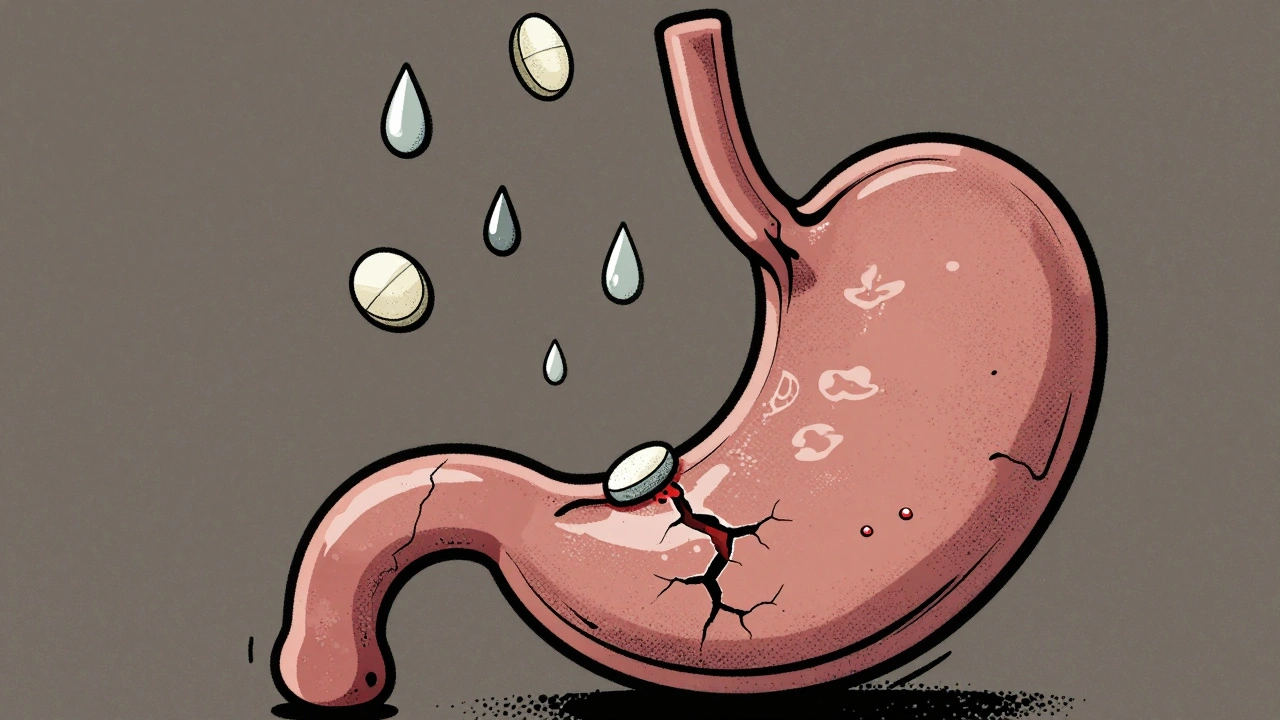
NSAIDs don’t just block pain. They block enzymes called COX-1 and COX-2. COX-2 is involved in inflammation, so stopping it helps with swelling and pain. But COX-1? That’s the enzyme that keeps your stomach lining protected. It helps produce mucus and bicarbonate - the natural shield against stomach acid. When NSAIDs shut down COX-1, that shield starts to break down.
It’s not always a deep ulcer you see on an endoscopy. Sometimes, it’s just tiny erosions - surface wounds in the stomach or duodenum. These can bleed slowly, day after day, until you’re anemic. A 2021 review in Clinics in Medicine found that 86% of people with lower GI bleeding had taken NSAIDs, even though they didn’t have a classic peptic ulcer. That means bleeding isn’t just about stomach ulcers. It can come from anywhere along the gut - even the small intestine.
The damage doesn’t wait. Studies show NSAID users have a 3.2 to 4.2 times higher risk of upper GI bleeding compared to non-users. And it’s not just prescription pills. Over-the-counter NSAIDs are just as dangerous. In fact, 26% of people take them at doses higher than recommended - and most never tell their doctor.
Not All NSAIDs Are the Same
If you’re taking NSAIDs regularly, the type matters. Non-selective NSAIDs like naproxen, ibuprofen, and diclofenac hit both COX-1 and COX-2. That means more stomach damage. Selective COX-2 inhibitors - like celecoxib - spare COX-1, so they’re gentler on the gut. A 2000 Lancet study showed celecoxib had half the rate of serious ulcers compared to ibuprofen.
But here’s the trade-off: COX-2 inhibitors raise your risk of heart attack and stroke. The 2004 APPROVe trial found rofecoxib (Vioxx) nearly doubled heart attack risk. That’s why it was pulled from the market. Celecoxib is still available, but it carries a black box warning from the FDA for cardiovascular danger.
So if you have heart disease, a COX-2 inhibitor might be worse than a traditional NSAID. If you have a history of ulcers, the opposite is true. There’s no one-size-fits-all answer.
Who’s at Highest Risk?
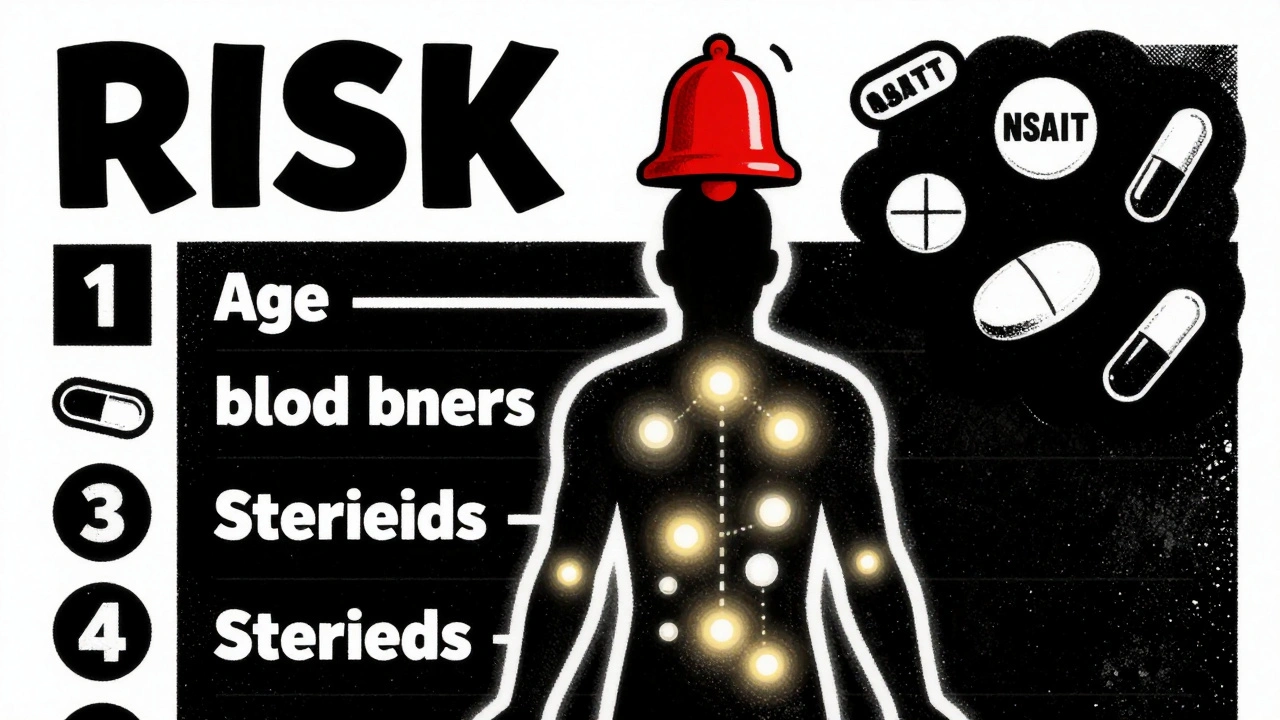
Not everyone who takes NSAIDs bleeds. But some people are walking into danger without knowing it. Experts have identified clear risk factors:
- Age over 65 - risk doubles every decade
- Previous peptic ulcer or GI bleeding - 2.5 times higher risk
- Taking blood thinners like warfarin or aspirin - 2.3 times higher risk
- Using corticosteroids (like prednisone) - 1.8 times higher risk
- Taking more than one NSAID at once - 1.9 times higher risk
- Daily doses over 1,200 mg of ibuprofen
- Chronic conditions like kidney disease or heart failure
One person might take naproxen for arthritis, have no history of ulcers, and never bleed. Another - say, a 72-year-old on low-dose aspirin and prednisone - might bleed after just a week. That’s why risk assessment isn’t optional. It’s life-saving.
The American College of Gastroenterology uses a simple scoring tool: 2 points for age over 70, 2 for past ulcer, 2 for blood thinners, 1 for steroids. Score 2 or higher? You’re high risk. No exceptions.
How to Protect Your Stomach - Proven Strategies
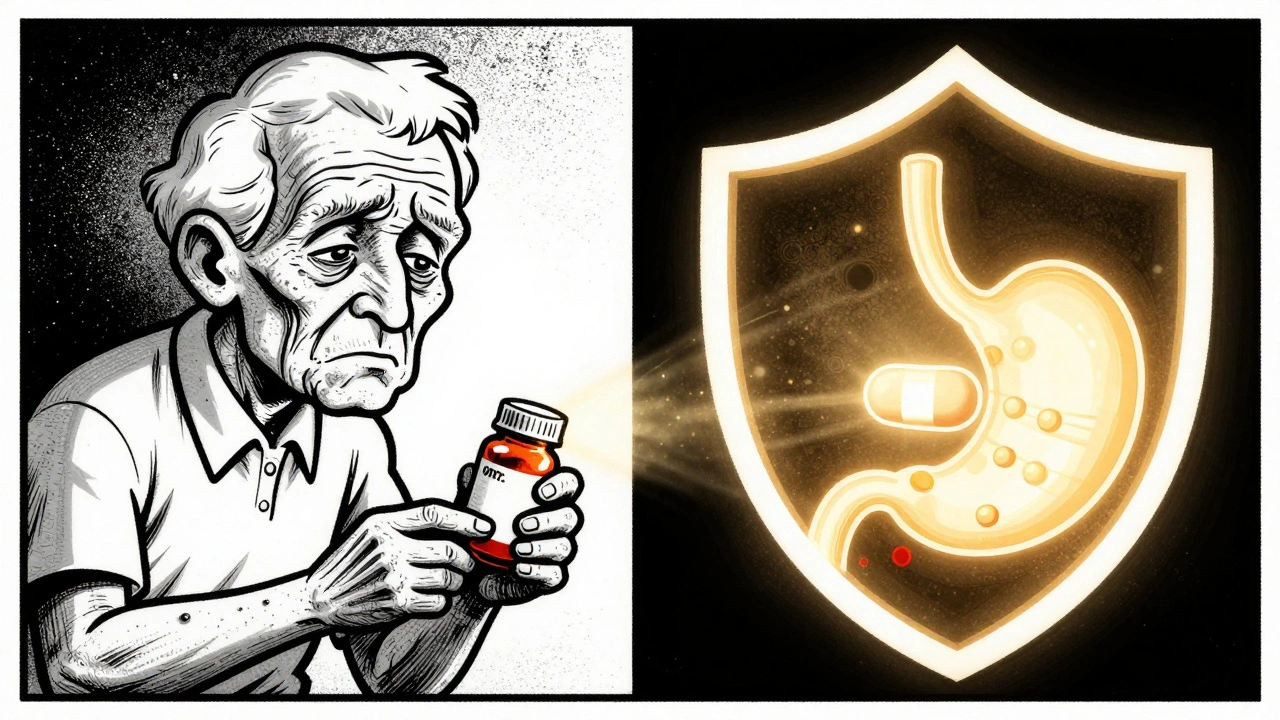
If you’re high risk and need NSAIDs, you don’t have to go without pain relief. You just need protection.
The gold standard? Proton pump inhibitors (PPIs). Omeprazole, esomeprazole, pantoprazole - these drugs shut down stomach acid production. A 2017 Cochrane review of over 13,000 patients found PPIs cut NSAID-related ulcers by 75%. That’s not a guess. That’s science.
Another option is misoprostol. It rebuilds the stomach’s natural mucus layer. But it’s tough on the body: 1 in 5 people get diarrhea. 1 in 6 get cramps. Most stop taking it.
Then there’s Vimovo - a single pill that combines naproxen with esomeprazole. The 2022 PRECISION-2 trial showed it slashed ulcer complications from 25.6% down to 7.3%. It’s not cheap, but for high-risk patients, it’s a game-changer.
And here’s the truth: starting a PPI before you even take your first NSAID pill reduces ulcers by 74%. Waiting until you feel pain? Too late.
Real Stories Behind the Numbers
Behind every statistic is a person.
On Reddit, a caregiver named u/ElderCareHelper shared how their 78-year-old mother ended up in the ER with severe anemia. She’d been taking ibuprofen daily for knee pain. No stomach pain. No warning. Just weakness. She needed three units of blood. The doctor found multiple small bowel ulcers - all from NSAIDs.
Another story came from the Arthritis Foundation’s 2022 survey: 42% of people quit NSAIDs because of gut problems. They didn’t want to risk bleeding. They switched to physical therapy, heat packs, or acetaminophen.
But not everyone has alternatives. Some have severe arthritis. Some have no insurance for expensive biologics. For them, NSAIDs are the only thing that lets them get out of bed. That’s why protection isn’t optional - it’s part of the treatment plan.
What You Should Do Right Now
If you’re taking NSAIDs - even just once a week - ask yourself these questions:
- Are you over 65?
- Have you ever had an ulcer or GI bleed?
- Are you on aspirin, warfarin, or steroids?
- Are you taking more than one painkiller?
- Do you ever feel bloated, nauseous, or unusually tired?
If you answered yes to two or more - talk to your doctor today. Don’t wait for symptoms. Don’t assume it’s just ‘indigestion.’
Ask: ‘Should I be on a PPI?’ If your doctor says no, ask why. If they don’t know, ask for a referral to a gastroenterologist.
And if you’re buying NSAIDs over the counter? Read the label. Check the dose. Don’t take more than recommended. And never mix different NSAIDs. That’s like pouring gasoline on a fire.
The Bigger Picture
NSAIDs cause 107,000 hospitalizations and 16,500 deaths every year in the U.S. alone. The cost? Over $2 billion. And yet, they’re still the most common pain reliever in the world.
Why? Because they work. They’re cheap. And for many, there’s no better option. The goal isn’t to scare people away from NSAIDs. It’s to make sure they use them safely.
Future drugs are coming - like CINODs, which release nitric oxide to protect the gut while reducing pain. But they’re still years away. Right now, the tools we have are simple: know your risk, use the lowest dose for the shortest time, and always pair NSAIDs with protection if you’re high risk.
There’s no shame in needing pain relief. But there’s real danger in ignoring the cost.
Can I take ibuprofen if I’ve had a stomach ulcer before?
No - not without protection. If you’ve had a peptic ulcer or GI bleed, taking NSAIDs like ibuprofen without a proton pump inhibitor (PPI) increases your risk of another bleed by up to 5 times. The American College of Gastroenterology recommends COX-2 inhibitors (like celecoxib) with a PPI for people with a history of ulcer bleeding. Never restart NSAIDs after a bleed without talking to your doctor.
Are over-the-counter NSAIDs safer than prescription ones?
No. The risk of gastrointestinal bleeding is the same whether you buy ibuprofen at the pharmacy or get a prescription for naproxen. The dose and duration matter more than whether it’s OTC or prescription. Many people take OTC NSAIDs daily for months - often at double the recommended dose - without realizing they’re putting themselves at risk.
What are the signs of NSAID-induced bleeding?
It can be silent. Overt signs include black, tarry stools (melena), vomiting blood, or sudden dizziness. But many people have occult bleeding - slow, hidden blood loss that leads to iron deficiency anemia. Symptoms include fatigue, shortness of breath, pale skin, or unexplained weakness. If you’re on NSAIDs and feel unusually tired, get a blood test. Don’t assume it’s just aging or stress.
Can I take acetaminophen instead of NSAIDs?
Yes - and it’s often the safer choice if you’re at risk for GI bleeding. Acetaminophen (Tylenol) doesn’t affect COX-1 or the stomach lining. It won’t reduce inflammation like NSAIDs, but it’s very effective for pain and fever. For many people with arthritis or chronic pain, acetaminophen plus physical therapy, heat, or topical treatments is enough. Always check your liver health first - high doses can damage the liver.
How long should I take a PPI with NSAIDs?
If you’re high risk and need NSAIDs long-term, stay on a PPI as long as you’re taking them. For short-term use (a few days), you may not need it. But if you’re taking NSAIDs weekly or daily for arthritis, back pain, or other chronic conditions, PPI protection should be ongoing. Stopping the PPI while continuing NSAIDs brings the risk right back. Always discuss duration with your doctor - don’t stop or start on your own.
Do COX-2 inhibitors completely eliminate GI risk?
No. While COX-2 inhibitors like celecoxib cut GI bleeding risk by about half compared to traditional NSAIDs, they don’t remove it. Studies still show a 1-2% annual risk of ulcers or bleeding, even with COX-2 drugs. For people with multiple risk factors - like age, prior bleeding, or blood thinners - adding a PPI still cuts risk further. COX-2 inhibitors are safer, but not safe.
What’s Next?
If you’re on NSAIDs and haven’t talked to your doctor about GI risk, make that appointment. Bring a list of every pill you take - including aspirin, supplements, and OTC painkillers. Ask about your risk score. Ask if you need a PPI. Ask if there’s a safer alternative.
And if you’re a caregiver for an older adult? Watch for fatigue, pale skin, or unexplained weakness. Don’t write it off as ‘just getting older.’ It could be bleeding - and it could be preventable.
NSAIDs are powerful tools. But like any tool, they need respect. Use them wisely. Protect your gut. And never ignore the quiet signs - because sometimes, the loudest danger is the one you can’t feel.
so like... we're just supposed to live in fear of ibuprofen now? 🤔 next they'll tell us breathing is risky if you're over 40. i mean, sure, i'll take my naproxen with a ppi like a good little patient... but can we at least admit this is just pharma's way of selling us more pills? i'm not dying from a headache, i'm just trying to get through my day without screaming.
The data presented here is both compelling and clinically significant. NSAID-related gastrointestinal hemorrhage remains one of the most preventable causes of hospitalization in aging populations. The emphasis on risk stratification and prophylactic PPI use aligns with current guidelines from the American College of Gastroenterology. It is imperative that primary care providers routinely assess these risks before prescribing or recommending over-the-counter agents.
bro i took 4 ibuprofen yesterday for my back and now i’m just… here. 🤢 i’m not even mad. just vibin’ with my internal bleeding. 😔💊 #pplife #painsworthit
There is a critical gap in public awareness about NSAID risks. Many people assume 'over-the-counter' means 'safe for daily use.' The fact that 26% exceed recommended doses without medical consultation is alarming. For patients over 65, on anticoagulants, or with prior GI events, even occasional use can be dangerous. PPIs are not a 'band-aid'-they're evidence-based prevention. If your doctor doesn't discuss this, ask for a referral to a gastroenterologist. Your stomach will thank you.
ok but what if i just dont believe in ppi’s? like… why should i take more chemicals to fix chemicals? maybe my body just needs to heal itself? i mean, people used to live to 80 without proton pump inhibitors. also, i read on a blog that stomach acid is good for your immune system so shutting it down is basically surrendering to big pharma. 🤷♀️ also i think celecoxib is just a marketing scam. i’ve been taking naproxen for 12 years and i’m fine. maybe the study authors just hate fun.
Thank you for sharing this. I’ve been taking naproxen for my arthritis for years and never thought twice about it until my mom had a bleed last year. Now I’m on omeprazole and honestly? I feel better. Less bloating, more energy. It’s not glamorous, but it’s working. If you’re on NSAIDs, please just talk to your doctor. You don’t have to suffer silently. There’s a way to manage pain without risking your life. You’re worth protecting.
Wow. Another fear-mongering article from the medical-industrial complex. 16,500 deaths? That’s 0.005% of the population. Meanwhile, opioid overdoses kill 70,000 a year and nobody’s banning oxycodone. Why is this headline news? Because it’s cheaper to sell you a PPI than to fix the healthcare system. Also, I’ve been taking ibuprofen daily since 2010. I’m 52. My blood work is perfect. You’re all just scared of pain. 🤡
So let me get this straight. You’re telling me that if I take a pill to stop my pain, I need another pill to stop the first pill from killing me? And if I don’t, I’m just a reckless idiot? Wow. What a way to live. No wonder people stop trusting doctors. You make medicine feel like a trap. I’m done. I’ll just lie on the couch and suffer quietly. At least then I’m not paying for three prescriptions just to sit up.