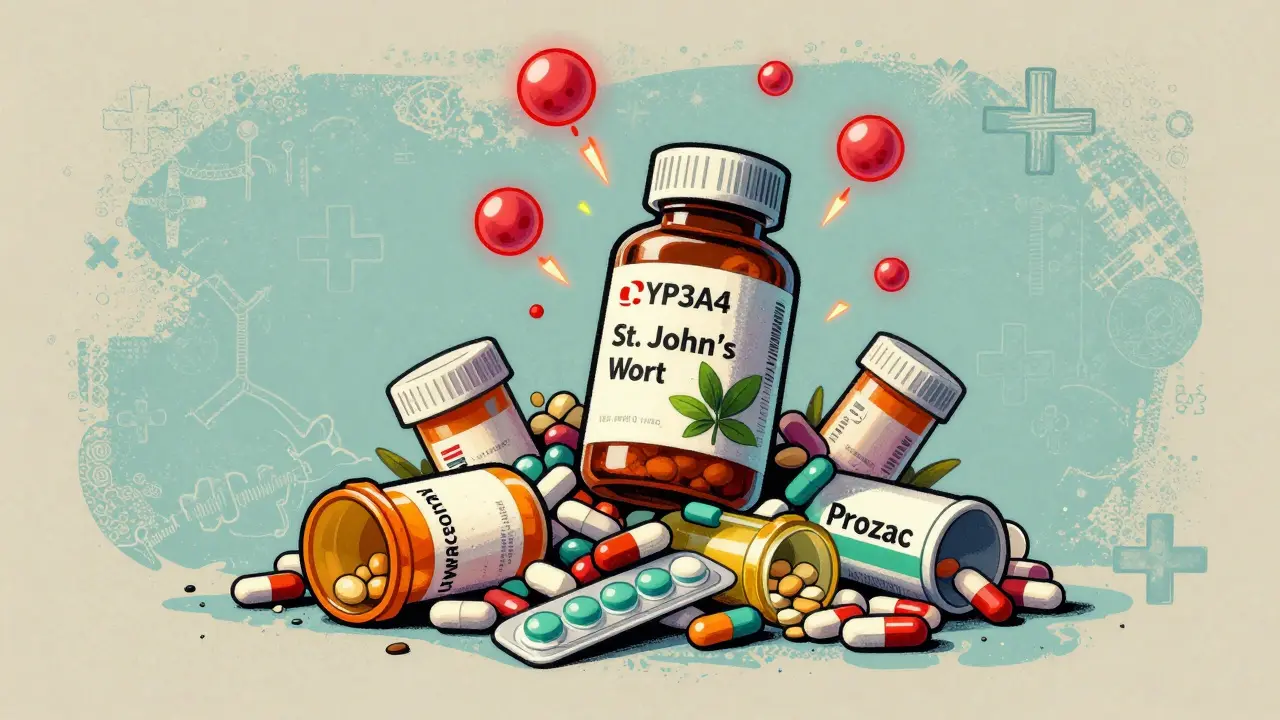
St. John’s Wort might seem like a safe, natural way to manage mild depression-but if you’re taking any prescription meds, it could be hiding a serious risk. You might not realize it until it’s too late. People have ended up in the hospital because their transplant drugs stopped working. Others got pregnant despite being on birth control. Some even had seizures because their epilepsy meds lost their punch. This isn’t rare. It’s well-documented. And it’s happening right now to people who thought herbal meant harmless.
How St. John’s Wort Changes How Your Body Handles Medications
St. John’s Wort doesn’t just sit there. It actively rewires how your body processes drugs. The key player is hyperforin, a compound in the plant that turns on a switch in your liver called the pregnane-X-receptor. This switch tells your body to make more of certain enzymes-mainly CYP3A4, CYP2C9, and CYP1A2-and a transport protein called P-glycoprotein. These enzymes are like garbage disposals for drugs. When they’re turned up, your body flushes out medications faster than it should.
Think of it like this: if you’re on a blood thinner like warfarin, your doctor carefully adjusts your dose so your blood clots just right. But if you start taking St. John’s Wort, your body starts breaking down warfarin too quickly. Your INR drops. Your blood thins less. Suddenly, you’re at risk for a clot. One case from 2000 showed a patient’s INR falling from 2.5 to 1.4 in just 10 days after starting the herb. That’s not a fluke. That’s the mechanism.
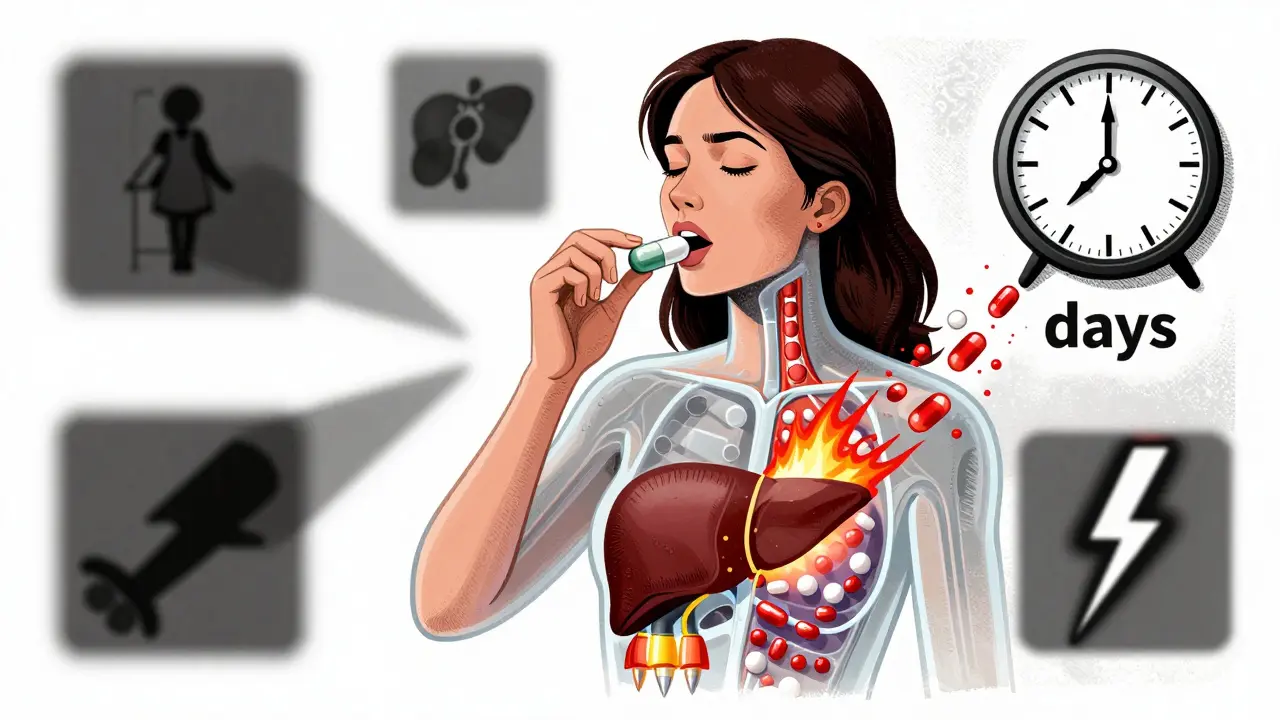
And it doesn’t stop there. The same enzymes that handle warfarin also break down antidepressants, birth control pills, heart meds, HIV drugs, and even painkillers like oxycodone and tramadol. The effect isn’t instant. It takes about 10 days for your body to ramp up enzyme production. That’s why people don’t notice right away. They feel fine. Then, weeks later, their depression comes back. Or their transplant starts failing. Or they get pregnant.
The Medications That Can Fail Because of St. John’s Wort
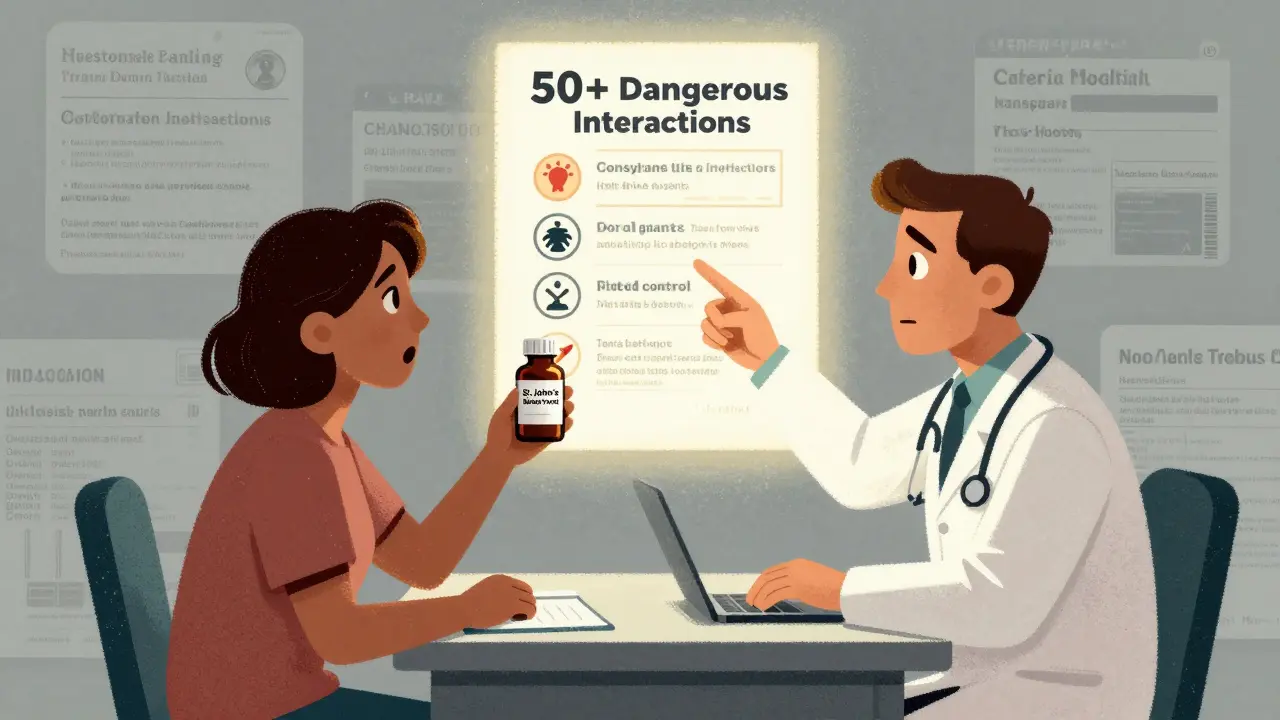
There are over 50 documented drug interactions with St. John’s Wort. But a few are life-threatening. Here’s what you absolutely need to avoid mixing it with:
- Immunosuppressants like cyclosporine, tacrolimus, and sirolimus-used after organ transplants. If these drop in your blood, your body attacks the new organ. There are documented cases of kidney and heart transplant rejection directly tied to St. John’s Wort.
- Oral contraceptives. The herb can make birth control pills, patches, and rings useless. There are reports of women getting pregnant despite perfect pill use-because they started taking St. John’s Wort for mood swings.
- Antidepressants like SSRIs (Prozac, Zoloft) and SNRIs (Effexor). Mixing them with St. John’s Wort can trigger serotonin syndrome-a dangerous spike in serotonin that causes agitation, rapid heart rate, high fever, and even seizures. The Mayo Clinic calls this a serious risk.
- HIV medications like protease inhibitors (ritonavir, indinavir). These keep the virus in check. St. John’s Wort can slash their levels by up to 60%, leading to drug resistance and disease progression.
- Anticoagulants like warfarin and rivaroxaban. As mentioned, these lose their effect, raising the risk of stroke or clotting.
- Chemotherapy drugs like irinotecan and imatinib. Reduced drug levels mean cancer treatment fails.
- Pain medications like oxycodone, methadone, and tramadol. St. John’s Wort can make them stop working, leaving patients in uncontrolled pain.
The European Medicines Agency says these interactions are serious enough to require warning labels on every product sold in the EU. In the U.S., the FDA issued a public advisory back in 2000-but there’s no pre-market review for supplements. So, you might buy a bottle with a tiny disclaimer buried in fine print. Don’t assume it’s safe.
Why People Think It’s Safe (And Why They’re Wrong)
St. John’s Wort is popular because it works-for some people. Studies show it can be as effective as low-dose SSRIs for mild to moderate depression. It’s cheaper than prescriptions. No prescription needed. And many users report fewer side effects than antidepressants: less weight gain, less sexual dysfunction. On Reddit’s r/Supplements, 68% of users say it helped their mood. That’s real.
But here’s the trap: people think if it’s natural, it’s safe. Or if it’s sold in a pharmacy, it’s been tested. Neither is true. The FDA doesn’t approve supplements for safety or effectiveness before they hit shelves. A 2022 study found that 30% of St. John’s Wort products on Amazon didn’t even contain the labeled amount of hypericin. Some had contaminants. Others had no active ingredients at all.
And even the good ones? They still trigger interactions. The problem isn’t the quality. It’s the biology. Your body treats hyperforin like a siren call to enzyme production. Once that switch flips, it doesn’t matter if the pill is cheap or expensive. The effect is the same.
What to Do If You’re Already Taking It
If you’re on St. John’s Wort and also take any prescription meds, stop immediately-but don’t quit cold turkey. Talk to your pharmacist or doctor. They need to know what you’re taking, even if you think it’s “just a supplement.”
Here’s what to ask:
- Is my medication metabolized by CYP3A4 or P-glycoprotein? (Most antidepressants, birth control, and transplant drugs are.)
- Do I need a blood test to check my drug levels?
- How long will it take for the herb to clear from my system? (It can take up to two weeks after stopping before enzyme levels return to normal.)
- Is there a safer alternative for my depression? (SAM-e or 5-HTP have far fewer interactions, though they’re not as well studied.)
Don’t wait for symptoms. If you’re on immunosuppressants, HIV meds, or birth control, the damage can be irreversible. One woman in 2019 had a kidney transplant fail because her tacrolimus levels dropped below 3 ng/mL-down from a stable 8 ng/mL-after starting St. John’s Wort. She didn’t feel different. The numbers just didn’t add up.
Alternatives That Don’t Play Games With Your Meds
If you want to treat mild depression without risking your other medications, there are options:
- SAM-e (S-adenosylmethionine): Works for mood, with minimal known interactions. Only caution: don’t mix with other antidepressants.
- 5-HTP: A precursor to serotonin. Fewer enzyme interactions than St. John’s Wort, but still use caution with SSRIs.
- Exercise: A 2021 meta-analysis found regular aerobic activity (30 minutes, 5x/week) was as effective as antidepressants for mild depression.
- Cognitive behavioral therapy (CBT): Proven, accessible, and free of physical side effects or interactions.
None of these are magic bullets. But they don’t come with hidden timers that shut off your other meds.
Why This Problem Keeps Happening
St. John’s Wort is still sold everywhere. It’s in health food stores, pharmacies, Amazon, and even some grocery stores. Labels often say “natural mood support” with no bold warnings. In the U.S., manufacturers aren’t required to prove safety before selling. The European Union requires clear labels about interactions with 12 drug classes. The U.S. doesn’t.
And patients? They don’t always tell their doctors about supplements. They think it’s not medicine. Or they’re embarrassed. Or they assume the doctor knows. But your doctor won’t know unless you tell them. And if you’re taking 5 or 6 prescriptions-common for people over 50-chances are one of them is vulnerable.
St. John’s Wort sales have dropped 37% since 2000, mostly because people are learning the risks. But it’s still used by nearly 5% of U.S. adults-mostly women aged 35 to 54. That’s a lot of people at risk.
Bottom Line: Don’t Guess. Ask.
St. John’s Wort isn’t evil. It’s not a scam. But it’s not harmless either. It’s a powerful biological tool that changes how your body handles drugs. If you’re on any prescription medication, especially for mental health, transplants, HIV, or birth control, it’s not worth the gamble.
Don’t rely on internet reviews. Don’t trust the label. Don’t assume your pharmacist knows. Bring your bottle to your doctor or pharmacist and say: “I’m taking this. Is it safe with my other meds?”
One conversation could prevent a hospital stay-or worse.
Can St. John’s Wort make birth control fail?
Yes. St. John’s Wort increases the breakdown of estrogen and progestin in birth control pills, patches, and rings. Studies and case reports show women have become pregnant while using birth control correctly-because they started taking the herb. The risk isn’t small. It’s documented in multiple medical journals. If you’re on hormonal birth control, avoid St. John’s Wort entirely.
How long does it take for St. John’s Wort to affect my meds?
It takes about 10 days for the body to ramp up enzyme production after starting St. John’s Wort. That’s why effects are delayed. But the problem doesn’t end when you stop. Enzyme levels can stay elevated for up to two weeks after discontinuing the herb. So even if you quit the supplement, your meds may still be affected for a while.
Is it safe to take St. John’s Wort with antidepressants?
No. Combining St. John’s Wort with SSRIs, SNRIs, or MAO inhibitors can cause serotonin syndrome-a potentially fatal condition. Symptoms include confusion, rapid heartbeat, high blood pressure, muscle rigidity, and fever. The Mayo Clinic and FDA both warn against this combination. Even if you feel fine at first, the risk builds over time.
Does St. John’s Wort interact with blood pressure meds?
Some blood pressure medications are metabolized by CYP3A4, including certain calcium channel blockers and beta-blockers. While not all are affected, there’s enough evidence to suggest caution. If you’re on blood pressure meds and want to try St. John’s Wort, get your levels checked. Don’t assume it’s safe.
Are there any St. John’s Wort products without interactions?
There are experimental low-hyperforin extracts that show promise in reducing enzyme induction-some studies report up to 90% less interaction. But these aren’t widely available yet. Most commercial products still contain enough hyperforin to trigger interactions. Until you see a product labeled as “hyperforin-free” and backed by independent testing, assume all St. John’s Wort is risky.
My friend took this stuff with her birth control and got pregnant. No joke. She thought it was ‘natural’ so it couldn’t hurt. Now she’s a mom. And pissed.
As a pharmacist, I’ve seen this too many times. People come in with a bottle of St. John’s Wort and ask if it’s ‘safe’ with their meds. I hand them the FDA advisory from 2000. They look shocked. Then they say, ‘But it’s herbal!’
It’s not about being ‘natural.’ It’s about biochemistry. Hyperforin is a potent enzyme inducer. It doesn’t care if your supplement costs $5 or $50. Your liver doesn’t read labels. It reads molecules.
If you’re taking anything that keeps you alive - transplant meds, HIV drugs, birth control, anticoagulants - don’t gamble with herbal ‘support.’
There are safer, science-backed ways to manage mood: therapy, exercise, SAM-e, even light therapy. You don’t need to risk your life because you saw a glowing review on Amazon.
You’re worth more than a quick fix. Your body deserves better than a loophole in U.S. supplement law.
Let’s be philosophical here: if a plant can alter the pharmacokinetics of life-saving pharmaceuticals, then the distinction between ‘drug’ and ‘herb’ is a social construct - not a biological one.
St. John’s Wort isn’t ‘dangerous.’ It’s honest. It does exactly what evolution designed it to do: disrupt competing biochemical systems. The danger lies in our delusion that ‘natural’ equals ‘innocent.’
We weaponize language to soothe guilt. But your liver doesn’t care about your marketing.
I get why people use it. I used it myself for a few months after my divorce. Felt better. No side effects. Then I realized I’d been on warfarin for AFib. My INR dropped to 1.2. Could’ve had a stroke.
Woke up. Stopped it. Talked to my doc. Switched to CBT. Best decision I ever made. You don’t need a miracle herb. You need awareness.
my dr never asked if i took herbs. i didnt think to tell her. now i always say ‘and i take this too’ - even if it’s just gummy vitamins. learn the hard way 😔
What’s really scary isn’t the interaction - it’s how little we’re taught about metabolic pathways in school. We’re raised to trust ‘natural’ and fear ‘chemical,’ but biology doesn’t care about those labels.
The same enzyme that clears warfarin clears caffeine, antidepressants, and chemotherapy. It’s not magic. It’s just metabolism. And we’re treating it like a magic trick.
got my st. john's wort from walmart. checked the bottle - no hyperforin listed. thought i was safe. turns out the lab test showed 2x the normal amount. i was lucky i didn't lose my kidney transplant. now i only trust third-party tested brands. and even then… i avoid it.
just stopped taking it after reading this 😭 i was on Zoloft and thought ‘it’s just a little boost’… now i’m in therapy and hiking every day. 10/10 recommend. no more herbal roulette 🙏
The European Medicines Agency requires warning labels. The U.S. does not. This is not an accident. It is policy. We have chosen to prioritize commercial freedom over patient safety. We are not victims of ignorance. We are victims of regulation.
Let’s be real - most people who take St. John’s Wort are middle-aged women trying to avoid antidepressants because they’re ‘too chemical.’ They’re not idiots. They’re just tired of being told they need a pill. But this isn’t about empowerment. It’s about biology overriding belief.
And now they’re blaming the doctor. Or the pill. Or the system. But the herb? That’s just ‘natural.’
You say ‘50 documented interactions’ - but how many are clinically significant? Most studies are case reports. Small N. Poor controls. And you’re ignoring the fact that 68% of Reddit users report positive effects. Correlation isn’t causation - but neither is anecdote.
Also, if hyperforin induces enzymes, why don’t we see this with green tea? Or turmeric? Because they’re weaker. So why is this one demonized? Is it because it works? Because it’s cheap? Because it’s not patented?
I want to believe in natural healing. I really do. I’ve meditated, eaten clean, taken magnesium, tried acupuncture. But when my anxiety got bad enough to need meds, I didn’t feel weak - I felt smart.
And when I told my mom I was on an SSRI, she said, ‘Just take St. John’s Wort!’ I didn’t say anything. But I cried that night.
It’s not about being ‘anti-natural.’ It’s about being pro-safety. We can honor nature without trusting every plant in the forest.
And if you’re reading this and you’re on birth control or a transplant med - please, just ask your pharmacist. One question could save your life.
As a former military medic, I’ve seen the consequences of self-medication. Soldiers think herbal = safe. Then they get deployed with a suppressed immune system because their tacrolimus dropped. We lost two men to rejection because they didn’t disclose their supplements.
It’s not ‘natural.’ It’s negligence. And the fact that this is still sold with no warning in the U.S. is a national disgrace.