Drug-Induced Neuropathy Symptom Checker
Check Your Symptoms
This tool helps identify potential signs of drug-induced neuropathy based on your symptoms and medications. Early detection is crucial for preventing permanent nerve damage.
What You’re Feeling Might Be More Than Just Nerves
You start noticing it after a few weeks on a new prescription: a faint tingling in your toes, like pins and needles you can’t shake. Maybe your fingers feel swollen, even though they’re not. It’s not painful-just weird. You brush it off as stress, poor circulation, or maybe you slept funny. But if you’re taking certain medications, those sensations could be the earliest warning signs of something called drug-induced peripheral neuropathy.
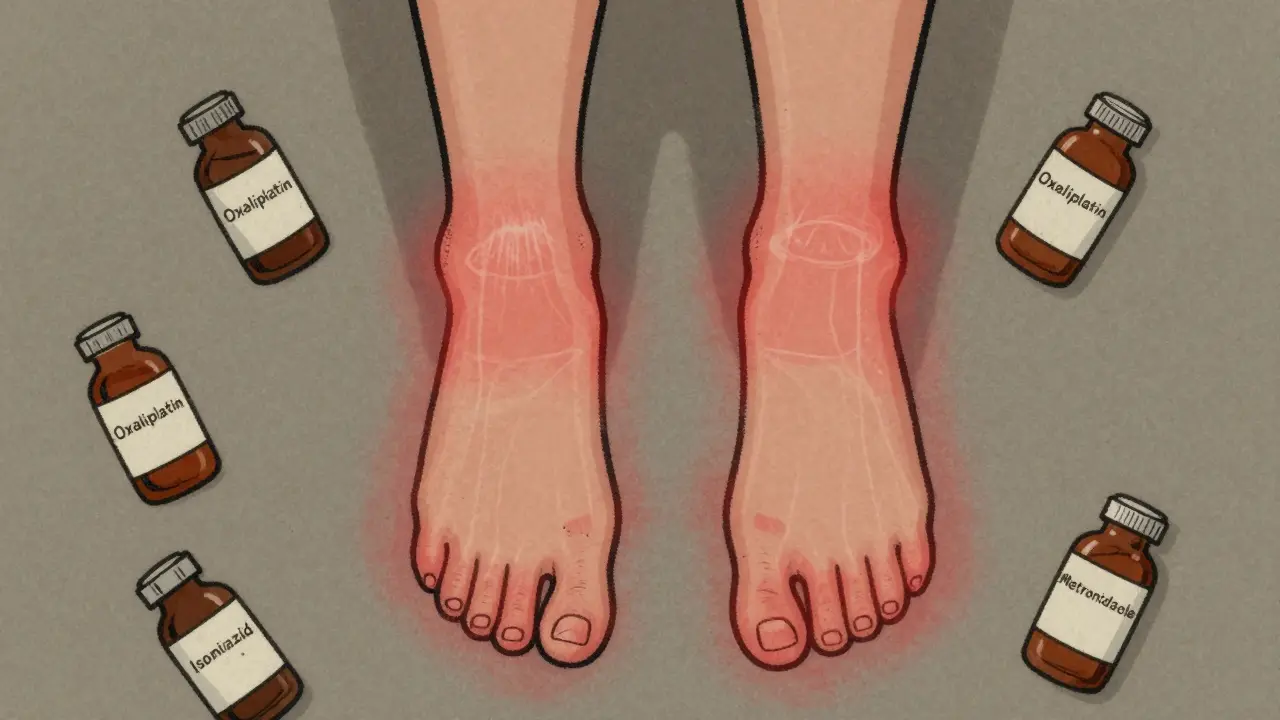
This isn’t rare. About 4% of all peripheral neuropathy cases come from medications, but for people on chemotherapy, that number jumps to 60%. Even common drugs like isoniazid for tuberculosis, metronidazole for infections, or certain statins can cause it. The symptoms are mild at first-tingling, numbness, a feeling of wearing invisible gloves or socks. But if you ignore them, they can get worse. And once nerve damage becomes severe, it might not fully reverse.
How It Starts: The Glove and Stocking Pattern
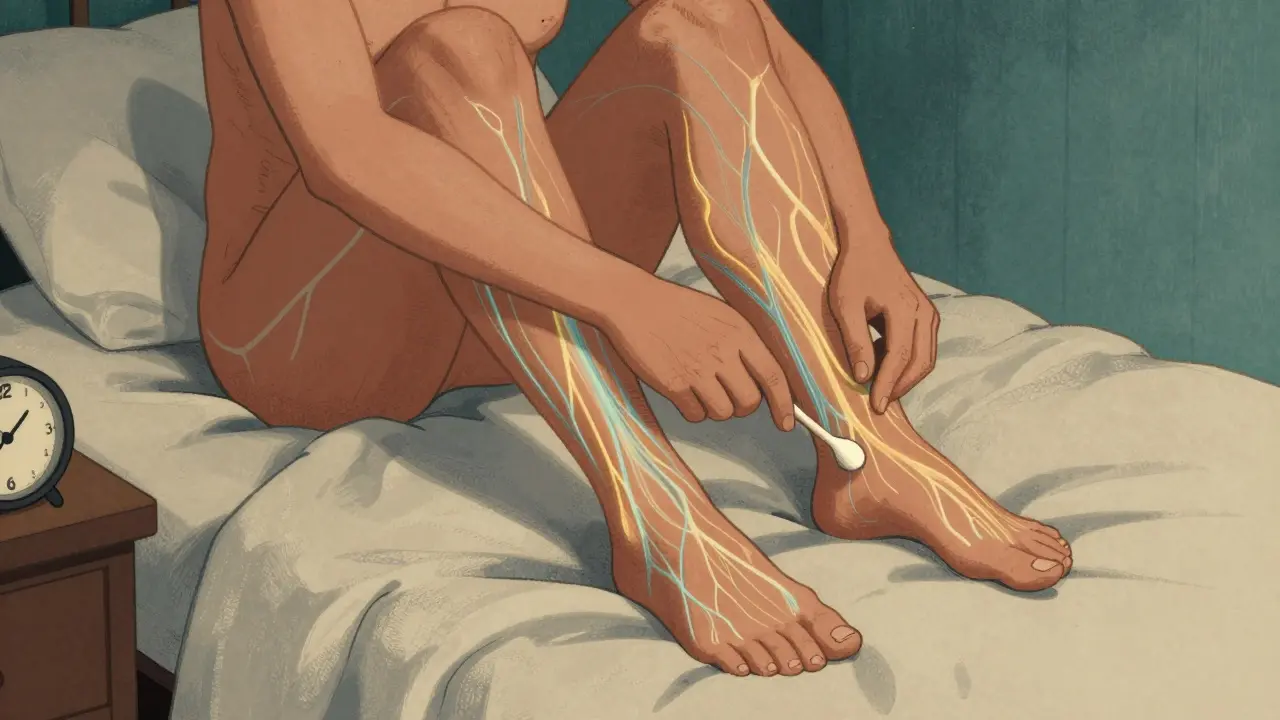
Drug-induced neuropathy doesn’t strike randomly. It follows a pattern. Symptoms usually begin in your feet and hands, then creep upward. That’s called the “glove and stocking” distribution. You’ll feel tingling in your big toe before your ankle. Numbness in your fingertips before your wrist. This happens because the longest nerves in your body-those reaching your toes and fingers-are the most vulnerable to damage from toxins in medications.
These sensations fall into two categories: positive and negative. Positive means your nerves are firing abnormally-tingling, burning, buzzing. Negative means your nerves are shutting down-numbness, loss of sensation, reduced ability to feel heat or cold. Most people notice the positive symptoms first. That’s your body’s alarm system. By the time numbness dominates, the damage is often more advanced.
Which Medications Are Most Likely to Cause This?
Not all drugs carry the same risk. Some are notorious. Chemotherapy agents top the list:
- Oxaliplatin (used for colon cancer): Up to 95% of patients feel tingling in their hands or feet during or right after infusion. It can get worse for months after treatment ends.
- Paclitaxel (breast, lung cancer): Around 60-70% of patients develop symptoms after several cycles. The numbness usually stabilizes after stopping, and many recover fully within a year.
- Cisplatin and bortezomib: These damage the nerve cell bodies directly. Symptoms often linger or become permanent if not caught early.
Antibiotics aren’t off the hook either:
- Isoniazid (for TB): Causes neuropathy in 10-20% of users at normal doses. Taking vitamin B6 (pyridoxine) reduces the risk, but many doctors don’t prescribe it unless symptoms appear.
- Metronidazole (for bacterial infections): Neuropathy can develop after just a few weeks of use. It’s rare, but once it happens, recovery can take months-even after stopping the drug.
Other offenders include:
- Amiodarone (heart rhythm drug): Can damage nerves over time, especially with long-term use.
- Stavudine (HIV treatment): Still used in some countries, it causes neuropathy in up to one-third of users.
- Statins (cholesterol drugs): The link here is debated. Some studies show a tiny risk-1-2%-but others say it’s mostly coincidental. Still, if you notice tingling after starting a statin, it’s worth discussing.
Why Early Detection Matters
Here’s the critical part: if you catch these symptoms early, you can often stop the damage before it becomes permanent. A 2022 study in the Journal of Neuro-Oncology found that patients whose doctors used regular symptom checklists had 37% fewer cases of severe neuropathy.
Doctors use tools like the Total Neuropathy Score and the EORTC QLQ-CIPN20 questionnaire to track changes over time. But you don’t need fancy tools to notice the warning signs. Ask yourself:
- Do my socks feel tighter than usual?
- Do I drop things more often, even though my grip feels fine?
- Can I feel the difference between my sock and bare skin on my toes?
- Do my feet feel cold even in warm rooms?
If you answer yes to any of these, don’t wait. Talk to your doctor-even if you think it’s “just a side effect.”
What Patients Are Saying: Real Stories
On cancer forums and neuropathy support groups, the same pattern keeps showing up:
- ChemoSurvivor42 (CancerCare, 2023): “I got tingling after my second oxaliplatin treatment. My oncologist said, ‘It’s normal.’ By cycle four, I couldn’t button my shirt. I wish I’d spoken up sooner.”
- NeuroNewbie (Reddit, 2023): “I had numb fingers after three months on isoniazid. My doctor gave me B6 but didn’t stop the meds. Now six months after quitting, I still have tingling.”
- MedReaction (Inspire, 2023): “I thought the tingling was stress. Turns out it was metronidazole. I lost feeling in my toes. Took 10 months to improve.”
But there’s hope too:
- On PatientsLikeMe, 73% of people who stopped their medication at the first sign of tingling reported near-complete recovery within six months.
The message is clear: early action saves nerves.
What to Do If You Notice Symptoms
Don’t panic. Don’t stop your medication without talking to your doctor. But do take these steps:
- Track your symptoms. Keep a simple log: date, location (toes? fingers?), intensity (1-10), what made it better or worse.
- Ask about alternatives. Can your drug dose be lowered? Is there another medication with less nerve toxicity? For example, some cancer patients switch from paclitaxel to docetaxel if neuropathy becomes problematic.
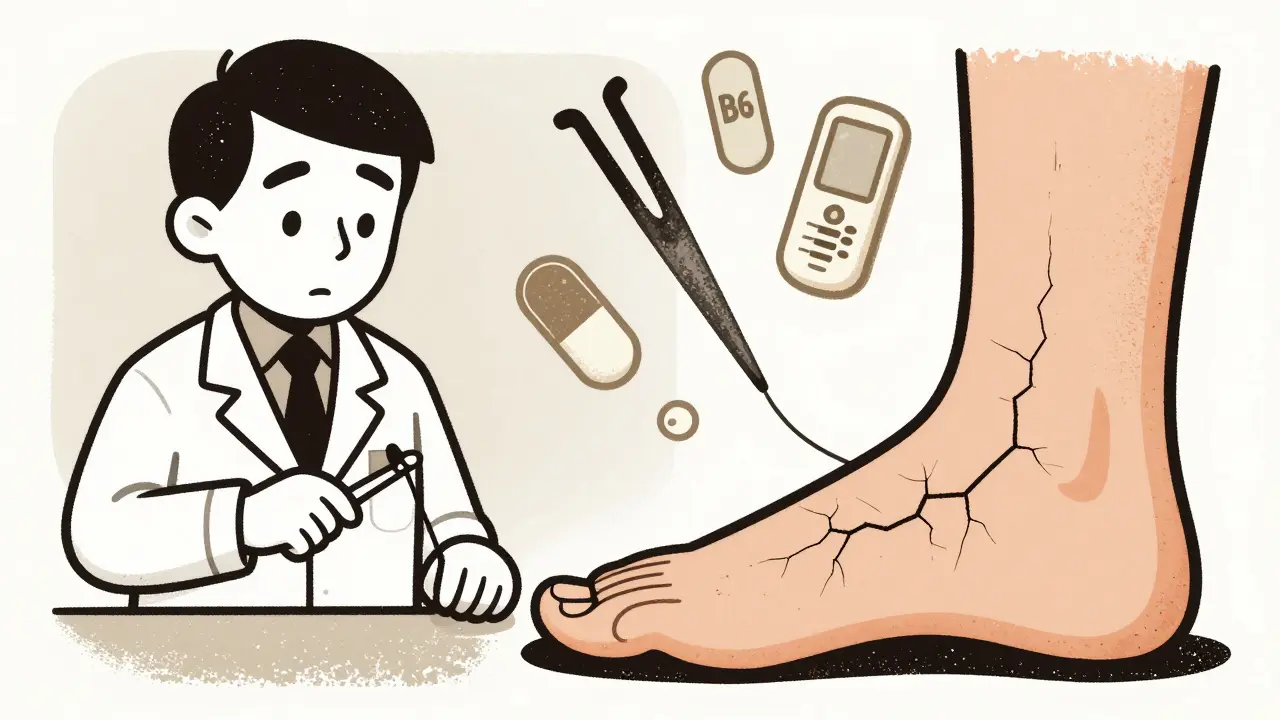
- Request a neurological exam. Your doctor can test your reflexes, vibration sense, and light touch. A simple monofilament test on your feet can detect early loss of sensation.
- Ask about B6 supplements. If you’re on isoniazid or certain other drugs, vitamin B6 (pyridoxine) may help prevent or reduce symptoms. Ask your doctor for the right dose-too much can cause its own nerve problems.
- Protect your feet. If sensation is fading, you’re at risk for unnoticed injuries. Check your feet daily for cuts or blisters. Wear well-fitting shoes. Use non-slip mats in the shower.
Some newer tools are helping too. The FDA-approved SudoScan device measures sweat response in your feet and hands to detect early small-fiber nerve damage-before you even feel symptoms. It’s not widely available yet, but more clinics are starting to use it.
What’s Next: The Future of Prevention
Scientists are working on ways to predict who’s most at risk. A 2023 study in Nature Reviews Clinical Oncology suggests that within five years, doctors may use genetic tests to see if you’re more likely to develop neuropathy from certain drugs. If you’re high-risk, they might choose a different treatment from the start.
There’s also promising research into neuroprotective agents. A phase III trial of acetyl-L-carnitine for paclitaxel patients showed a 40% reduction in symptom severity after six months. It’s not standard yet, but it’s a sign that we’re moving beyond just managing symptoms-we’re trying to prevent them.
Bottom Line: Don’t Ignore the Signals
Tingling and numbness from medications aren’t just annoying side effects. They’re neurological red flags. For many people, they’re the first-and only-warning before permanent nerve damage. The good news? You don’t need to suffer in silence. By paying attention to subtle changes, speaking up early, and working with your doctor to adjust treatment, you can often avoid the worst outcomes.
Medications save lives. But they can also harm nerves. The key is balance: knowing when to push back, when to ask for alternatives, and when to protect yourself before it’s too late. Your nerves can’t tell you they’re hurting until it’s too late. You have to listen before they go quiet.
Can medication-induced tingling go away on its own?
Yes, in many cases-especially if caught early. For drugs like paclitaxel or metronidazole, symptoms often improve within months after stopping the medication. But for others, like cisplatin or bortezomib, damage can be permanent if not addressed quickly. The earlier you act, the better your chances of full recovery.
Is tingling from statins real, or just in people’s heads?
The evidence is weak. Some studies show a tiny increase in neuropathy risk with statins, but others suggest it’s mostly coincidence or reporting bias. If you started a statin and noticed tingling shortly after, it’s worth discussing with your doctor-but don’t assume it’s the statin without ruling out other causes.
Should I stop my medication if I feel tingling?
No-not without talking to your doctor. Many of these drugs treat serious conditions like cancer or infections. Stopping them abruptly can be dangerous. Instead, report your symptoms, get evaluated, and work with your provider to adjust the dose or switch to a safer alternative if possible.
Can vitamin B6 help with drug-induced neuropathy?
It can help with certain drugs, especially isoniazid and some chemotherapy agents. Vitamin B6 supports nerve health and is often prescribed alongside these medications to prevent neuropathy. But high doses of B6 (over 200 mg/day) can actually cause nerve damage themselves. Always follow your doctor’s advice on dosage.
How long does it take for symptoms to improve after stopping the drug?
It varies. For mild cases, improvement can start in weeks. Full recovery often takes 3-6 months. With severe or long-term damage, it may take a year or more-and sometimes symptoms never fully disappear. That’s why early action matters so much.
Are there any home tests I can do to check for neuropathy?
Yes, simple checks can help. Try the “toe test”: close your eyes and ask someone to gently touch your big toe with a cotton swab. Can you feel it? Try the “vibration test”: place a vibrating tuning fork on your big toe bone. Can you feel it? If you notice reduced sensation compared to your fingers or other toes, mention it to your doctor. These aren’t replacements for professional exams, but they’re good early warning tools.
What to Watch For Next
If you’re on a medication known to cause neuropathy, keep monitoring. Symptoms can appear weeks or months after starting. Even if you’ve been on the drug for a while, new tingling or numbness is still a red flag. Don’t assume you’re “used to it.” Nerve damage is cumulative. The longer you wait, the harder it is to reverse.
And if your doctor dismisses your concerns? Get a second opinion. Neurologists and specialized oncology nurses are more likely to recognize early signs. Your nerves can’t wait for bureaucracy. Speak up. Track your symptoms. Protect your body-because sometimes, the medicine that saves your life can also quietly damage it. You just have to be the one to notice first.


I got tingling in my toes after starting statins and thought it was just my feet being tired from work. Turns out it was the meds. Took me 3 months to tell my doc and now I'm off it. Still a little numb but way better. Don't wait like I did.
OMG yes!! I was on metronidazole for a bad infection and my fingers went numb like i was wearing gloves. Doctor said it was 'probably stress' 😒 I stopped it myself after 2 weeks and it took 8 months to feel normal again. B6 helped a bit but not magic. Just listen to your body!
This is precisely why South African healthcare systems must prioritize patient education. In our rural clinics, we see patients on isoniazid for months without B6 supplements. The neuropathy rates are catastrophic. This isn't just medical negligence-it's systemic failure. We must demand better protocols, not wait for symptoms to escalate.
I had this with chemo-oxaliplatin was brutal. Tingling in my fingers every time I touched something cold. My nurse taught me to keep gloves in the car and avoid metal handles. Small things. I kept a log like the article said and my doc adjusted my dose. Recovery took 9 months but I got most of it back. You’re not alone.
so like... are we saying meds are bad now? i mean i get the tingling thing but like... life is risk. you take a pill to live longer and your toes tingle? sounds like a fair trade to me. unless you're a yoga instructor who needs to feel their big toe
Western medicine overreacts to minor sensations. In India we treat TB with isoniazid for a year and people work in fields all day. Tingling? That's your body adapting. No need for B6 or panic. Just endure. We don't have luxury of neurologists for every prickly toe
Another clickbait article about meds making your feet tingle. Newsflash: every drug has side effects. If you're on chemo you signed up for this. Stop whining and take your pills. Your 'glove and stocking' nonsense is just fearmongering dressed as science.
There's a deeper existential layer here: the body as a fragile vessel navigating the paradox of modern pharmacology. We weaponize chemistry to preserve life, yet the very molecules that sustain us also erode the delicate architecture of our nervous system. The tingling is not merely a symptom-it is the soul's whisper, the somatic echo of a civilization that trades sensation for survival. We must ask not just 'can we treat this?' but 'should we endure this?'
I'm so glad this was posted. My mom had this with cisplatin and they didn't catch it until she couldn't walk without tripping. We cried. But she switched meds early and now she hikes again. Don't be shy-tell your doctor. Even if they roll their eyes. Your feet matter.
Statins cause neuropathy? Please. That’s just placebo effect amplified by internet fear. If your toes tingle, maybe you’re just sitting too much. Or you’re a hypochondriac. The real issue is overdiagnosis in the West. People feel a tingle and call it disease. Pathetic.
Please, please, PLEASE-track your symptoms!!! Write them down! Use a notebook, an app, a sticky note on your mirror! I have a patient who logged every tingling episode for 6 months-and guess what? Her doc saw the pattern and switched her drug. She’s now symptom-free. Don’t rely on memory. Your nerves won’t remind you twice!
I had the metronidazole thing too. Took me 4 months to realize it wasn’t just 'old age'. Doc said 'it's rare' and I believed him. Now I have a little permanent numbness in my left foot. Worth it? Not really. But I'm alive. So... 🤷♂️
This is exactly the kind of practical, science-backed info we need more of. I'm a pharmacist in Delhi and I've seen too many patients suffer because they didn't know about B6 prophylaxis with isoniazid. We started handing out pamphlets at TB clinics last year. Drop in neuropathy cases by 40%. Small changes, big impact.
Ohhh so now we're giving out gold stars to people who notice their toes tingling? Congrats! You felt something! Meanwhile, in the real world, people are dying of cancer while you're doing yoga and checking your foot sensitivity. Maybe stop being a hypochondriac and let the medicine do its job. 🙄