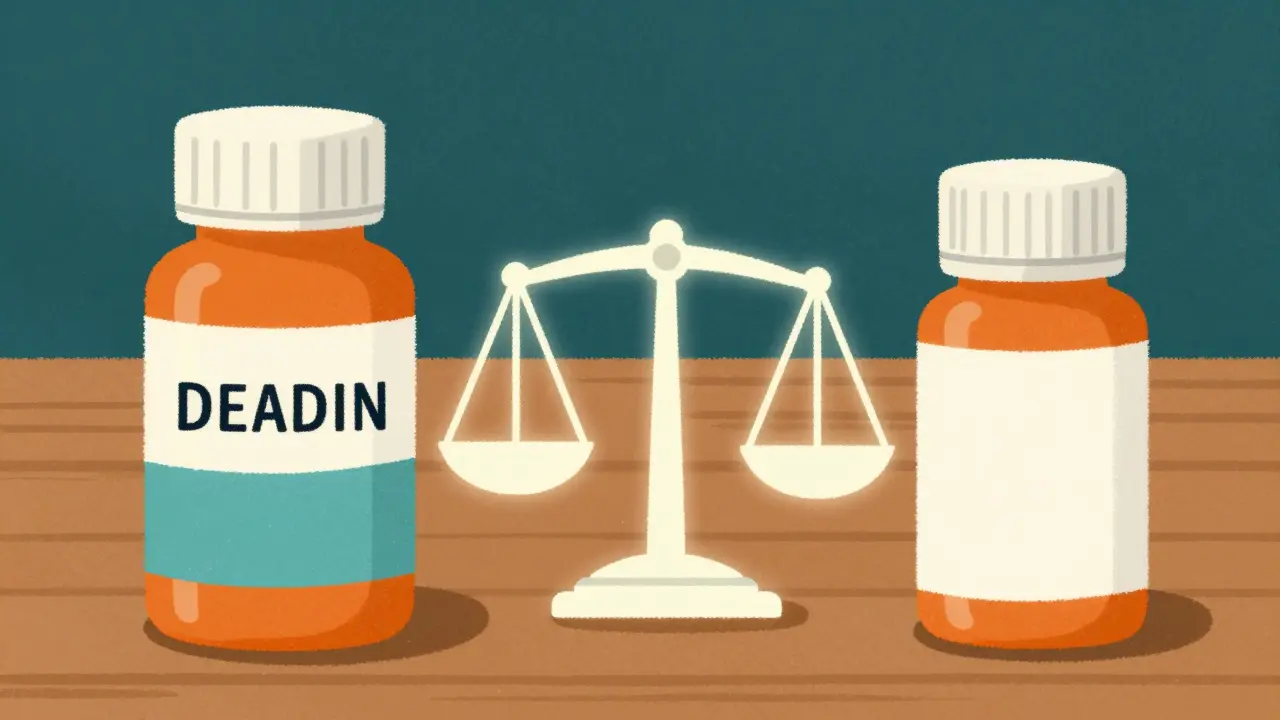
Switching from a brand-name medication to a generic version usually feels like a simple way to save money. But when you're dealing with Warfarin is a vitamin K antagonist anticoagulant used to prevent blood clots and strokes, a "simple switch" isn't always simple. Because this drug has a narrow therapeutic index, even a tiny change in how your body absorbs the medicine can push your blood clotting levels too high or too low. This is where INR monitoring comes into play-it's the only way to know if a generic switch is working safely for you.
Why Warfarin isn't like other generic drugs
Most generic drugs are interchangeable without a second thought. However, Warfarin belongs to a group called narrow therapeutic index (NTI) drugs. This means the gap between a dose that helps you and a dose that causes a dangerous bleed is incredibly small. For most people, the target International Normalized Ratio (INR) is between 2.0 and 3.0. If your INR drops below 2.0, you risk a blood clot; if it climbs too high, you risk internal bleeding.
The FDA requires generics to show 80-125% equivalence in how they reach peak concentration in the blood. While that sounds precise, for a drug as potent as Warfarin, a 10% difference in absorption can be the difference between a stable patient and a medical emergency. This is why doctors often treat a switch from Coumadin (the brand name) to a generic as if you were starting the medication for the first time.
Is generic Warfarin actually as safe as brand name?
The short answer is yes, but with a caveat. Large-scale data suggests that generic versions are therapeutically equivalent. For instance, a study published in PubMed (PMID: 11978149) tracked 182 patients switching to a generic version and found no significant difference in the number of dose changes or the rate of bleeding events. Another massive review of over 40,000 patients showed that the actual difference in INR units after switching was negligible (ranging from -0.05 to 0.12).
Despite these numbers, individual reactions vary. Your body processes Warfarin using CYP2C9 and CYP3A4 enzymes in the liver. Because of genetic differences, two people can take the exact same generic pill and have completely different INR responses. This is why "one size fits all" doesn't work with anticoagulants.
| Feature | Generic Warfarin | DOACs (e.g., Eliquis, Xarelto) |
|---|---|---|
| Monthly Cost | $4 - $10 | $300 - $500 |
| Monitoring Needs | Frequent INR tests (12-18/year) | Occasional renal checks |
| Reversibility | Easily reversed with Vitamin K | More complex reversal process |
| Dietary Restrictions | High (Vitamin K intake matters) | Minimal to none |
The "Safe Switch" protocol: How to monitor your INR
If you're moving from Coumadin to a generic, or switching between different generic manufacturers, you can't just wait for your next monthly checkup. Stability is the goal, but getting there requires a structured approach.
Experts, including those from the Cleveland Clinic, suggest a more aggressive monitoring schedule during the first few weeks of a transition. Here is a typical roadmap for a safe switch:
- The Transition Week: Check your INR daily or every other day for the first 7 to 14 days. This catches any sudden spikes or drops immediately.
- The Stabilization Phase: Once your INR remains within your target range for two consecutive days, you can move to checking it 2-3 times a week for another week or two.
- The Maintenance Phase: If everything remains steady, you can eventually return to the standard 4-to-6 week monitoring interval.
If your INR fluctuates unexpectedly, don't panic, but do investigate. Common culprits include a sudden change in your diet (like eating significantly more spinach or kale), a new medication, or a missed dose. In many cases, a small 5-10% dose adjustment is all that's needed to get back on track.
Hidden traps: Diet, drugs, and consistency
Generic switching isn't the only thing that can throw your INR off. Warfarin is famously "touchy" when it comes to other substances. There are over 300 known medications that can alter your INR by as much as 50% within just three days of starting them. If you start a new antibiotic or an antifungal while switching generics, it becomes nearly impossible to tell which one is causing the INR swing.
Diet is another huge factor. Vitamin K is the natural "off switch" for Warfarin. If you suddenly start a health kick and eat 150mcg more Vitamin K per day than usual, your INR will drop, and your blood will thicken. The key isn't to avoid Vitamin K entirely, but to keep your intake consistent. Whether you love salads or hate them, just keep the amount the same from day to day.
When to stick with the brand name
While generics save a lot of money, there are times when the brand-name Coumadin-or even newer Direct Oral Anticoagulants (DOACs)-might be a better choice. If you have a history of extreme INR instability (often called "brittle" anticoagulation), the tiny variations between generic manufacturers might be too much for your system to handle.
Additionally, for patients with mechanical heart valves in the mitral position, the target INR is higher (2.5-3.5), leaving even less room for error. In these high-risk scenarios, the consistency of a single, trusted manufacturer is often worth the extra cost. However, for most people, the $4-to-10 monthly cost of generics is a massive advantage, especially for those on fixed incomes or without comprehensive insurance.
Can I switch between different generic brands of Warfarin?
Yes, but you should treat it like a new switch. Even though all approved generics are rated as therapeutically equivalent, different manufacturers may have slight variations. It is highly recommended to increase your INR monitoring frequency for the first two weeks after changing generic brands to ensure your levels remain stable.
What is a normal INR range for Warfarin?
For most conditions like atrial fibrillation or venous thromboembolism, the target range is 2.0 to 3.0. However, this changes based on the condition: 2.5 to 3.5 for mitral valve replacements and 3.0 to 4.0 for some high-risk aortic valves. Always follow your doctor's specific target for your health status.
Why is my INR fluctuating after switching to a generic?
Fluctuations can be caused by several things: slight differences in how the generic is absorbed, changes in your intake of Vitamin K (leafy greens), interactions with new medications, or inconsistent dosing. Because Warfarin has a narrow therapeutic index, these small changes can lead to noticeable INR swings.
Are DOACs safer than generic Warfarin?
DOACs are often more convenient because they don't require frequent blood tests or strict diets. However, they are significantly more expensive and aren't suitable for everyone-especially those with mechanical heart valves or severe kidney failure. Warfarin remains the gold standard for these specific patients.
What should I do if my INR is too high after a switch?
If your INR is above your target range, contact your healthcare provider immediately. They may instruct you to skip a dose, take a lower dose, or in severe cases, administer Vitamin K or fresh frozen plasma to reverse the effect and prevent bleeding.
Next steps for a safe transition
If you're planning to switch to a generic, start by talking to your pharmacist about which manufacturer they use. If you change pharmacies, you might accidentally change manufacturers, so try to stick to one source.
For those who find Warfarin monitoring too burdensome, ask your doctor if you are a candidate for a DOAC. While the cost is higher, the lack of frequent blood draws is a huge quality-of-life improvement for many. But if you stay on Warfarin, remember: consistency is your best friend. Keep your diet steady, your meds organized, and your INR appointments on the calendar.

It is quite fascinating how the pharmacological nuances of narrow therapeutic index drugs create such a precarious balance for the patient, and while the transition to generics is often framed as a mere economic convenience, the reality is a complex interplay of hepatic enzyme variability and meticulous clinical surveillance that requires a level of patience many in our fast-paced society have simply forgotten how to cultivate.
Oh wonderful, another reminder that our biological existence is basically a high-stakes game of roulette where the prize is not bleeding out in your sleep because a pharmacy decided to save a nickel on a generic pill. Truly, the pinnacle of modern medicine is spending half your life in a waiting room for a blood draw just to see if your liver is feeling cooperative today.
I've seen a few folks struggle with the diet part! Just remember that consistency is way more important than avoiding greens entirely :) Just keep your salad habit the same every day and you'll be golden! 🌟
My cousin did this!!! Scary!!! Totally unexpected spikes!!!
The pharmacokinetics here are basic, yet the systemic volatility of NTI agents is what separates the amateurs from the actual clinicians 🙄. If you can't handle the bioavailability fluctuations, maybe you just aren't cut out for the rigor of anticoagulant therapy. It's all about that CYP2C9 polymorphism, obviously. 💅
Its honestly a sin how some people just ignore the warnings and then act surprised when they end up in the ER!! Like use your brain!! 🙄 if u cant follow a simple schedule then maybe u dont deserve the cheap meds lol!!
There is something profoundly poetic about the way we must harmonize our very diet with our medicinal needs to maintain a fragile internal equilibrium, and I believe that by approaching this transition with a spirit of mindfulness and cooperation with our healthcare providers, we can transform a stressful medical requirement into a journey of self-awareness and physical healing that ultimately empowers us to take control of our own longevity.
who cares about a 10 percent diff honestly just take the pill and hope for the best lol
Imagine thinking that 'hoping for the best' is a valid medical strategy in the 21st century. Your lack of basic discipline is almost impressive, truly. Some of us actually value the concept of not having a spontaneous brain hemorrhage because we were too lazy to read a chart.
I totally get how scary this feels... the whole INR thing is just so stressful... especially when the bioavailability varies!!! Please just stay safe everyone!!!
I remember when I switched and my INR went wild. I spent three weeks in a state of absolute panic, waking up at 3 AM checking for bruises on my arms. It felt like my whole life was just waiting for the next lab result. I can't even describe the crushing weight of that anxiety. Every time I saw a bruise, I thought it was the end. It's just exhausting to live like this.
we should all just try to be patient with our bodies and the medicine because every person is different and peace comes from accepting the process
India makes the best generics anyway. The world depends on our medicine and people should just trust the system without all this western overthinking.
The interplay between CYP2C9 genotypes and warfarin sensitivity is a wild ride! I've noticed that some folks who are 'slow metabolizers' get hit way harder by these generic shifts than others, making their INR readings look like a jagged mountain range. It's a vivid example of how our unique genetic blueprints turn a standard pill into a personalized chemistry experiment!
It is interesting to see how different healthcare systems handle the cost-benefit analysis of brand vs generic here.