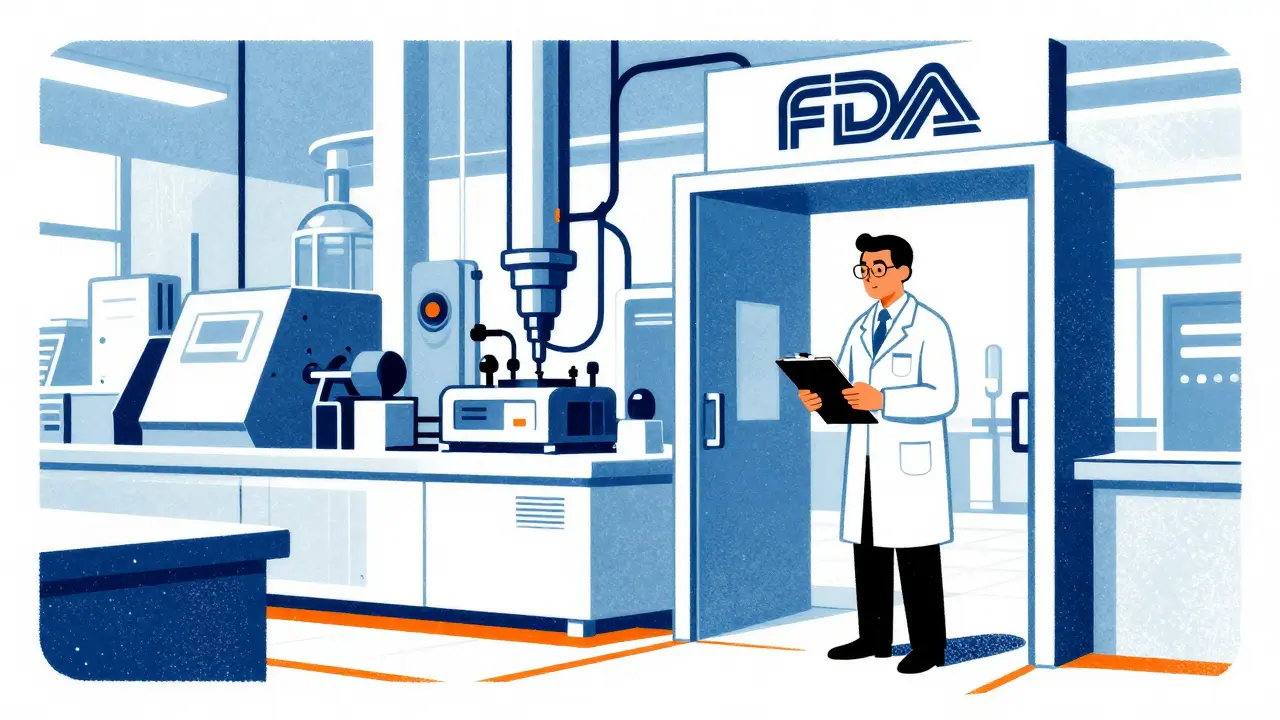
Imagine spending years developing a life-saving drug or a cutting-edge medical device, only to have the entire project grind to a halt because a single piece of equipment wasn't calibrated correctly. This is the reality for companies facing FDA facility inspections is a careful, critical, official onsite examination of a facility to determine its compliance with federal law . It is not just a routine check-up; it is a high-stakes assessment of whether a company is actually doing what it claims to do in its paperwork.
| Key Focus | Crucial Detail |
|---|---|
| Annual Volume | ~12,000 domestic and 1,000 foreign facilities |
| Primary Goal | Verify CGMP (Current Good Manufacturing Practice) compliance |
| Critical Document | FDA Form 483 (Notice of objectionable conditions) |
| Rising Concern | Data integrity and electronic records (21 CFR Part 11) |
How the FDA Decides Who to Inspect
The agency doesn't just pick names out of a hat. Since 2019, the FDA has used a multi-criteria risk-based model to decide which sites get a visit. This means they prioritize facilities based on three main risk factors: the product, the facility, and the process.
Product risk looks at how serious the condition being treated is and who the patient population is. For example, a facility making high-risk implants for elderly patients is more likely to be visited than one making a simple dietary supplement. Facility risk considers the site's track record-if you've had a history of violations or frequent recalls, you're moving up the priority list. Process risk focuses on how things are made; if a company is using a brand-new, novel manufacturing approach, the FDA wants to see it in action.
Because of this system, high-risk facilities might see an inspector every 6 to 12 months, while low-risk sites might go 3 to 5 years without a visit. It's a targeted approach designed to put resources where the danger to the public is highest.
The Four Types of Inspections
Not all inspections are created equal. Depending on why the inspector is walking through the door, the goals and the pressure levels change significantly.
- Pre-approval Inspections: These happen after a company submits a PMA (Pre-Market Approval). The FDA wants to ensure the facility can actually manufacture the product according to the design and quality standards promised in the application.
- Routine Surveillance: These are the standard checks that happen every few years to make sure a company hasn't let its standards slip over time.
- Compliance Follow-up: If a previous inspection found a mess, the FDA comes back to verify that the company actually fixed the problems.
- "For Cause" Inspections: These are the ones that keep executives awake at night. They are triggered by specific red flags, such as a sudden spike in consumer complaints, tips from confidential informants, or a string of adverse event reports. These often happen with zero advance notice.
What Actually Happens During the Visit?
When an investigator arrives, they present their credentials and a FDA Form 482, which is the official Notice of Inspection. From that moment, the facility's designated representative must accompany the inspector at all times.
The process usually lasts between 3 and 10 days. It's not just a walk-through; it's a deep dive. The inspector will tour the plant, interview staff on the fly to see if they actually know the procedures, and spend hours reviewing records. They are looking for things like deviation reports, equipment qualification documents, and process validation records. If they see something suspicious, they might collect samples for independent testing.
The climax of the visit is the exit interview. If the investigator found issues, they'll issue an FDA Form 483. This document lists the "objectionable conditions" found. The company then has exactly 15 working days to provide a written response explaining how they will fix these issues. Failure to respond adequately can lead to a formal Warning Letter, which is a public slap on the wrist that can tank a company's stock price or stop production.
Where Most Companies Fail
You'd think the biggest problems would be massive equipment failures, but the data says otherwise. A huge chunk of inspection observations come from boring, administrative mistakes. In fact, roughly 78% of observations stem from four specific documentation gaps: inadequate deviation investigations, incomplete training records, missing validation documents, and poor change control records.
Data integrity has become the new battlefield. Dr. Rebecca Wang from the Center for Devices and Radiological Health noted that data integrity concerns now account for 45% of all observations. This is largely due to the shift toward electronic records under 21 CFR Part 11. If you can't prove who entered a piece of data and when, the FDA assumes the data is unreliable.
Real-world experience shows that the "human factor" is often the weakest link. On industry forums, managers often complain that staff provide inconsistent answers to the same question. Imagine an inspector asking three different operators how they clean a vat, and getting three different answers. That immediately tells the inspector that the training program is failing, regardless of what the written SOP says.
Pro Strategies for Inspection Readiness
If you're preparing for a visit, don't just clean the floors the day before. The most successful facilities treat readiness as a year-round project. Those with formal readiness programs see a 63% reduction in observation rates.
One highly effective tactic is the "runner system." Instead of having the subject matter expert leave the inspector to go hunt for a document, a designated "runner" fetches the file. This keeps the inspector focused and prevents the conversation from drifting into areas that might invite more questions. Additionally, having a dedicated inspection support room-complete with printers and computers-helps resolve document requests 40% faster.
Here is a practical 30-day countdown for a facility expecting a visit:
- Days 1-5: Perform a comprehensive document review. Check for signatures and dates on every log.
- Days 6-15: Run mock inspections. Put your staff in the hot seat and practice their answers.
- Days 16-25: Facility walkthroughs. Fix the peeling paint, clear the clutter, and ensure the facility diagram is updated to the exact current layout.
- Days 26-30: Final verification and ensuring all key personnel are available.
The Future: AI and Remote Audits
The days of exclusively flying investigators across the globe are changing. The FDA is moving toward a hybrid model. By 2026, the agency expects a 35% increase in remote assessment tools. This includes virtual facility tours and remote document reviews, which have already proven effective for nearly 80% of documentation checks.
The biggest shift, however, is the Inspection Modernization Initiative. By the second half of 2025, the FDA plans to implement AI-assisted document review systems. This means the agency will be able to scan thousands of pages of records for anomalies in seconds, making it almost impossible to hide inconsistent data or "dry-labbing" (inventing data) through manual entries.
What happens if a company ignores a Form 483?
Ignoring a Form 483 is a dangerous move. If the response is missing or insufficient within 15 working days, the FDA may issue a Warning Letter. This is a formal notification that the company has violated federal law. Persistent failure to comply can lead to an injunction, seizure of products, or a consent decree, where a court-appointed monitor takes over quality operations.
How often does the FDA actually visit?
It depends entirely on the risk profile. High-risk facilities (those making critical care drugs or high-risk medical devices) may be inspected every 6 to 12 months. Medium-risk sites typically see a visit every 2 to 5 years, while low-risk facilities, such as those making basic dietary supplements, may go 5 years or more between routine checks.
What is the difference between CGMP and GMP?
GMP stands for Good Manufacturing Practice. The "C" in CGMP stands for "Current." This is a critical distinction because it means the FDA expects companies to use the most up-to-date technologies and methods. Following a manual from 1995 might be "GMP," but it isn't "Current GMP" if the industry has moved to automated, more precise systems.
Can the FDA inspect a facility without notice?
Yes. While many routine inspections have a few days of notice, "for cause" inspections-triggered by reports of contamination, death, or fraud-are almost always unannounced. Domestic facilities are generally subject to these surprise visits, while foreign inspections usually require more coordination but still maintain a high level of unpredictability.
Why is data integrity so important to inspectors?
If the data is wrong, the product is unsafe. The FDA relies on a company's records to prove that a batch of medicine was sterilized or that a device was tested. If an inspector finds "ghost entries" or deleted logs, they can no longer trust any of the facility's claims, which often leads to a total shutdown of production until a full audit is performed.
Next Steps for Facility Managers
If you are currently managing a site, start by auditing your training records. Ensure every employee can explain their specific task in a way that matches the written SOP. Next, implement a quarterly mock inspection to identify gaps before the FDA does. Finally, move toward a digitized quality management system to satisfy the increasing scrutiny on data integrity and 21 CFR Part 11 compliance.
The runner system is a total lifesaver during these audits. I've seen so many SMEs accidentally leak info or go off on tangents because the inspector had too much downtime while waiting for a binder. Keeping the momentum controlled is half the battle.