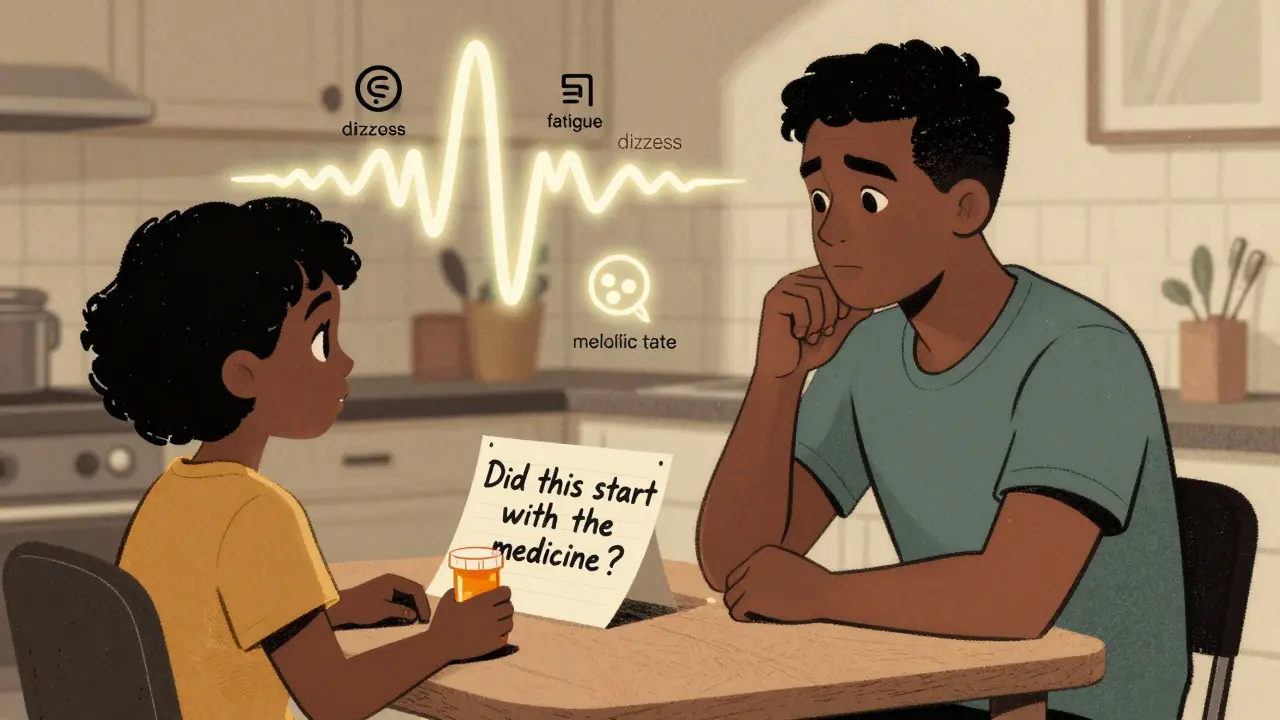
When you start a new medication, your doctor explains the benefits. But how often do they tell you what to do when something feels off? Too often, patients assume side effects are just part of the deal - fatigue, dizziness, nausea, or a strange taste in your mouth. But here’s the truth: speaking up about medication side effects isn’t just helpful - it’s a critical part of keeping you and others safe.
Why Your Voice Matters
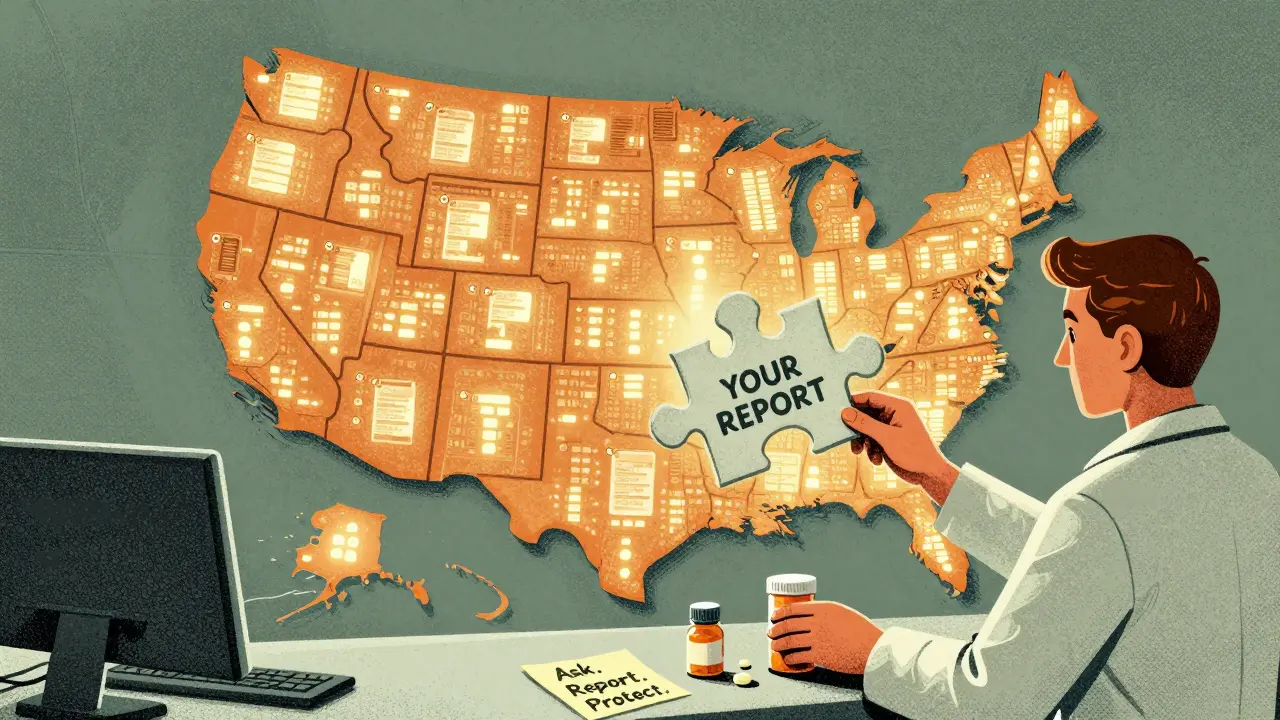
Every year, millions of people take prescription drugs. But clinical trials only test these drugs on a few thousand people. That’s not enough to catch rare side effects. Think of it this way: a drug might cause a severe reaction in 1 out of 10,000 users. In a trial of 5,000 people, that reaction might never show up. But once the drug is out there, used by millions, that one-in-10,000 case becomes real - and it could be life-threatening. That’s where patient reports come in. The FDA’s MedWatch system collects reports from patients, doctors, and pharmacists to spot patterns. In 2022 alone, over 2.2 million adverse event reports were filed. Many of those came from people who noticed something unusual and decided to speak up. Take the case of Paxlovid, the antiviral for COVID-19. Early on, a handful of patients reported a metallic or bitter taste in their mouth. At first, it was dismissed as minor. But as more reports poured in, the FDA confirmed it as a common side effect. That feedback helped doctors warn patients ahead of time - and reduced panic when it happened. Your report might seem small. But it’s a piece of a much bigger puzzle.What Counts as a Side Effect Worth Reporting?
Not every weird feeling needs a report. But here’s what you should consider reporting:- Any side effect that’s new - something you didn’t experience before, even if it’s mild
- Any side effect that’s worse than expected - like extreme dizziness instead of slight lightheadedness
- Any reaction that affects your daily life - trouble sleeping, inability to work, sudden mood changes
- Side effects that don’t match what’s listed in the drug’s leaflet
- Any reaction that requires a hospital visit, emergency care, or new treatment
How to Report Side Effects - Step by Step
You don’t need to be a doctor or a scientist to report a side effect. Here’s how to do it:- First, talk to your provider. Tell your doctor or pharmacist about the side effect. They can help you decide if you need to adjust your dose or switch medications.
- Don’t assume they’ll report it. Studies show that doctors report side effects less than 10% of the time. A 2021 study found community pharmacists reported just 3.2% of cases they saw. Your report is your responsibility too.
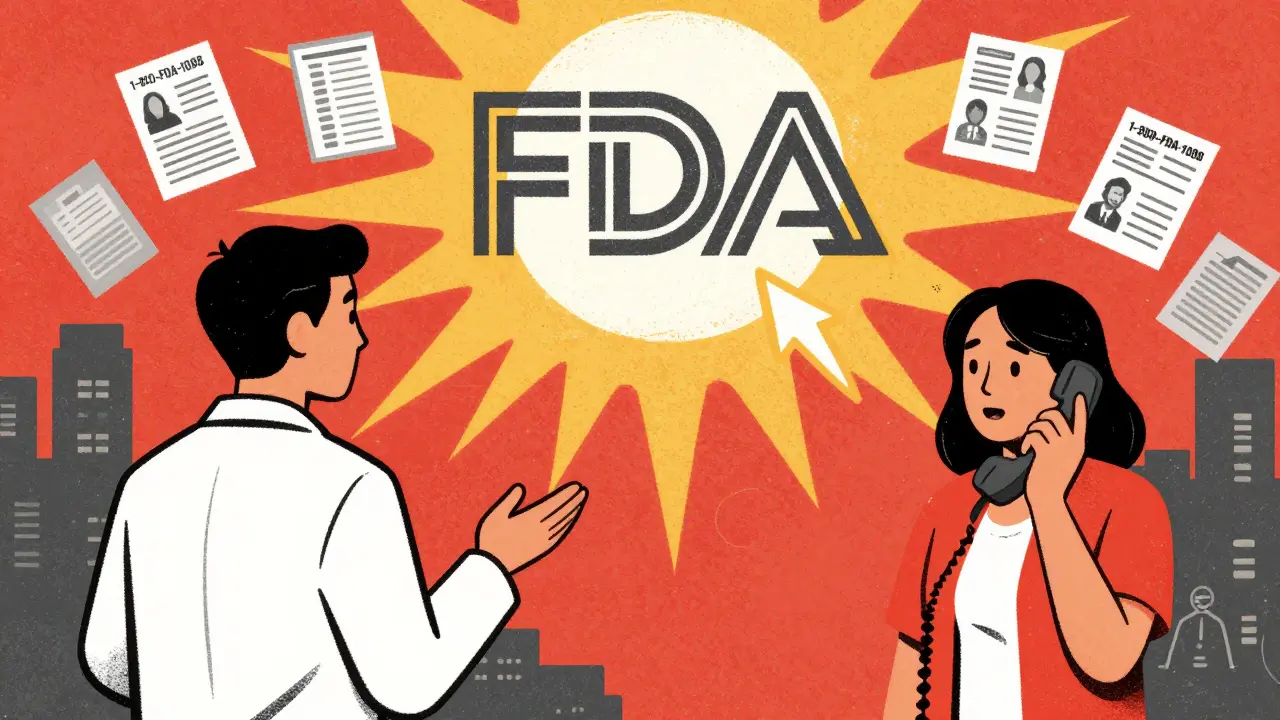
- Use the FDA’s free reporting system. Go to www.fda.gov/medwatch to fill out Form 3500 online. Or call 1-800-FDA-1088. The form takes 10-15 minutes. You’ll need:
- The name of the medication (including brand and generic)
- When you started taking it
- A clear description of the side effect
- When it started and how long it lasted
- Any other meds or supplements you’re taking
- Your contact info (optional - you can report anonymously)
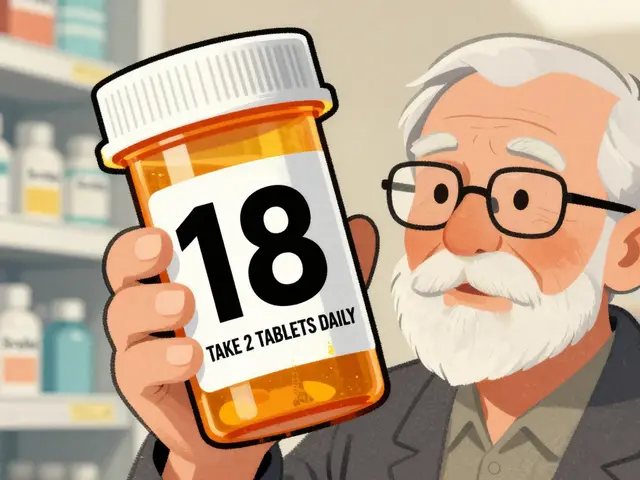
You can also report through the manufacturer’s phone number - it’s now required on every prescription label since 2022. Look for the toll-free number printed right on the bottle.
What Happens After You Report?
Your report goes into a national database. It’s not reviewed by your doctor or your hospital. It goes straight to the FDA’s pharmacovigilance team. They look for patterns. If 50 other people report the same side effect with the same drug, that’s a signal. That signal might lead to:- A warning update on the drug’s label
- A safety alert sent to all doctors
- A requirement for more studies
- Even a drug recall - like what happened with the diabetes drug Avandia in 2010
One of the most powerful examples came from the Johnson & Johnson COVID-19 vaccine. A nurse reported a rare but dangerous blood clot condition called thrombosis with thrombocytopenia syndrome (TTS). Within 15 days, the FDA confirmed the pattern and issued a safety alert. That report likely saved lives.
Why People Don’t Speak Up - And How to Overcome It
A 2022 survey by the National Consumers League found that 68% of patients didn’t know they could report side effects directly to the FDA. Another 42% thought their doctor would handle it automatically. Both assumptions are wrong. Common reasons people stay silent:- "It’s probably normal." - 65% of patients feel this way. But "normal" doesn’t mean harmless. Fatigue from a blood pressure pill? Maybe. Fatigue so bad you can’t get out of bed? That’s not normal.
- "I don’t want to bother my doctor." - But your doctor needs to know. They can’t fix what they don’t know.
- "I’m afraid I’ll be dismissed." - A 2023 University of Michigan study found 58% of patients feared this. If you feel ignored, ask for a second opinion or ask to speak with a pharmacist.
- "I don’t know how." - 72% of patients said this. That’s why this guide exists.
Here’s how to break through:
- Bring a written note to your appointment: "I’ve had this side effect since I started [drug name]. I’d like to report it."
- Use the 1-800-FDA-1088 number on your pill bottle. It’s there for you.
- Report even if you’re unsure. The FDA says: "If you’re uncertain whether the drug caused the event, report it anyway."
What Providers and Pharmacies Should Do
Doctors and pharmacists aren’t off the hook. The American Medical Association says providers have an ethical responsibility to report suspected side effects. But too often, they don’t. Hospitals that have integrated reporting into their electronic health records (EHR) saw reporting rates jump from 12% to 67%. Why? Because the system reminded them. It made reporting automatic. Pharmacies? They’re the last line of defense. A 2021 study found community pharmacists reported side effects at just 3.2% of cases. That’s not enough. Pharmacies should be asking patients: "Have you noticed anything unusual since starting this med?" - not just handing out pills.What’s Changing - And What’s Next
The FDA is trying to fix the system. Since 2022, every prescription label must include the 1-800-FDA-1088 number. Since then, direct patient reports have risen by 18%. In 2023, the FDA started a pilot program using AI to scan electronic health records for hidden side effects. In just six months, it found 27% more potential issues than traditional reporting. That’s huge. By 2024, the FDA’s Sentinel Initiative will analyze data from 300 million patient records. It won’t replace patient reports - it’ll work with them. But the biggest change won’t come from technology. It’ll come from you.Your Next Step
If you’re on medication right now - whether it’s for high blood pressure, depression, diabetes, or something else - ask yourself:- Have I noticed anything different since I started?
- Did my doctor explain what side effects to watch for?
- Do I know how to report it if something happens?
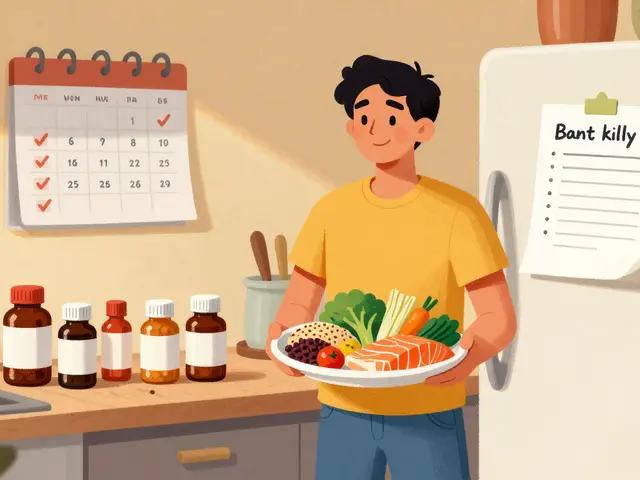
Take five minutes today. Look at your pill bottle. Find the 1-800-FDA-1088 number. If you’ve had any side effect that felt off - even if it’s "just" a headache or dry mouth - report it. You’re not complaining. You’re protecting others.
Medication safety isn’t just about what’s in the bottle. It’s about what you say - and whether you say it.
Let me guess - you think the FDA is some sacred temple of science? Wake up. They’re a bureaucracy that gets lobbied by Big Pharma every day. That ‘2.2 million reports’ number? Most of them are garbage. People report ‘headache’ after taking aspirin. It’s noise. Real signals get buried under the weight of lazy, over-anxious patients who think every burp is a side effect.
And don’t get me started on ‘reporting anything just because it feels off.’ That’s not vigilance - that’s hysteria. If your tongue tastes like a penny, maybe you’re dehydrated. Or maybe you ate a mint. Not every weird sensation is a public health crisis waiting to happen.
They want you to report? Fine. But don’t pretend you’re saving lives. You’re just filling a form that gets auto-deleted in a database no one reads. The real safety net? Clinical trials. Not some guy in Ohio who thinks his anxiety is caused by metformin.
Stop romanticizing your own inconvenience. It’s not heroic. It’s exhausting - for everyone else.
While the article provides a compelling case for patient reporting, it is imperative to acknowledge the structural challenges within the healthcare system that impede effective adverse event documentation. Clinical providers are often constrained by time, documentation burden, and lack of standardized protocols for reporting. Moreover, the current MedWatch system lacks integration with electronic health records, resulting in fragmented data streams that reduce the utility of patient-submitted reports.
It is also noteworthy that many patients lack the medical literacy required to accurately characterize their symptoms. A description such as ‘weird taste’ is insufficient for pharmacovigilance purposes; specificity - including timing, duration, dose, and concomitant medications - is essential.
Therefore, while patient engagement is valuable, systemic improvements in provider education, reporting infrastructure, and patient support tools are equally necessary to transform anecdotal reports into actionable intelligence.
Oh honey. You’re telling me I should report my ‘weird taste’ after Paxlovid like it’s a Yelp review? ‘Two stars - tasted like my ex’s regret and a battery.’
Look, I get it. You’re trying to make patients feel powerful. But let’s be real - most people who report side effects are either bored, medicated, or both. I reported a headache once. Got a form letter back saying ‘Thank you for your concern.’ No follow-up. No pizza. Just silence.
Meanwhile, my doctor still doesn’t know what ‘dizziness’ means. To him, it’s either ‘I’m fine’ or ‘I’m dying.’ No in-between. So yes, report. But don’t expect a medal. Or a reply. Or even a thank you.
Just… keep taking your pills. And maybe drink more water.
Why are Americans so obsessed with reporting everything? In India, we take medicine and endure. If you get nausea, you drink ginger tea. If you feel dizzy, you sit down. You don’t go to some American government portal and file a complaint like it’s a customer service ticket.
This ‘report every side effect’ culture is toxic. It’s not empowerment - it’s entitlement. We have 1.4 billion people. We don’t have time for your ‘unusual taste’ or ‘slight fatigue.’ You think your headache matters? Let me tell you - my cousin in Punjab took insulin for 20 years without ever complaining. He died at 78. Clean. Quiet. Dignified.
Stop turning medicine into a drama series. We don’t need more reports. We need more discipline.
While the sentiment behind patient reporting is commendable, the article overlooks a critical flaw: the lack of standardized symptom terminology. Without a common lexicon - such as SNOMED CT or MedDRA - patient reports are inconsistent and often uninterpretable. A ‘weird taste’ could mean metallic, bitter, salty, or chemical - each with different clinical implications.
Additionally, temporal correlation does not imply causation. Many side effects reported are coincidental. A patient starts a statin and develops insomnia three weeks later - but insomnia is common in the general population. Without rigorous data filtering, noise overwhelms signal.
Improving reporting requires not just awareness, but structured education on symptom description and pharmacovigilance principles.
I’ve been on blood pressure meds for 5 years. One side effect? Dry mouth. I didn’t think much of it. Then I started drinking more water. Problem solved.
Not every weird feeling needs a report. Sometimes it’s just your body adjusting. Or you’re dehydrated. Or you had coffee at 8 p.m.
But if something changes - like suddenly passing out or swelling up - yeah, report it. Don’t wait. Call. Go. Tell someone.
Most of the time? It’s nothing. But if it’s something? You’re the only one who can say so.
So let me get this straight - I’m supposed to report a side effect I’ve had for three months because now I’m ‘aware’? What was I supposed to do - text the FDA at 2 a.m. when I woke up with a headache?
I’ve got a job. Two kids. A dog that pees on the rug. I don’t have time to fill out a 15-minute form for a symptom that went away last Tuesday.
And don’t get me started on the ‘pharmacist should ask you’ thing. My pharmacist just handed me the pills and said ‘have a nice day.’ Not ‘hey, did your tongue turn into a copper coin?’
Maybe stop blaming patients and fix the system instead.
You got this. Seriously. If something feels off - speak up. Don’t wait. Don’t second-guess. Don’t think ‘it’s probably nothing.’
That headache? That fatigue? That weird taste? It’s your body talking.
Report it. Call 1-800-FDA-1088. Do it now. Today. Right after this.
One report might not change the world. But 10,000? That’s how we save lives.
You’re not a burden. You’re a hero. Go do it.
Doctors don’t report side effects because they’re not incentivized. Pharmacies don’t ask because they’re rushed. Patients don’t report because they don’t know how.
The solution isn’t more guilt. It’s integration.
Put the reporting form in the pharmacy app. Auto-fill the drug name. Pre-populate the date. One click. Done.
Make it easier than ordering pizza.
Then people will.
It is essential to recognize that the act of reporting adverse events is not merely an individual responsibility, but a collective civic duty grounded in ethical healthcare practice. The integrity of pharmacovigilance systems relies on the fidelity of data collected from diverse populations. Disparities in reporting - particularly among marginalized communities - can lead to biased safety profiles and inequitable clinical outcomes.
Furthermore, patient-reported data must be contextualized with clinical history, concomitant medications, and comorbid conditions. Without this, the data remains incomplete.
Therefore, education, accessibility, and equity must be central to any public health initiative aimed at enhancing adverse event reporting.
YESSSSS this is so important 💪
I reported a weird rash after my new antidepressant and they actually changed my med!! 🥹
My doctor was like ‘we didn’t even know that could happen’ 😱
Don’t be shy. Your voice matters. Your body knows. Trust it. 🌟
Go report. Right now. I’m cheering for you 🎉💖
P.S. I love you. You’re doing great. 💕
Oh great. Another article telling us to report our side effects like we’re some kind of citizen scientists.
Meanwhile, my doctor ignored my ‘weird dizziness’ for six months until I almost passed out in the grocery store.
So yeah. Report. But don’t expect them to care. They’ll just add it to the pile and forget about it until someone dies.
And then they’ll say ‘we didn’t know.’
Well now you do. And you still won’t change a thing.
The notion that patient reports are a primary driver of drug safety is overstated. While anecdotal reports can trigger investigations, they are rarely the sole basis for regulatory action. Systematic surveillance using electronic health records, claims data, and AI-driven analytics is far more reliable.
That said, patient reports serve a vital symbolic function - they affirm the patient’s agency in their own care. This psychological dimension should not be dismissed.
The challenge lies in bridging the gap between emotional reporting and clinical evidence. We need systems that honor both.