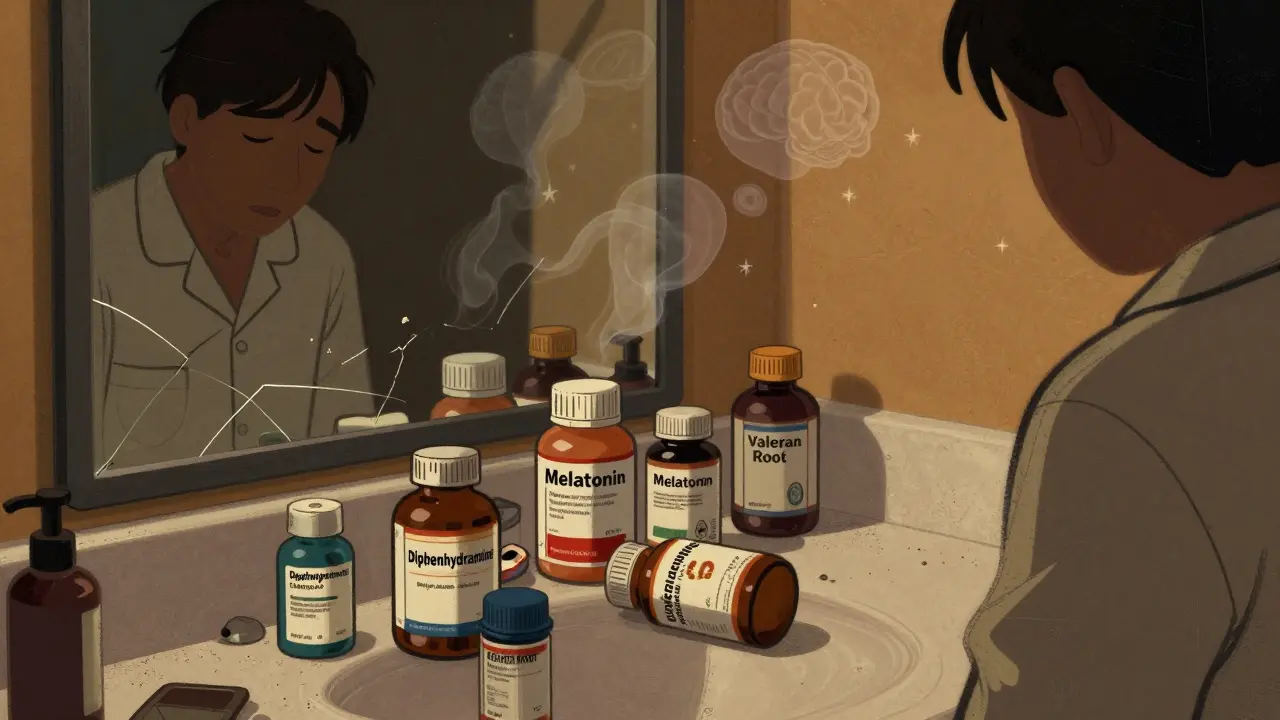
Millions of people reach for an OTC sleep aid every night, thinking it’s a quick fix for tossing and turning. But what most don’t realize is that these pills - whether they’re labeled as diphenhydramine, melatonin, or herbal blends - aren’t harmless. They’re drugs. And like all drugs, they come with trade-offs that can quietly harm your health over time.
What’s Actually in OTC Sleep Aids?
There are two main types of over-the-counter sleep aids: antihistamines and supplements. The most common antihistamines are diphenhydramine (found in Benadryl, Sominex, Nytol) and doxylamine (Unisom SleepTabs). These were never meant to help you sleep. They were designed to treat allergies. The drowsiness? That’s just a side effect. When they block histamine in your brain, they also slow down your central nervous system - which is why you feel sleepy.
Then there’s melatonin. It’s not a drug. It’s a hormone your body naturally makes to signal bedtime. Supplements try to mimic that signal. But here’s the catch: a 2017 study in the Journal of Clinical Sleep Medicine tested 31 melatonin products and found that 71% contained significantly more or less melatonin than what was listed on the label. One pill labeled 3mg had only 0.5mg. Another had 14mg. You’re not just guessing at effectiveness - you’re guessing at safety.
Valerian root and chamomile are also common. They’re marketed as “natural,” but there’s little high-quality evidence they work better than a placebo for most people. And since supplements aren’t regulated like drugs, you have no guarantee of purity, potency, or consistency.
How Effective Are They Really?
If you’re hoping for 8 hours of deep, restorative sleep after taking an OTC sleep aid, you’re setting yourself up for disappointment. According to clinical trials reviewed by the American Academy of Sleep Medicine, these products typically reduce the time it takes to fall asleep by just 3 to 13 minutes. Total sleep time increases by 20 to 60 minutes - barely enough to notice.
That’s not a solution. That’s a Band-Aid. And it’s especially misleading for people with chronic insomnia, which affects about 10% of adults. These products don’t fix the root cause - whether it’s stress, anxiety, poor sleep habits, or sleep apnea. They just mask the symptom, and often make it worse over time.
The Hidden Side Effects You’re Not Being Told About
Antihistamine-based sleep aids like diphenhydramine and doxylamine are part of a class of drugs called anticholinergics. These drugs block acetylcholine, a chemical your brain needs for memory, focus, and muscle control. That’s why users report dry mouth, blurred vision, constipation, and trouble urinating - especially men with enlarged prostates.
But the real danger shows up years later. A 2015 study in JAMA Internal Medicine followed 3,434 adults for over seven years and found that those who regularly used anticholinergic medications had a 54% higher risk of developing dementia. The longer you use them, the higher the risk. And yes, that includes OTC sleep aids taken nightly for months or years.
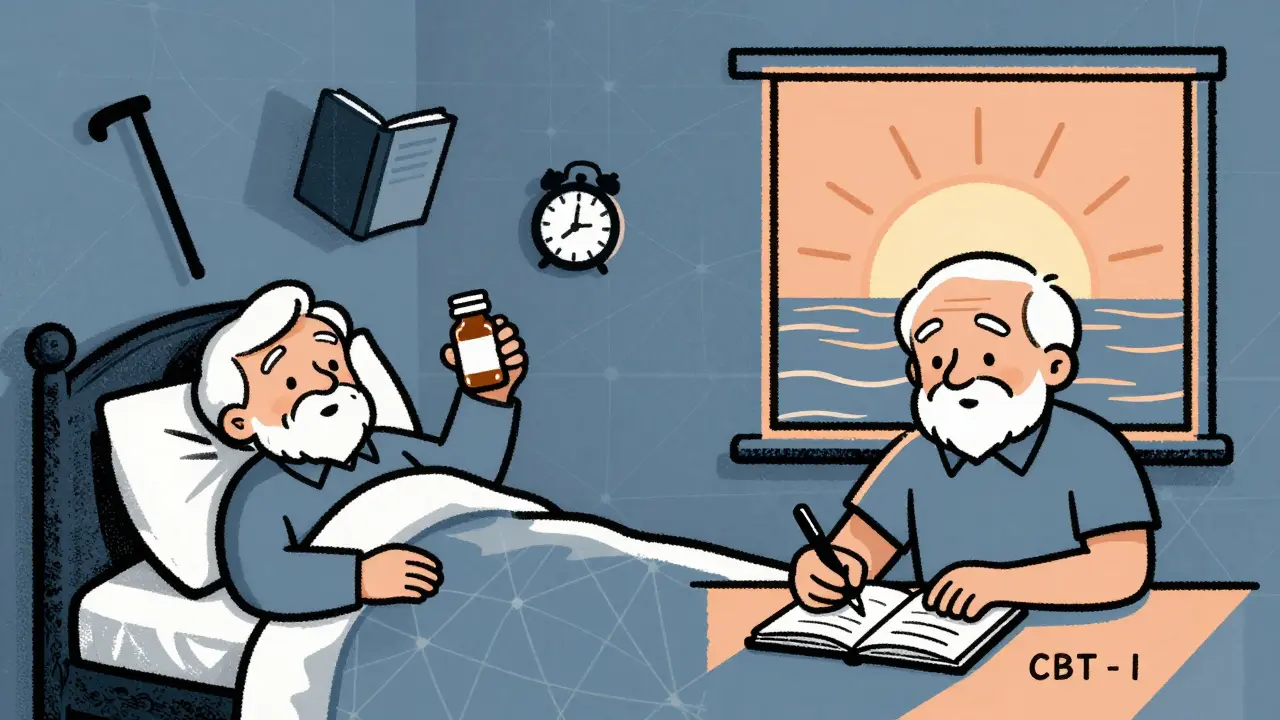
For older adults, the risks are even starker. The Beers Criteria - the gold standard for safe prescribing in seniors - lists diphenhydramine as a “potentially inappropriate medication” for anyone over 65. Why? Because it increases fall risk by 50%. One stumble, one hip fracture, and your life can change forever.
Melatonin has a different profile. It doesn’t cause the same brain fog or fall risk. But it’s not gentle, either. A 2022 review found that 45% of users feel groggy the next day. Nearly 70% report vivid dreams or nightmares. Higher doses - like the 5mg or 10mg pills commonly sold - can cause nausea, dizziness, confusion, and even bedwetting in kids. The NHS warns that leg pain from melatonin is a real side effect that requires stopping the supplement immediately.
Who Should Avoid OTC Sleep Aids Entirely?
If you have sleep apnea, these products can be dangerous. They relax your throat muscles even more, making breathing interruptions worse. That’s not just uncomfortable - it’s life-threatening.
Pregnant women should avoid them too. While diphenhydramine is classified as Category B (no proven harm in humans, but limited data), melatonin has almost no safety data for pregnancy. The NIH’s LactMed database says it’s best avoided.
And if you’re taking other medications - especially antidepressants, blood pressure drugs, or sedatives - OTC sleep aids can interact badly. Mixing them with alcohol? That’s a recipe for slowed breathing, extreme drowsiness, or worse.
How Long Is Too Long?
The FDA says: don’t use antihistamine sleep aids for more than two weeks. The Cleveland Clinic says the same. The Sleep Foundation says: use melatonin only as needed, not nightly.
Yet a 2022 survey found that 38% of users take them for more than two weeks. Nineteen percent use them for over a month. That’s not occasional use. That’s dependency.
And here’s what happens when you stop: rebound insomnia. Your body gets used to the drug. When you quit, your natural sleep drive is suppressed. Sleep gets worse than before. Studies show about 30% of people who use OTC sleep aids for more than two weeks experience this. You didn’t fix your sleep - you broke it.
What Should You Do Instead?
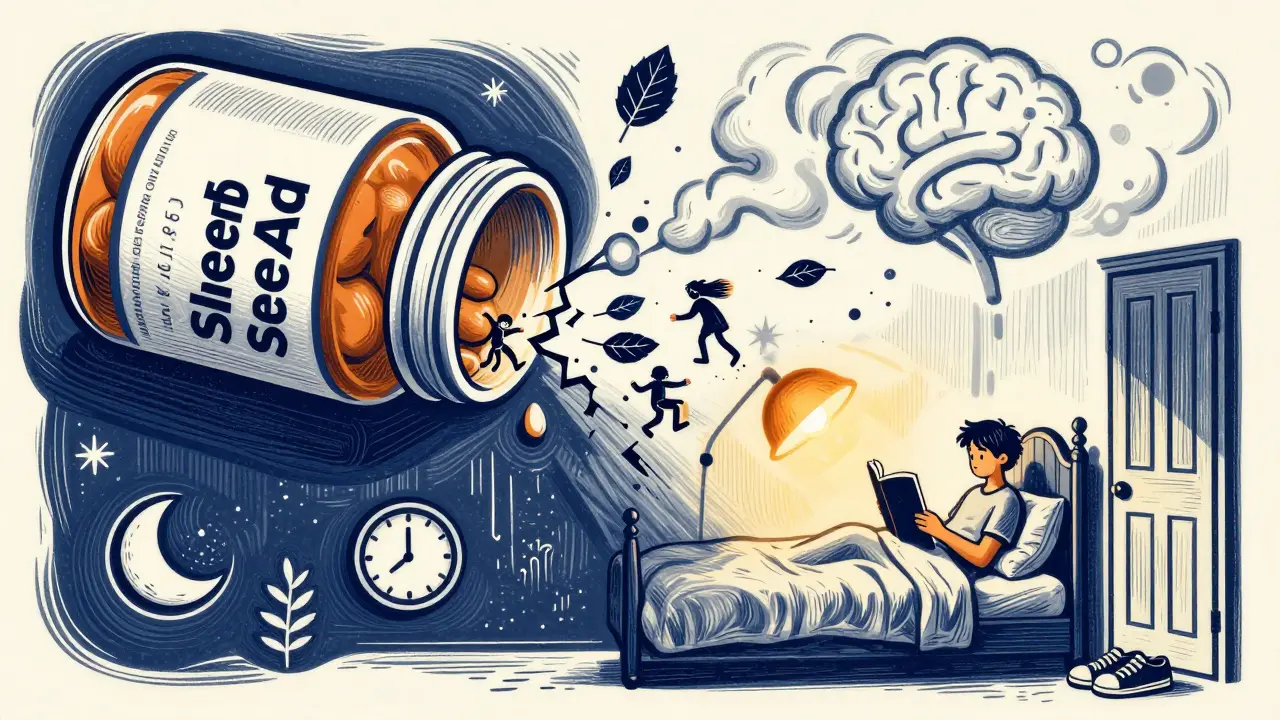
The most effective treatment for chronic insomnia isn’t a pill. It’s CBT-I - Cognitive Behavioral Therapy for Insomnia. It’s not fancy. It doesn’t involve drugs. It teaches you how to retrain your brain and body to sleep naturally.
How well does it work? A 2023 meta-analysis in JAMA Internal Medicine found CBT-I works for 70-80% of people. That’s better than any medication. And the benefits last. Unlike pills, it doesn’t wear off. You don’t need to keep taking it.
Simple habits matter too:
- Keep a consistent sleep schedule - even on weekends.
- Avoid screens for at least an hour before bed. Blue light kills melatonin production.
- Get sunlight in the morning. It resets your internal clock.
- Don’t lie in bed awake for more than 20 minutes. Get up, read under dim light, then return when sleepy.
- Keep your bedroom cool, dark, and quiet.
These aren’t “tips.” They’re science-backed strategies that work better than any OTC pill.
What If You Still Want to Try an OTC Sleep Aid?
If you’re dealing with jet lag, a short-term disruption, or one bad night - and you’re healthy - a low-dose option might help. But here’s how to do it safely:
- For melatonin: Start with 0.5mg. That’s often enough. If it doesn’t work after a few nights, try 1mg. Never go above 3mg unless a doctor says so.
- For antihistamines: Use diphenhydramine or doxylamine only once or twice a week. Never nightly. Never for more than 10 days.
- Never combine with alcohol, other sedatives, or prescription sleep meds.
- Check the label. Avoid products with added pain relievers like acetaminophen or ibuprofen. You don’t need those.
- Stop immediately if you feel confused, dizzy, have trouble urinating, or wake up with strange dreams.
And if your sleep doesn’t improve after two weeks - stop. Talk to a doctor. Your insomnia isn’t a pill problem. It’s a signal.
Bottom Line
OTC sleep aids are big business. Americans spend over $600 million a year on them. But they’re not solving the real problem. They’re creating new ones.
They offer tiny benefits at a high cost: brain fog, memory risks, falls, dependency, and rebound insomnia. For most people, they’re not worth it.
Real sleep doesn’t come from a bottle. It comes from rhythm, routine, and respect for your body’s natural cycles. If you’re struggling, don’t reach for a pill. Reach for a better strategy. Your brain - and your future self - will thank you.
Can I take melatonin every night?
It’s not recommended. While melatonin is safer than antihistamines, taking it nightly can lead to tolerance, where you need more to get the same effect. It can also disrupt your body’s natural melatonin production. Use it only for short-term issues like jet lag or occasional trouble falling asleep. The Sleep Foundation advises using the lowest effective dose - often just 0.5mg - and only on an as-needed basis.
Are OTC sleep aids addictive?
They’re not addictive in the same way as prescription sleep meds like Ambien, but they can lead to psychological dependence. Many people feel they can’t sleep without them after using them for more than two weeks. Stopping can trigger rebound insomnia - where your sleep gets worse than before. This isn’t physical addiction, but it’s still a real problem that keeps people stuck in a cycle of relying on pills.
Why do OTC sleep aids make me feel groggy the next day?
Antihistamines like diphenhydramine have a long half-life - meaning they stay in your system for hours. Even if you sleep 8 hours, the drug may still be active in your bloodstream the next morning. This causes lingering drowsiness, reduced alertness, and slower reaction times. Melatonin can cause this too, especially at higher doses. It’s not just being tired - it’s a direct side effect of the medication.
Is it safe to use OTC sleep aids if I’m over 65?
No. First-generation antihistamines like diphenhydramine and doxylamine are listed in the Beers Criteria as potentially inappropriate for older adults. They increase the risk of falls by 50%, worsen confusion, and raise the long-term risk of dementia. Even if you feel fine, your brain is still being affected. Safer alternatives like CBT-I or light therapy are strongly recommended for seniors.
What’s the best non-drug way to fix insomnia?
Cognitive Behavioral Therapy for Insomnia (CBT-I) is the gold standard. It’s backed by decades of research and works for 70-80% of people. It teaches you to change thoughts and habits that keep you awake - like worrying about sleep, lying in bed awake, or irregular schedules. Unlike pills, it doesn’t wear off. It gives you lasting skills. Many online programs and apps now offer CBT-I, and some insurance plans cover it.


Man, I used to chow down on Benadryl like it was candy before bed-thought I was being smart. Turns out I was just slowly turning my brain into mush. This post hit me like a truck. I stopped cold turkey last month, and yeah, the first week was rough-but now I actually sleep deeper than I have in years. No grogginess. No weird dreams. Just... quiet rest. My wife says I stop snoring too. Who knew?
Wait-so you’re saying melatonin isn’t just ‘natural sleep juice’? I’ve been taking 5mg every night for 18 months because ‘it’s harmless’… and now I’m reading that 71% of bottles are mislabeled? And I’m supposed to start with 0.5mg? That’s less than a grain of salt. My brain is spinning. I need to check the label on my bottle right now. And why does no one tell you this?!
Oh wow. So the ‘sleep aid’ you’re popping is actually an anticholinergic drug linked to dementia? And you’re surprised people are tired all day? You’re not tired because you didn’t sleep-you’re tired because your brain is being slowly poisoned. Congrats, you’ve been self-medicating your way into Alzheimer’s. And you thought you were being proactive.
Stop. Just stop. OTC sleep aids are not a solution. They’re a crutch. And you’re not fooling anyone by calling them ‘natural.’
Wow, this is so important! 🙏 I come from India, where people just buy melatonin from pharmacies like candy-no prescription, no questions. I’ve seen grandparents take diphenhydramine every night for years. No one knows the risks. This post should be shared in every village, every clinic. Thank you for writing this with such clarity. CBT-I is the real hero here-gentle, lasting, no side effects. 💪🌙
Bro, I used to think sleep aids were like coffee for tiredness-just another pick-me-up. But now I get it: your body isn’t broken, it’s just out of rhythm. 🌅 I started waking up with the sun, no screens after 9 PM, and now I fall asleep faster than ever-no pills. My mom even tried it and says she’s dreaming in color again 😄
Actually, the whole ‘dementia risk’ thing is overblown. That JAMA study had a selection bias-people who take OTC sleep aids are already more likely to have underlying health issues. Correlation ≠ causation. Also, CBT-I? That’s just glorified meditation. I’ve tried it. Didn’t work. Melatonin works better for me. So stop shaming people who just want to sleep.
It is, indeed, a profound indictment of our pharmaceuticalized culture that the most efficacious intervention for chronic insomnia-cognitive behavioral therapy-is not only underutilized but often dismissed as ‘too much effort.’ The fact that millions of individuals willingly ingest unregulated, poorly labeled substances with known neurotoxic profiles, while simultaneously eschewing evidence-based behavioral protocols, speaks volumes about our collective aversion to discipline, and our pathological reliance on pharmacological quick fixes. The data is unequivocal. The moral imperative is clear. Yet, we persist in our ignorance.
bro i just take 1 benadryl and i’m out like a light. why are you all overcomplicating this? i dont have time for ‘sleep hygiene’ or whatever. i got work in 5 hours. just let me sleep.
It’s not just about the dementia risk. It’s about the erosion of autonomy. When you rely on a pill to do what your body was designed to do naturally, you’re surrendering control. You’re outsourcing your biology to a corporation that profits from your sleeplessness. And then you wonder why you feel empty. It’s not insomnia. It’s spiritual exhaustion.
While the article presents a compelling case against the chronic use of over-the-counter sleep aids, it is fundamentally flawed in its implicit assumption that behavioral interventions such as CBT-I are universally accessible. The reality is that CBT-I requires significant time, financial investment, and psychological resilience-all of which are luxuries not afforded to individuals working multiple jobs, caring for dependents, or living in socioeconomic precarity. To dismiss pharmacological aids as ‘not worth it’ without acknowledging structural barriers to care is not evidence-based-it is elitist. The solution is not to shame the user, but to democratize access to therapy. Until then, a 0.5mg melatonin tablet may be the only humane option for many.
Look, I get it-you’re all woke about sleep now. But let’s be real: if you’re working a 12-hour shift, raising kids, and your partner snores like a chainsaw, you’re not gonna do CBT-I. You’re gonna take the damn pill. And if it lets you function the next day? Good for you. Stop acting like everyone has the luxury of a 7pm bedtime and a $200/month therapist. I’ve been on diphenhydramine for 3 years. I’m not dead. I’m not demented. I’m just tired. And I’m still here. So don’t preach. Just help.