Statin & Supplement Safety Checker
Select all that apply to your current health regimen to check for potential high-risk interactions.
Emergency Red Flags
If you experience dark-colored urine (tea or cola colored) or severe, symmetrical muscle weakness, stop all supplements and seek immediate medical attention. This may indicate rhabdomyolysis.
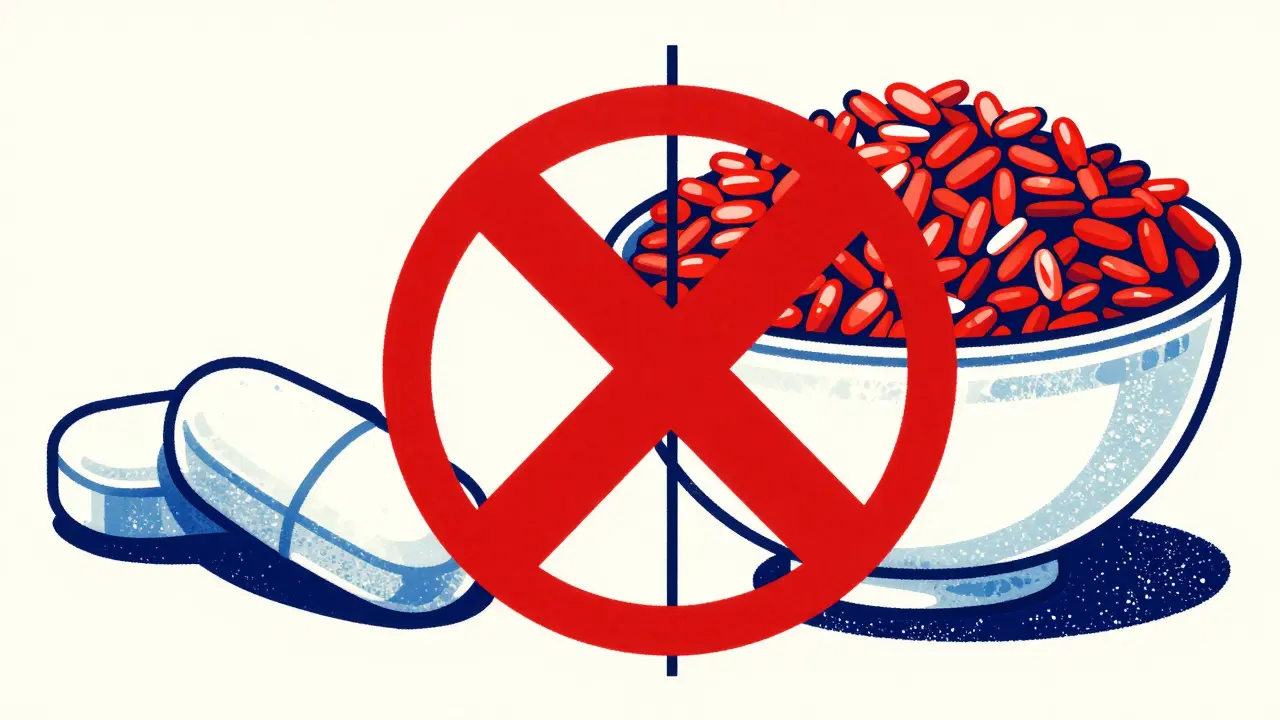
Taking a "natural" supplement alongside your prescription medicine sounds like a great way to boost your health, but in the case of Red Yeast Rice is a fermented rice product created by the Monascus purpureus mold, traditionally used in Chinese medicine for circulation and digestive health. and cholesterol medication, it's essentially like taking a double dose of the same drug. Many people reach for this supplement because they want a gentler alternative to pharmaceuticals, but if you're already on a prescription, you're walking into a high-risk scenario called duplicate therapy.
The core problem is that these two aren't actually different treatments. They both target the exact same enzyme in your liver to stop cholesterol production. When you combine them, you aren't "adding" to the effect-you're amplifying the side effects to a level that can cause permanent organ damage. If you're managing your lipids, understanding exactly how these two interact is the difference between a healthy heart and a trip to the emergency room.
The Hidden Chemistry: Why It's a Double Dose
To understand why this is dangerous, we have to look at what's inside the supplement. Red Yeast Rice contains several compounds called monacolins. The most important one is monacolin K is a bioactive compound chemically identical to the pharmaceutical drug lovastatin. Because monacolin K is the same thing as lovastatin, taking both a statin and RYR is functionally the same as taking two different prescription statins at once.
Both substances inhibit HMG-CoA reductase, the enzyme responsible for making cholesterol in your body. While this is exactly what you want for lowering LDL, the body has a limit on how much of this inhibition it can handle. When you overload the system, the risk of muscle breakdown increases exponentially. This isn't just a theoretical risk; the Mayo Clinic classifies this interaction as "Major," suggesting that users avoid this combination entirely.
| Feature | Red Yeast Rice (Supplement) | Prescription Statins (e.g., Atorvastatin) |
|---|---|---|
| Active Ingredient | Variable Monacolin K | Standardized Chemical Compound |
| Dosing Consistency | Low (Varies by batch/brand) | High (Precise mg per tablet) |
| Regulatory Oversight | Dietary Supplement (DSHEA 1994) | FDA Approved Medication |
| Typical LDL Reduction | 21-30% | 20-60%+ (Depending on dose) |
| Contamination Risk | Possible Citrinin (Mycotoxin) | Negligible (Pharmaceutical grade) |
The Danger Zone: Myopathy and Rhabdomyolysis
What actually happens to your body when you take too much of these HMG-CoA reductase inhibitors? It starts with myalgia-simple muscle aches and pains that you might mistake for a hard workout or getting older. But it can quickly escalate into myopathy is a disease of the muscle fibers that causes weakness and inflammation.
The nightmare scenario is rhabdomyolysis is a severe condition where damaged muscle tissue breaks down and releases a protein called myoglobin into the blood, which can cause acute kidney failure. This is a medical emergency. In documented cases, users combining low-dose statins with RYR have seen their Creatine Kinase (CK) levels-a marker of muscle damage-skyrocket. While a normal CK level is low, some patients in duplicate therapy have peaked at over 18,000 U/L, requiring immediate hospitalization to save their kidneys.
The risk isn't just about the drug itself, but how your body processes it. Both RYR and most statins rely on the CYP3A4 enzyme system is a primary enzyme in the liver responsible for metabolizing a vast array of drugs and supplements in the liver. If this pathway is crowded or inhibited (for example, if you also drink grapefruit juice), the concentration of the drug in your blood spikes, making the toxic effects even more likely.
The "Natural" Trap and Product Variability
One of the biggest hurdles in managing cholesterol with supplements is the lack of standardization. When you buy a 20mg Atorvastatin tablet, you know exactly what you're getting. With Red Yeast Rice, it's a gamble. Because it's a fermented product, the amount of monacolin K depends on the type of rice used (like Thai Oryza sativa L.) and the fermentation conditions.
Some products have almost no active ingredient, while others are potent enough to be considered unapproved drugs. This unpredictability is why the FDA has issued multiple warning letters to manufacturers. You might start a supplement thinking it's a "mild" alternative, only to find out that specific brand has a concentration that mimics a high-dose prescription. If you're already taking a statin, this variability can push you over the safety threshold without you even knowing it.
Beyond the monacolins, there is the risk of citrinin. This is a nephrotoxic mycotoxin produced during the fermentation process. Reports from the European Food Safety Authority have found citrinin in up to 30% of commercial RYR products. While statins have their own side effects, they don't come with the risk of fungal toxin contamination.
Managing Statin Intolerance Safely
Many people turn to RYR because they can't handle prescription statins-a condition called statin intolerance that affects up to 29% of users. For these individuals, RYR can be a viable monotherapy (used alone), as some studies show that 60% of statin-intolerant patients can tolerate RYR at around 1,800 mg daily.
However, the transition must be handled by a doctor. You cannot simply add RYR to a failing statin regimen to "bridge the gap." If you are considering switching, your healthcare provider should follow a specific protocol:
- Establish baseline liver function tests (ALT/AST) and CK levels.
- Completely taper off the prescription statin before starting the supplement.
- Use only USP-verified products to ensure the monacolin K content is accurate and citrinin levels are low.
- Re-test lipid panels and liver enzymes after 8-12 weeks to see if the supplement is actually working.
If you find that RYR isn't enough to lower your LDL, don't go back to adding a statin on top. There are other pharmaceutical alternatives like ezetimibe or PCSK9 inhibitors that work through different pathways and don't carry the same duplication risk as RYR.
Can I take Red Yeast Rice if I am already taking a statin?
No. You should avoid combining Red Yeast Rice with prescription statins. Because Red Yeast Rice contains monacolin K (which is chemically identical to lovastatin), taking both is essentially a double dose. This significantly increases your risk of severe muscle damage (myopathy) and potentially life-threatening kidney failure (rhabdomyolysis).
What are the signs that Red Yeast Rice is causing muscle damage?
The first sign is usually unexplained muscle aches, tenderness, or weakness, often felt symmetrically in the legs or shoulders. A more severe red flag is dark-colored urine (resembling tea or cola), which indicates that myoglobin from damaged muscles is leaking into your bloodstream and stressing your kidneys. If you notice these symptoms, stop the supplement and contact a doctor immediately.
Is Red Yeast Rice a safer alternative to statins?
It depends on the person. For some with statin intolerance, it may be better tolerated. However, it is not necessarily "safer" because it lacks the standardized dosing of pharmaceuticals and can be contaminated with citrinin, a toxin that harms the kidneys. It should only be used as a monotherapy under medical supervision.
How do I know if my Red Yeast Rice supplement is high quality?
Look for third-party certifications. USP-verified products are the gold standard because they test for both the amount of active monacolin K and the absence of citrinin. Avoid brands that make vague claims without providing standardized concentrations of monacolins on the label.
Does grapefruit juice affect Red Yeast Rice?
Yes. Grapefruit juice inhibits the CYP3A4 enzyme in your liver, which is the same pathway used to break down both statins and the monacolins in Red Yeast Rice. This can lead to higher concentrations of the active ingredient in your blood, increasing the risk of toxicity and muscle pain.
Next Steps for Your Heart Health
If you are currently taking both a statin and a Red Yeast Rice supplement, your first step is to call your doctor. Do not simply stop your prescription medication abruptly, but do inform them about the supplement immediately so they can run a CK test to check for muscle damage.
For those struggling with statin side effects, start a "supplement log." Note exactly which brand and dosage of RYR you use, and track any new muscle pains. This data is invaluable for your doctor to determine if you are actually intolerant to all statins or just specific types. Remember, the goal is to lower your LDL without compromising your kidney or muscle health-standardization and medical oversight are the only ways to do that safely.