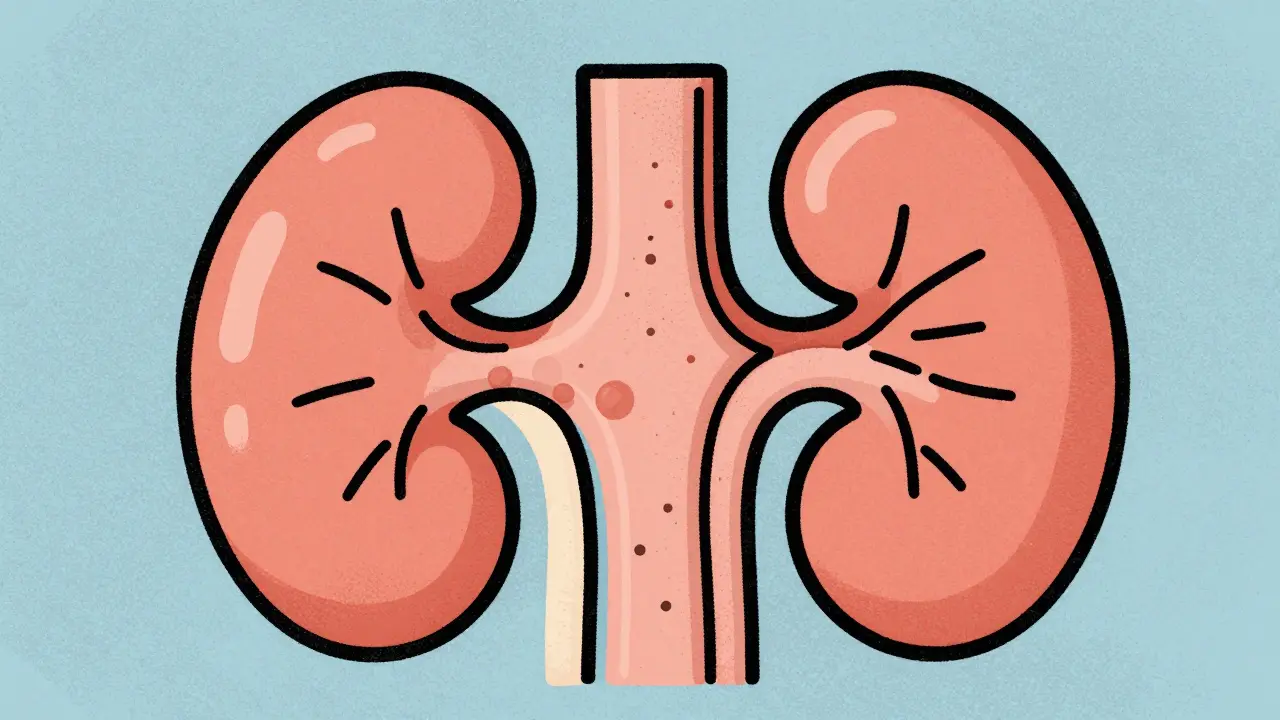
Your kidneys work silently day and night, filtering waste from your blood. But when they start failing, you might not feel a thing until it's too late. That's why simple tests like creatinine, eGFR, and urinalysis are lifesavers-they catch problems early when treatment can still help. These tests are part of your kidney function tests, a standard way doctors check kidney health. Let's break down what each one does and why they matter.
What is a Creatinine Test?
Serum Creatinine is a waste product from muscle metabolism. Your kidneys filter it out of your blood. When they're not working well, creatinine builds up. But here's the catch: about half your kidney function must be lost before creatinine levels rise. That means it's a late warning sign. For example, a young athlete with lots of muscle might have higher creatinine naturally, even with healthy kidneys. Doctors look at this number alongside other tests to get the full picture. Normal serum creatinine ranges from 0.6 to 1.2 mg/dL for adults, but it varies by age, sex, and muscle mass.
Understanding eGFR
eGFR Estimated Glomerular Filtration Rate is a calculation based on your serum creatinine level, age, sex, and sometimes race. It estimates how well your kidneys filter waste from your blood. This number tells doctors how well your kidneys filter waste. A normal eGFR is 90 or higher. Stages of kidney disease are based on eGFR:
| Stage | eGFR (mL/min/1.73 m²) | What it means |
|---|---|---|
| Stage 1 | 90 or higher | Normal or mild kidney damage |
| Stage 2 | 60-89 | Mildly decreased kidney function |
| Stage 3a | 45-59 | Moderate decrease |
| Stage 3b | 30-44 | Moderate to severe decrease |
| Stage 4 | 15-29 | Severe decrease |
| Stage 5 | Below 15 | Kidney failure |
The CKD-EPI equation is the standard method used today. It's more accurate than older formulas, especially for people with higher kidney function. But remember, eGFR isn't perfect. It may not be accurate for very muscular people, pregnant women, or those under 18. In those cases, doctors might use cystatin C instead.
Urinalysis and Proteinuria
Urinalysis checks your urine for signs of kidney problems. The most important part is the Albumin-Creatinine Ratio (ACR), which measures tiny amounts of protein in your urine. Protein in urine is an early sign of kidney damage. Even if your creatinine and eGFR look normal, protein can signal trouble. For example, someone with diabetes might have normal eGFR but elevated ACR, showing early kidney stress. The UK Kidney Association recommends using ACR over dipstick tests because it's more precise. A normal ACR is less than 3 mg/mmol. Between 3-70 mg/mmol needs retesting. Over 70 requires medical attention.
Why Both Blood and Urine Tests Matter
Blood tests alone can miss early kidney damage. The CDC says protein in urine is one of the earliest signs of kidney disease. That's why doctors always check both. Imagine a car with a check engine light that only comes on after major damage. Urine tests are like the early warning system-catching issues before the blood tests show changes. For instance, a person with diabetes might have normal creatinine but high ACR. This means their kidneys are struggling even if blood tests look okay. A 2023 study by the American Kidney Fund found that 40% of people with early kidney damage had normal eGFR but abnormal urine protein levels. Skipping the urine test could mean missing critical early intervention.
Who Should Get Tested?
The CDC recommends basic metabolic blood tests yearly for everyone. But certain groups should be extra vigilant. If you have diabetes, high blood pressure, heart disease, or a family history of kidney disease, get tested regularly. Also, if you've had acute kidney injury before. These tests are simple-just a blood draw and urine sample. They're not expensive, and they can save your kidneys from further damage. For example, a 55-year-old with type 2 diabetes and high blood pressure should get tested every 3-6 months. Their doctor will likely check eGFR and ACR together. Without these tests, kidney damage could progress unnoticed until it's too late for treatment.
Limitations and Advanced Testing
eGFR has limitations. If you're very muscular, pregnant, or under 18, the estimate might not be accurate. In those cases, cystatin C-a different blood test-can give a better picture. It's not used as much as creatinine, but it's helpful when standard tests are unclear. For detailed assessment, a 24-hour urine collection might be needed. This measures all urine produced in a day, checking for protein, sodium, potassium, and other substances. But for most people, the standard blood and urine tests are enough. The Merck Manual notes that serum creatinine increases when kidney function is impaired, but it's not the only factor. Combining tests gives the clearest picture of kidney health.
Frequently Asked Questions
What's a normal eGFR range?
A normal eGFR is 90 or higher. Stages of kidney disease start at eGFR below 90. Stage 1 is 90+ (normal or mild damage), Stage 2 is 60-89 (mildly decreased), and lower numbers indicate more severe damage. Always discuss your results with a doctor-context matters.
Why test urine if blood tests look normal?
Protein in urine (proteinuria) is often the earliest sign of kidney damage. Your blood creatinine might stay normal until half your kidney function is lost, but urine tests can spot issues before that. For example, people with diabetes might have normal creatinine but high ACR, showing early stress on kidneys. Skipping urine tests could delay treatment.
How often should I get tested?
If you're healthy, get a basic metabolic test yearly. If you have diabetes, high blood pressure, or heart disease, test every 3-6 months. The UK Kidney Association recommends regular eGFR and ACR checks for high-risk groups. Always follow your doctor's advice based on your specific health history.
Can I do these tests at home?
No. Blood tests require lab analysis, and urine tests need proper collection and measurement. Home dipstick tests aren't reliable for kidney health-they're designed for general urine checks, not precise protein measurement. Always get tested through a medical provider for accurate results.
What if my eGFR is low but I feel fine?
Kidney disease often has no symptoms until it's advanced. A low eGFR with no symptoms still needs medical attention. Your doctor might order repeat tests, check urine protein, or investigate causes like diabetes or high blood pressure. Early treatment can slow or stop damage. Don't wait for symptoms-acting on test results saves kidneys.


I've had kidney issues before.
They told me to get all these tests.
But I think they're just trying to make money.
This is a scam.
Im a US citizen and I know the truth.
Theyre all in on it.
I had a kidney test recently. It's crucial to check both blood and urine.
Protein in urine shows up before blood tests do.
Doctors need to do both.
It's so critical!
eGFR is a calculation based on serum creatinine age sex race. It estimates glomerular filtration rate. But it's not perfect. Muscular individuals may have higher creatinine. Proteinuria is an early sign. ACR is better than dipstick. Doctors don't always check it. Need more research.
I've seen patients with normal creatinine but protein in urine.
The kidney tests are part of a bigger plan by Big Pharma. They want to keep us sick so we buy more medicine. They're using creatinine and GFR to track us. I read somewhere that the government is involved. Also, they don't want you to know that natural remedies can fix everything. Like drinking lemon water every day. It's all a cover-up.
This is all a government plot. They're using kidney tests to monitor citizens. They want to control your health. Trust no one. The real solution is to avoid all medical testing and rely on natural methods. They're lying to you.
The United States maintains the highest standards for medical testing. Other nations lack such rigorous protocols. It is imperative to uphold these standards for national security.
The current methodology for kidney function assessment is inadequate it fails to consider numerous variables that influence results a more holistic approach is imperative
While the tests are useful, it's important to remember that kidney function is complex. Creatinine levels can be misleading, especially in people with varying muscle mass. Perhaps a more holistic approach is needed, considering diet, hydration, and other biomarkers. But yes, early detection is key.