Why Your Medicine Cabinet Is at Risk
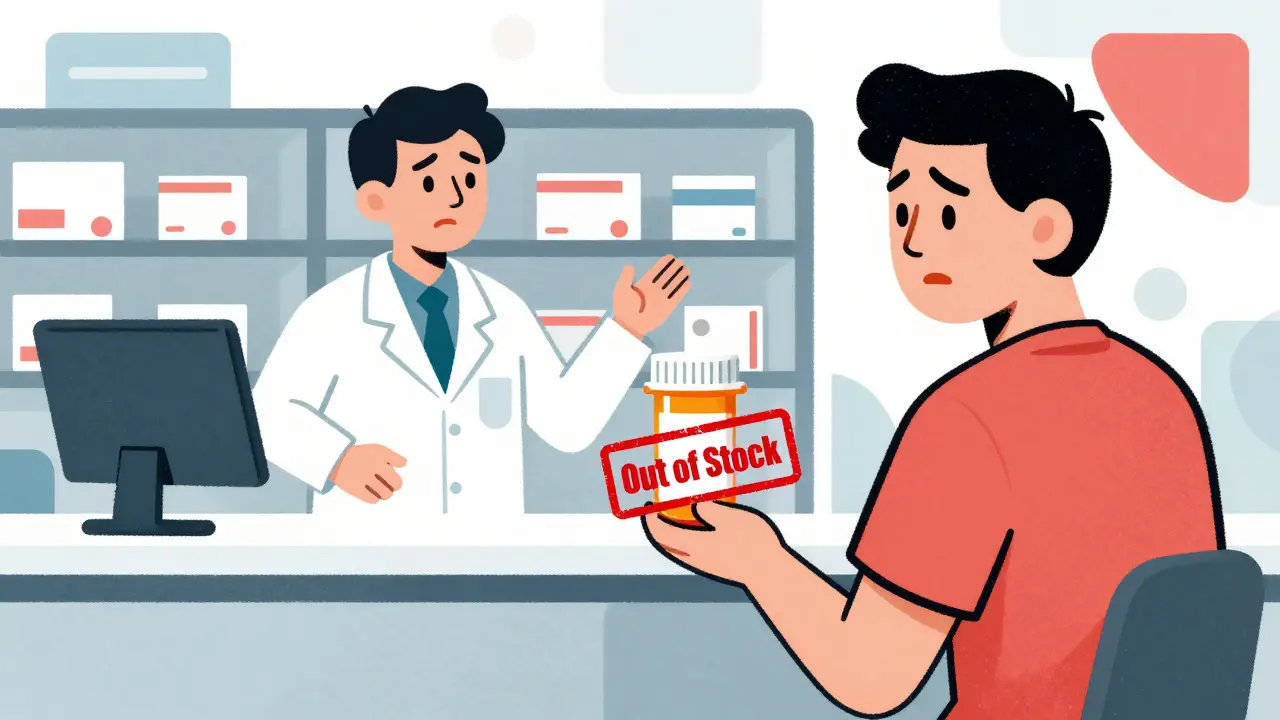
Imagine walking into the pharmacy for your heart medication, only to be told it’s out of stock. Not just low on shelf-gone. This isn’t a rare glitch; it is a systemic failure that has become painfully normal. In 2022 alone, the FDA documented 245 drug shortages. That number sounds abstract until you realize that 62% of those shortages involved sterile injectables-the drugs doctors rely on during surgeries and emergency room crises.
The root cause isn’t bad luck. It is design. For decades, the pharmaceutical industry optimized for cost efficiency, adopting "just-in-time" manufacturing models borrowed from the automotive sector. The goal was to minimize inventory costs by producing exactly what was needed, when it was needed. But this lean approach left the system brittle. When the COVID-19 pandemic hit, these fragile chains snapped. Now, as we move further into 2026, the question is no longer whether disruptions will happen, but how quickly we can recover from them.
Resilience in the drug supply chain means more than just having backup plans. It requires a fundamental shift in how we map, manufacture, and manage the flow of medicines from raw materials to patient hands. Let’s look at what actually works to stop these shortages before they start.
The Hidden Weakness: Where Your Drugs Come From
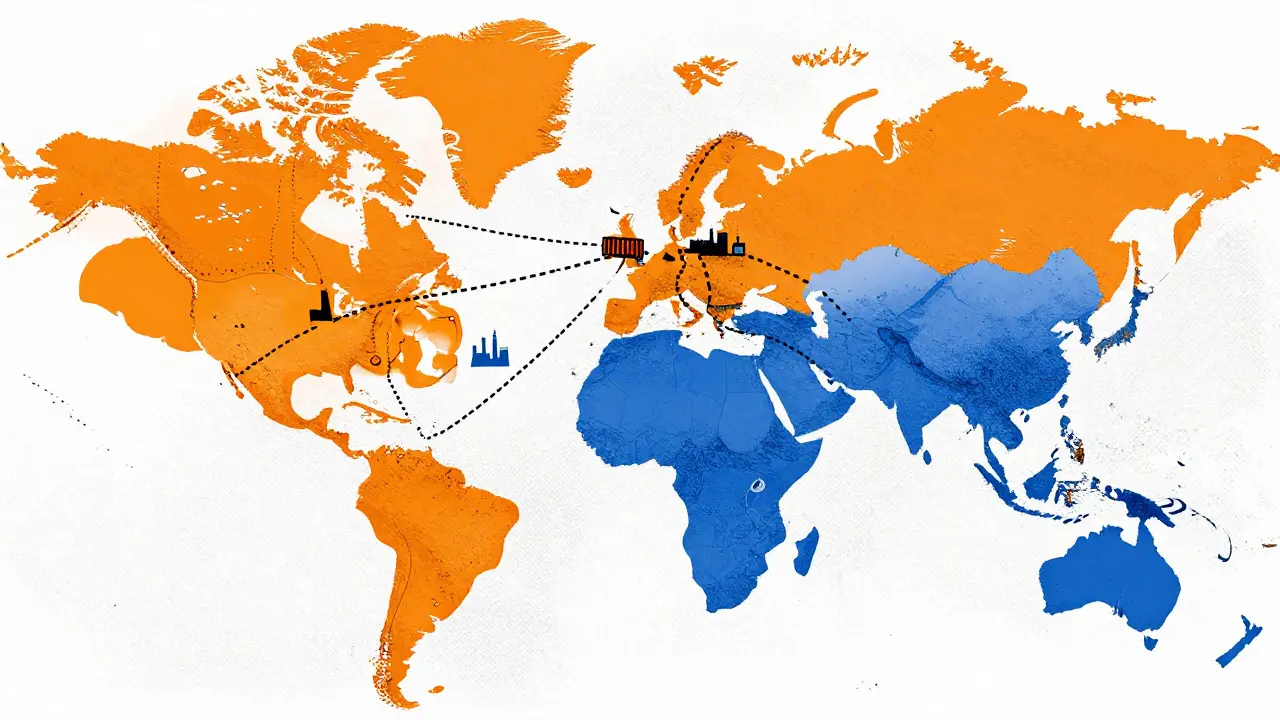
To fix the problem, you first have to see it. The biggest blind spot in our current system is geographic concentration. According to a 2023 report by the Department of Health and Human Services (HHS) Agency for Healthcare Research and Quality, 72% of active pharmaceutical ingredient (API) manufacturing facilities for drugs sold in the United States are located outside the country. Specifically, 28% of these critical components come from just two countries: China and India.
This creates a single point of failure. If a factory in Gujarat, India, shuts down due to power issues, or if shipping lanes near Shanghai get blocked, hospitals across the U.S. feel the impact within weeks. The problem is compounded by a lack of visibility. The Duke-Margolis Center reports that only 35% of pharmaceutical companies can see beyond their immediate suppliers (Tier 1). Just 12% have visibility all the way to Tier 3-the raw material suppliers who provide the basic chemicals needed to make APIs.
| Visibility Level | Percentage of Companies with Access | Risk Implication |
|---|---|---|
| Tier 1 (Direct Suppliers) | 65% | Low awareness of upstream disruptions |
| Tier 2 (Sub-suppliers) | 35% | Moderate ability to predict delays |
| Tier 3 (Raw Materials/APIs) | 12% | High vulnerability to global shocks |
Without this deep mapping, companies are flying blind. They don’t know that a drought in Brazil could affect the sugar used in tablet coatings, or that a labor strike in Europe could halt the packaging process. Building resilience starts with turning on the lights in these dark corners of the supply chain.
Strategic Stockpiling: More Than Just Hoarding
One of the most intuitive solutions is to keep more medicine in reserve. But simple hoarding doesn’t work well because drugs expire, and storage costs money. The key is strategic buffer stockpiling focused on high-risk products. The HHS ASPE framework recommends maintaining a 6-to-12-month supply for critical medicines-those with few alternatives and high clinical importance.
However, stockpiling alone is expensive and inefficient. A hybrid model works better. Instead of trying to stockpile everything, companies should identify the "critical few." These are usually life-saving injectables, antibiotics, and chemotherapy agents. By focusing resources here, you prevent the most dangerous shortages without breaking the bank. The Duke-Margolis Center estimates that a targeted domestic capacity strategy combined with diversified international partnerships would cost $1.2-$1.8 billion annually but could prevent 85% of critical shortages. Compare that to maintaining larger buffer stocks for all products, which would cost $3.5-$4.2 billion while preventing only 45% of shortages.
It’s about smart prioritization. You wouldn’t keep six months’ worth of aspirin in a warehouse, but you might want three months of epinephrine ready to go.
Diversification and Redundancy: Don’t Put All Eggs in One Basket
If stockpiling is the shield, diversification is the sword. Relying on a single manufacturer for an essential drug is a recipe for disaster. The standard best practice now is dual-sourcing for APIs that represent 80% of usage volume. This means having at least two qualified manufacturers for any critical ingredient, preferably in different geographic regions.
For finished dosage forms, the recommendation is even stricter: a minimum of three geographically dispersed suppliers for critical products. This ensures that if one region faces a natural disaster, political instability, or regulatory shutdown, the others can ramp up production.
But there’s a catch: substitution capacity. Even if you have multiple suppliers, they must be able to produce interchangeable products. Pre-qualifying alternative formulations so that at least 15% of formulary options are available as backups is crucial. This allows pharmacists to switch brands or generic versions seamlessly when primary supplies run dry.
The Role of Technology: AI and Cybersecurity
You can’t build a resilient supply chain with spreadsheets and phone calls. Advanced technology is the nervous system that connects all these physical assets. Artificial Intelligence (AI) is transforming how we predict disruptions. As of 2023, AI adoption in pharmaceutical supply chains jumped to 58%, enabling predictive modeling with 83% accuracy for 30-day horizons. This means companies can anticipate a shortage weeks before it happens, allowing time to reroute shipments or accelerate production.
However, digital tools bring new risks. Cybersecurity is no longer an IT issue; it is a supply chain security issue. Between 2020 and 2023, cyberattacks targeting healthcare supply chains increased by 214%. A ransomware attack on a major distributor can freeze distribution networks overnight, effectively creating a shortage even if the drugs exist in warehouses. Implementing NIST Cybersecurity Framework controls across all partners is now a non-negotiable requirement for resilience.
Pfizer’s 2023 transformation serves as a prime example. By integrating AI-powered demand forecasting across 150 distribution centers, they reduced stockouts by 38%. Yes, it required a $220 million initial investment and 18 months of implementation, but the return on stability was immediate.
Policy and Incentives: Making Resilience Profitable
Here is the hard truth: building resilience costs money. Reshoring API production typically increases costs by 25-40%. In a market driven by thin margins, why would a company voluntarily spend more? They won’t, unless the rules change.
This is where government policy steps in. The 2021 Executive Order 14017 directed HHS to strengthen pharmaceutical supply chains, leading to concrete actions like the 2024 Supply Chain Resilience Implementation Plan. This plan allocates $520 million for domestic manufacturing of 50 critical medicines, aiming for 40% domestic API production for these products by 2027.
But financial incentives need to align with reimbursement. Merck’s 2022 initiative to domestically source 12 critical antibiotics increased production costs by 31%. To make this viable, CMS had to adjust reimbursement rates. Without this alignment, manufacturers either cut corners or abandon resilient practices to stay competitive.
Looking ahead, the CMS 2024 proposed rule linking Medicare reimbursement to supply chain transparency could be a game-changer. Affecting $80 billion in annual drug spending, it would require manufacturers to disclose full supply chain mapping by 2026. This turns transparency from a nice-to-have into a business necessity.
What Needs to Happen Next?
We have the tools. We have the data. What we lack is coordinated execution. The National Academies concluded in 2021 that a diversified strategy using a balance of measures is far more cost-effective than relying on any single solution. Dr. Mark Trusheim of MIT noted that companies embedding resilience into their core operations experienced 63% fewer disruptions during the pandemic.
The path forward involves three clear steps:
- Map Everything: Achieve Tier 3 visibility across all critical supply chains within the next 12 months.
- Diversify Sources: Mandate dual-sourcing for top 50 critical APIs and triple-sourcing for sterile injectables.
- Incentivize Transparency: Link public funding and insurance reimbursements to verified supply chain resilience metrics.
By 2030, comprehensive measures could reduce critical drug shortages by 75%, according to Congressional Budget Office projections. It will require sustained annual investment of $2.1-$3.4 billion-a mere 0.3% of total U.S. prescription drug spending. Compared to the human cost of running out of insulin or chemotherapy, that price tag is negligible.
The era of cheap, fragile supply chains is over. The future belongs to systems that are transparent, redundant, and intelligent. Patients deserve nothing less.
What is the main cause of recent drug shortages?
The primary cause is the reliance on "just-in-time" manufacturing models that prioritize cost efficiency over robustness, combined with heavy geographic concentration of API production in China and India. This lack of redundancy makes the system vulnerable to global disruptions.
How much does it cost to reshore pharmaceutical manufacturing?
Reshoring API production typically increases costs by 25-40%. However, a hybrid model combining targeted domestic capacity with international diversification is estimated to cost $1.2-$1.8 billion annually while preventing 85% of critical shortages.
What is Tier 3 visibility in supply chains?
Tier 3 visibility refers to tracking raw material suppliers who provide the basic chemicals for APIs. Only 12% of pharmaceutical companies currently have this level of visibility, leaving significant blind spots in risk assessment.
Can AI really predict drug shortages?
Yes. AI-powered demand forecasting can predict disruptions with 83% accuracy for 30-day horizons. Companies like Pfizer have used this technology to reduce stockouts by 38% by anticipating issues before they impact patients.
What role does cybersecurity play in drug supply resilience?
Cybersecurity is critical because ransomware attacks can freeze distribution networks. With a 214% increase in attacks between 2020-2023, implementing robust cybersecurity frameworks across all supply chain partners is essential to prevent digital-induced shortages.