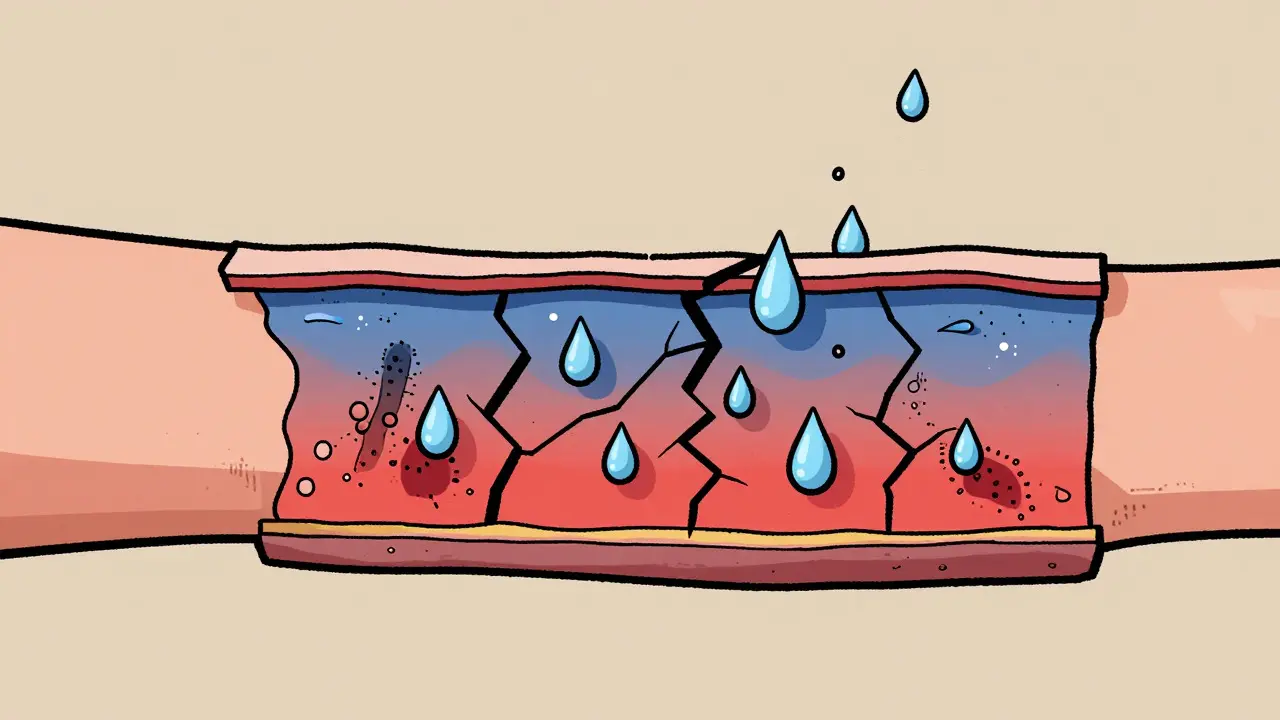
Living with chronic eczema is less about managing a rash and more about fixing a broken wall. For years, doctors focused on calming the immune system with steroids, but recent research flips the script. The core issue isn't just inflammation; it's that your skin's physical defense line is leaking. This condition, clinically known as Atopic Dermatitis, affects roughly 15-20% of children and 1-3% of adults globally. If you've tried moisturizers that feel like they do nothing, you're not alone. The problem usually lies in using products that coat the skin rather than rebuilding its structure.
The Broken Wall: Understanding Skin Barrier Dysfunction
To fix the leak, you need to understand what's broken. Your skin barrier consists of four layers: the physical layer (dead skin cells embedded in lipids), the chemical layer (acid mantle), the microbiologic layer (good bacteria), and the immunologic layer. In eczema patients, this system fails primarily because of a protein called filaggrin. Filaggrin helps hold skin cells together and produces natural moisturizing factors. About 50% of people with moderate-to-severe eczema have mutations in the FLG gene, leading to filaggrin deficiency. Without enough filaggrin, your skin loses water rapidly-a process measured as Transepidermal Water Loss (TEWL). Healthy skin loses about 8-12 grams per square meter per hour. Eczema-prone skin can lose 25-40 g/m²/h, meaning your skin is constantly dehydrated and vulnerable to irritants.
This dehydration isn't just uncomfortable; it invites trouble. When the barrier is compromised, allergens and bacteria like Staphylococcus aureus penetrate easily, triggering the intense itching that defines the condition. The American Academy of Dermatology confirms that barrier impairment often precedes visible eczema by three to six months in high-risk infants. This means repairing the barrier isn't just a treatment for flares; it's a preventive strategy to stop the cycle before it starts.
Barrier Repair vs. Standard Moisturizing
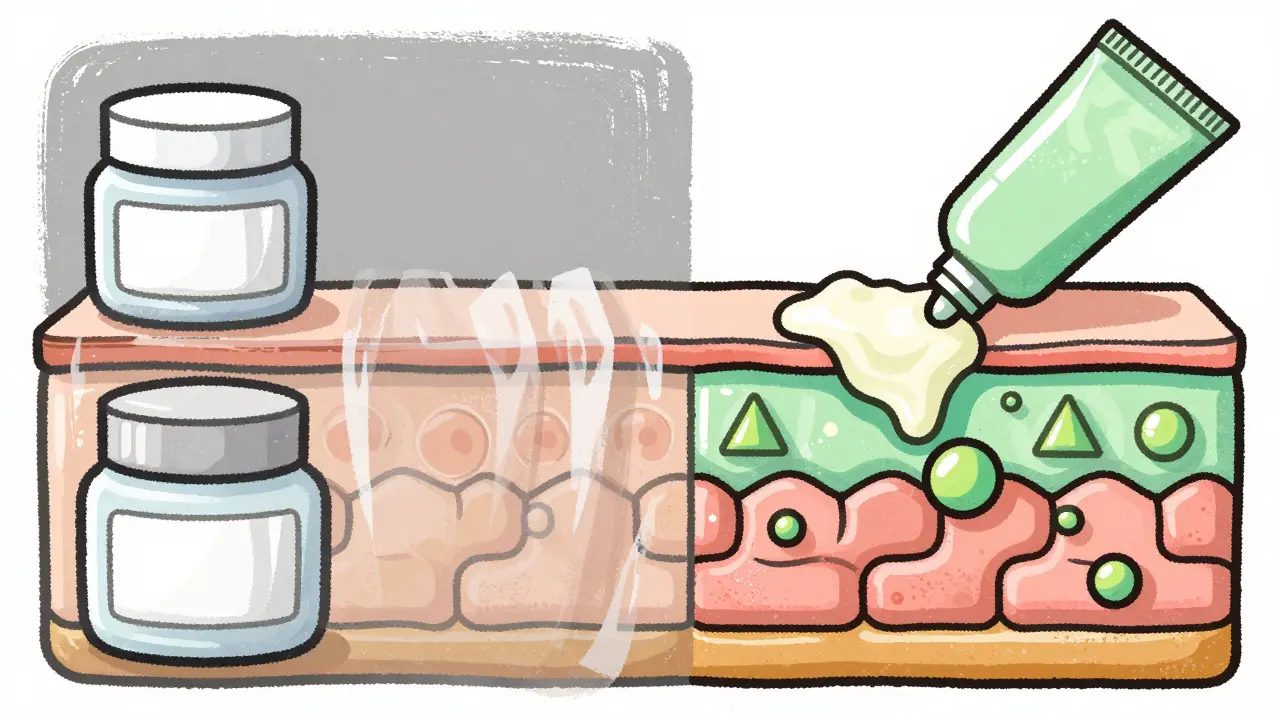
Not all creams are created equal. Traditional emollients like basic petrolatum create a seal over the skin, trapping moisture temporarily. They work, but they don't rebuild the underlying structure. Physiologic lipid replacement therapy takes a different approach. These advanced formulations mimic the skin's natural lipid composition, specifically targeting the ratio of ceramides, cholesterol, and free fatty acids. Clinical trials show that products with an equimolar ratio (1:1:1) of these components restore barrier function with 87% efficacy, compared to just 52% for standard emollients.
While physiologic lipid products cost two to three times more, the investment pays off in reduced flare frequency. Longitudinal studies indicate that consistent use decreases flare-ups by 40-60%. However, price is a real barrier for many. If premium brands are out of reach, look for store-brand options that list "ceramides" and "cholesterol" near the top of the ingredient list, rather than just "fragrance" or "water."
Identifying and Managing Triggers
Even with perfect barrier repair, certain triggers can knock the system back down. Identifying your personal triggers is crucial for long-term control. Common culprits include environmental allergens, stress, and specific fabrics.
- Dust Mites: A major trigger for indoor sufferers. Using allergen-proof mattress covers and washing bedding in hot water weekly can reduce exposure significantly.
- Fragrances: Hidden in soaps, detergents, and even some "natural" oils. Switch to fragrance-free, dye-free cleansers and laundry detergents.
- Temperature Extremes: Both dry winter air and humid summer heat can destabilize the barrier. Aim for a consistent indoor humidity level of 40-60%.
- Stress: Psychological stress increases cortisol, which weakens the skin barrier. Mindfulness techniques or regular exercise can help mitigate this inflammatory response.
Keep a simple diary for two weeks. Note what you ate, what you wore, and your environment when flares occur. Patterns often emerge quickly, allowing you to remove specific triggers from your daily routine.
Mastering Itch Control and Application Techniques
Itch is the enemy of compliance. Scratching breaks the skin further, releasing more inflammatory signals. Breaking the itch-scratch cycle requires both medication and technique. Topical corticosteroids remain the gold standard for acute inflammation, but they should be used strategically, not continuously. Newer non-steroidal options like pimecrolimus cream offer a slower but safer long-term profile, promoting lipid layer formation without thinning the skin.
Application timing matters more than most people realize. The American Academy of Dermatology recommends applying barrier repair products within three minutes of bathing. This "soak and smear" method traps water in the skin while the active ingredients absorb. Use about 5 grams per application (roughly two fingertip units) for an adult arm. Don't rush; take two to three minutes to massage the product in thoroughly. Studies show that proper technique leads to 35% greater efficacy than delayed or hasty application.
If you use prescription steroids, wait 15 minutes after applying them before layering on your barrier repair cream. Applying them simultaneously can reduce the effectiveness of both products. Consistency is key: optimal results require 28-42 days of twice-daily use. Many users quit early because they don't see immediate relief, but the biological repair process takes time.

Emerging Treatments and Future Directions
The field of eczema care is evolving rapidly. Platelet-rich plasma (PRP) therapy is gaining attention as an adjunct treatment. PRP contains growth factors that may increase filaggrin expression by up to 300%, potentially speeding up barrier recovery. While still being studied, early results are promising for severe cases resistant to traditional therapy.
Personalized medicine is also on the horizon. Companies are developing algorithms that match barrier repair products to your specific genetic profile, particularly your filaggrin status. This could mean that in the near future, you won't just buy a generic moisturizer; you'll get a formulation tailored to your exact molecular deficiencies. Meanwhile, sustainability efforts are pushing manufacturers to replace non-biodegradable silicones with greener alternatives, aligning effective skincare with environmental responsibility.
Frequently Asked Questions
How long does it take for barrier repair to work?
Most people notice reduced itching and improved hydration within 2 weeks, but significant structural repair and TEWL reduction typically take 4 to 6 weeks of consistent twice-daily application. Patience is essential during the first month.
Can I use barrier repair products with topical steroids?
Yes, but timing is critical. Apply the steroid first to clean, dry skin. Wait 15 minutes to allow absorption, then apply the barrier repair cream. This prevents dilution of the medication and ensures the barrier ingredients aren't washed away.
What if my eczema doesn't improve with moisturizers?
If you have no improvement after 4-6 weeks of correct application, consult a dermatologist. You may have a severe filaggrin mutation requiring combination therapy with JAK inhibitors or biologic agents. Also, check for hidden triggers like dust mites or contact allergens that might be undermining your efforts.
Is expensive cream always better than cheap petroleum jelly?
For mild cases, petroleum jelly is a cost-effective option. However, for moderate to severe eczema, especially with known filaggrin deficiency, physiologic lipid products containing specific ceramide ratios are clinically proven to be more effective at restoring the actual barrier structure, not just sealing it.
Does diet affect chronic eczema?
Diet plays a smaller role than barrier health and environmental triggers for most adults. However, if you have a confirmed food allergy (like to eggs or dairy), eliminating those foods can help. Blind elimination diets are generally not recommended unless guided by a specialist, as they can lead to nutritional deficiencies without clear benefit.