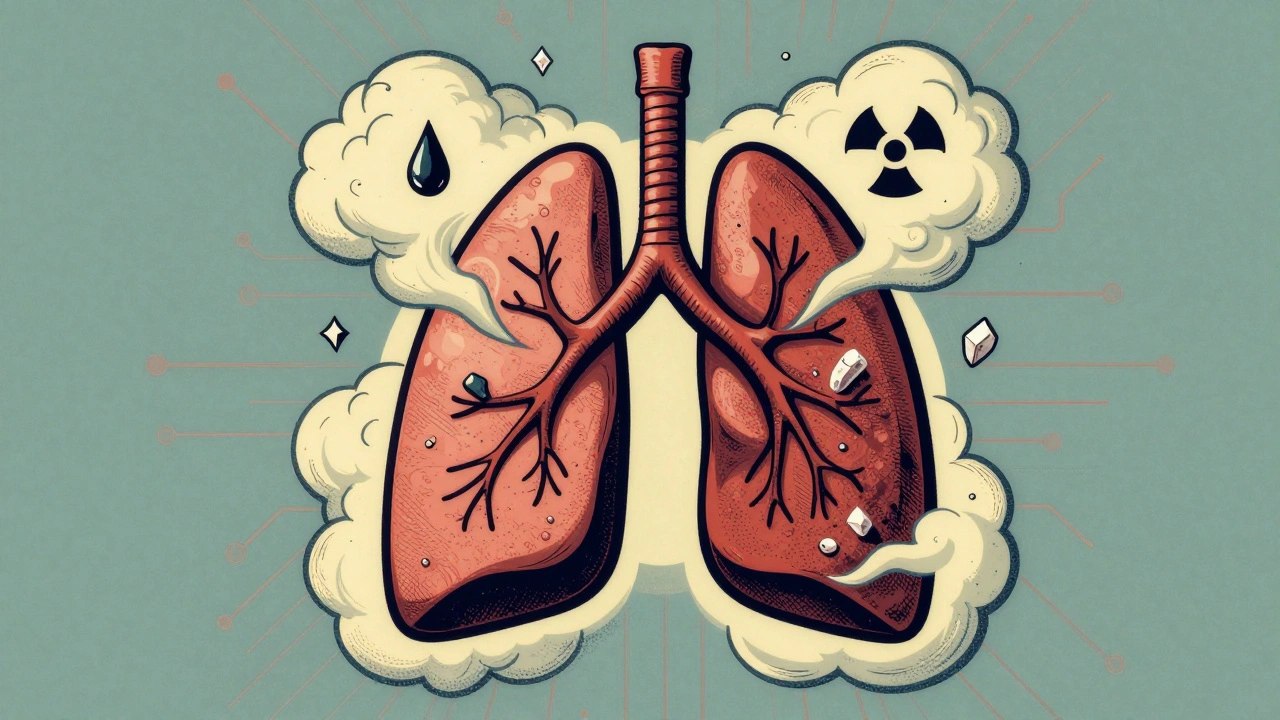
When you see someone vaping on the street, it’s easy to think it’s just water vapor-harmless, maybe even clean. But what’s really in that cloud? It’s not just flavor and nicotine. It’s a mix of chemicals that can quietly damage your lungs, even if you’ve never smoked a cigarette. By 2025, the evidence is clear: vaping isn’t safe. It’s not the same as smoking, but it’s not harmless either.
What’s Actually in Vaping Aerosol?
E-cigarettes heat a liquid-usually made of propylene glycol, vegetable glycerin, nicotine, and flavorings-into an aerosol you inhale. On paper, it sounds simple. But when that liquid gets heated, it breaks down into new chemicals you didn’t sign up for. Studies from the University of North Carolina found that these base ingredients are toxic to lung cells. And the more additives in the e-liquid, the worse it gets.
Inside that vapor, you’ll find acetaldehyde, formaldehyde, and acrolein-chemicals linked to lung disease. Some of these are the same ones found in car exhaust and burned plastic. Heavy metals like lead, nickel, and tin show up too, not from the liquid, but from the metal coils inside the device that heat up and flake off over time. Even flavorings you’d expect to be safe, like diacetyl (used in buttery popcorn), have been tied to serious lung damage. While diacetyl has been banned in many countries, it’s still found in some products, especially those sold online or through informal channels.
And it’s not just what’s in the device. Secondhand vapor carries nicotine, ultrafine particles, and these same toxins. You don’t have to vape to be affected. Breathing it in can still irritate your airways.
The Real Lung Risks: More Than Just ‘Popcorn Lung’
Early fears about vaping focused on ‘popcorn lung’-a nickname for bronchiolitis obliterans, a rare and serious lung disease linked to diacetyl. But here’s the twist: even though smokers get ten times more diacetyl than vapers, no one’s seen a spike in popcorn lung among either group. That doesn’t mean vaping is safe-it just means the bigger threats are different.
The real danger is chronic inflammation. Every time you vape, you’re irritating the lining of your lungs. That doesn’t just cause a cough. Over time, it changes how your lungs work. Research from the American Thoracic Society shows vaping suppresses immune cells in the lungs. That means your body is less able to fight off infections like pneumonia and bronchitis. One study found vapers had a 48% higher risk of developing COPD than non-users-even if they’d never smoked. That’s not a small number. That’s a clear signal your lungs are under stress.
And then there’s EVALI. In 2019, over 2,800 people in the U.S. were hospitalized with severe lung injury linked to vaping. Some died. The cause? Vitamin E acetate, an oil added to THC vaping products to thicken them. It’s not in most nicotine vapes, but it shows how quickly unregulated ingredients can cause disaster. Even if you only use legal, store-bought nicotine vapes, you’re still exposing yourself to chemicals that weren’t meant to be inhaled.
Who’s Most at Risk?
It’s not just longtime users. People who vape occasionally still show signs of lung irritation. A 2025 report from Lyracore found that even light vapers-those using devices a few times a week-had measurable changes in lung function and increased airway resistance.
Young adults are especially vulnerable. Their lungs are still developing, and nicotine rewires their brain’s reward system. Dr. NeSmith, a respiratory specialist, notes that more young people who’ve never smoked are now addicted to nicotine through vaping. They don’t see it as risky. They think it’s cool. But their lungs are paying the price.
People with asthma or existing lung conditions are at higher risk too. The CDC warns that vaping can trigger asthma attacks and worsen bronchitis. Even if you’ve never had breathing problems, vaping can bring them on.
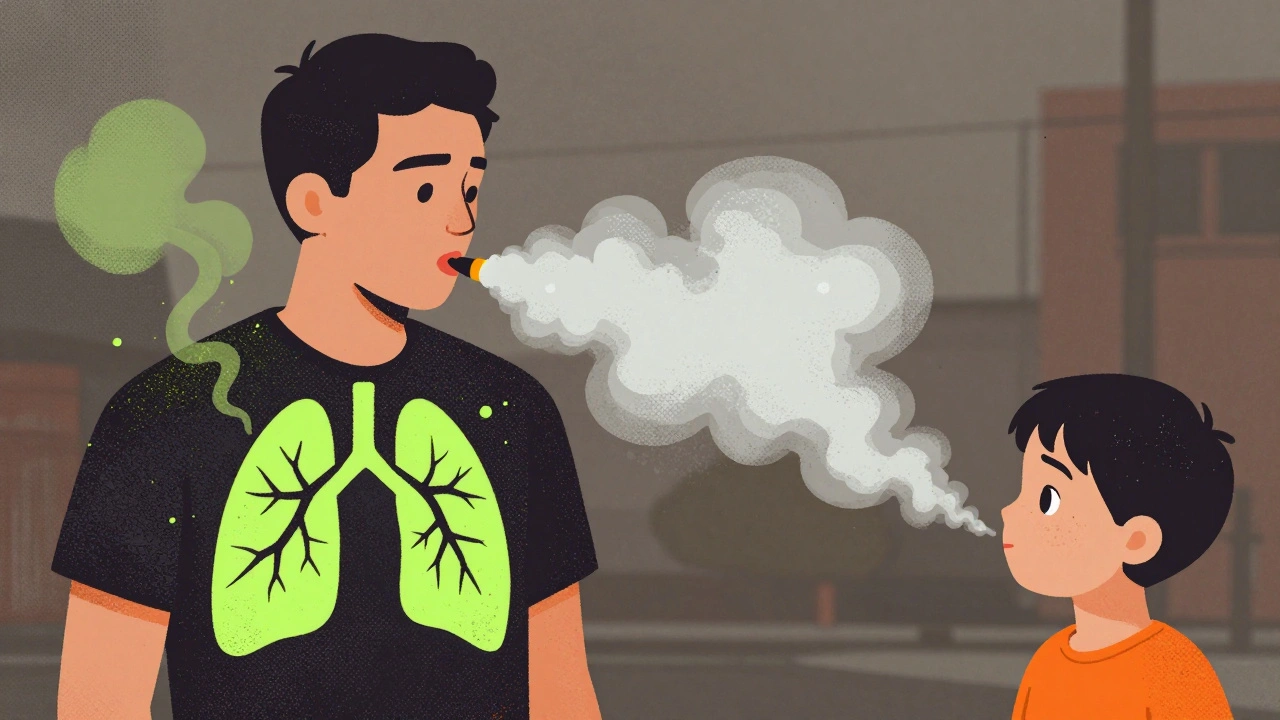
Is Vaping Better Than Smoking?
Yes, it’s less harmful. That’s not a green light. It’s a warning to be smarter.
Traditional cigarettes burn tobacco, releasing over 7,000 chemicals, including dozens of known carcinogens. Vaping doesn’t do that. No tar. No combustion. That’s why public health agencies say switching from smoking to vaping reduces exposure to the worst toxins.
But here’s the catch: if you’re vaping to quit smoking, you’re still inhaling chemicals that damage your lungs. And you’re still addicted to nicotine. The goal shouldn’t be swapping one habit for another. It should be quitting both.
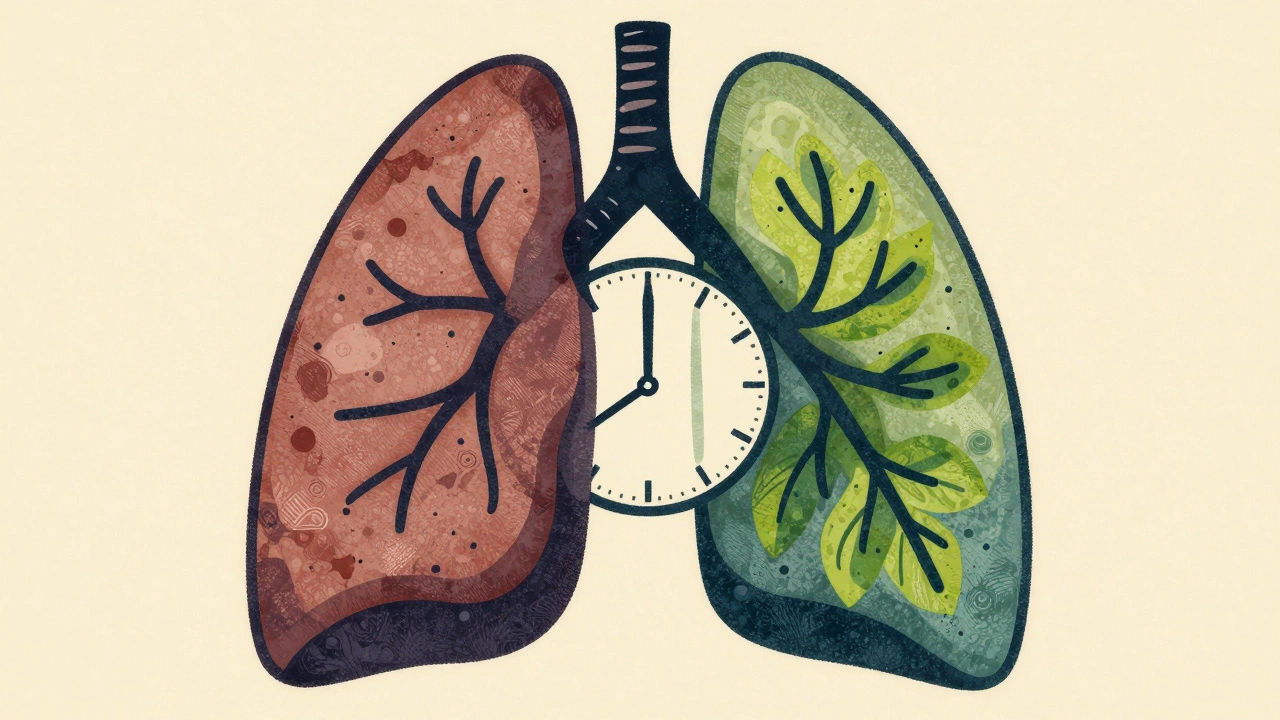
Studies show people who quit vaping entirely have better lung function over time. Some inflammation reverses. But long-term damage? That’s harder to undo. The cells in your lungs don’t forget what they’ve been exposed to.
What Symptoms Should You Watch For?
You don’t need to wait for a hospital visit to know something’s wrong. Common signs include:
- Chronic cough that won’t go away
- Shortness of breath during light activity-like walking up stairs
- Chest tightness or pain
- More frequent colds or respiratory infections
- Reduced ability to exercise or get winded faster than before
If you vape and have any of these, talk to a doctor. Don’t wait. These aren’t normal. They’re your body telling you something’s wrong.
What About Quitting?
Quitting vaping is harder than people think. Nicotine is addictive, and the ritual of vaping-holding the device, the throat hit, the flavor-creates strong habits. But your lungs start healing as soon as you stop.
Within weeks, lung inflammation begins to drop. Coughing and wheezing often improve. After six months, many people notice better stamina. After a year, lung function can show measurable improvement.
But quitting cold turkey doesn’t work for everyone. Support helps. Counseling, nicotine patches, or even switching to FDA-approved cessation tools can make a difference. The key is stopping completely-not just cutting back.
And if you’re vaping to quit smoking? You’re not done yet. The safest choice is to quit nicotine entirely. Vaping isn’t the finish line. It’s just a different starting point.
The Bottom Line
Vaping isn’t a harmless hobby. It’s not a safe alternative. It’s a respiratory risk with real, documented consequences. The chemicals in e-cigarettes cause inflammation, weaken your immune system, and raise your odds of serious lung disease-even if you’ve never smoked.
The science is no longer debating whether vaping harms your lungs. It’s asking how much, how fast, and who’s most at risk. The answer? Everyone who inhales it.
If you vape, your lungs are under stress. If you don’t, don’t start. If you’re trying to quit, you’re not alone-and your lungs will thank you.

Look, I get it - vaping isn't some magical health hack, but calling it 'just as bad as smoking' is a stretch. My cousin switched from smokes to vapes and hasn't had a cough in two years. The real issue? Regulation. If these devices had to pass the same safety tests as pharmaceuticals, we wouldn't be having this panic.
you know what they dont tell you? the government lets vape companies use toxic flavorings because they dont want to admit they banned smoking too late and now theyre stuck with a billion dollar industry they cant control. also the metal coils? theyre leaching heavy metals because the fda never tested them for long term use. its all a cover up. they want you addicted so you keep buying
ok but like… why are we acting like vaping is the enemy when the real problem is corporate greed? 🤡 someone’s making bank off people thinking this is ‘safe’ and it’s not even close. i vape because i’m anxious and i need something to hold, not because i want to die. also i cried reading about the lung damage but like… i still haven’t quit. 😭
It’s not about fear. It’s about awareness. I’ve worked with teens who started vaping because it looked cool - now they’re on inhalers. The science isn’t perfect, but the trend is clear: lungs don’t like aerosolized chemicals. If you’re vaping, pause. Ask yourself: is this helping me, or just distracting me?
my dad smoked for 40 years and lived to 82. i vape twice a week and i’m 24. the science is still new. dont act like we’ve got all the answers. also why is everyone acting like this is a moral crisis? its a public health issue, not a sin
they’re lying. vitamin e acetate was just the tip. the real killer is the nano-particles they pump into the vapor to make the clouds bigger - they go straight into your bloodstream. the FDA knew. the manufacturers knew. but they kept selling because people love the fog. its not about health. its about virality. you think your vape is safe? you’re the product
There’s a deeper question here: why do we turn to substances like nicotine when we’re stressed, lonely, or bored? Vaping is a symptom, not the disease. The real issue is the erosion of mental health support, especially among youth. If we offered better coping tools instead of banning devices, maybe fewer would feel the need to inhale chemical mist just to feel okay.
It is profoundly irresponsible to suggest that vaping is anything other than a slow-acting poison. The normalization of nicotine delivery to adolescents under the guise of harm reduction is a moral failure of the highest order. The lungs are not a sandbox. They are not a toy. And the consequences will be paid in decades of respiratory decline.
While I appreciate the thoroughness of the analysis presented, I must respectfully challenge the conflation of correlation with causation in the cited studies. Many of the reported lung impairments are statistically marginal and fail to account for confounding variables such as pre-existing environmental exposures or genetic predispositions. A more rigorous, longitudinal study is warranted before policy is enacted.
so like… i used to think vaping was just fruity clouds and now i realize it’s just nicotine with a side of regret and a sprinkle of ‘why did i think this was cool’ 🤦♀️ also my dentist noticed i have gum recession now. thanks, flavor of the month.
Acrolein levels in vape aerosol exceed OSHA limits for occupational exposure. This is not debatable. The data is public. The risk is quantifiable. No amount of marketing can make inhaling a known pulmonary irritant safe.
I grew up in a community where smoking was normal. My mom smoked. My uncle died of COPD. I never thought I’d be the one vaping - but now I’m trying to quit. And I’m not ashamed to say I need help. If you’re reading this and you’re still vaping… you’re not weak. You’re just human. And you deserve better than a cloud of chemicals.